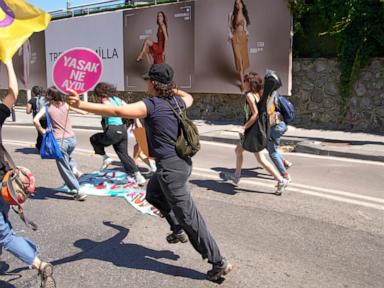
The tea is always too hot when the police arrive.
You learn to blow on the rim not just to cool the liquid, but to buy three seconds. Three seconds to push a notebook under a cushion. Three seconds to clear a chat window on a cracked screen. Three seconds to swallow the lump of lead rising in your throat and remember that in Istanbul, in Ankara, in the quiet apartments where the radiators hiss through long winter nights, caution is no longer a choice. It is oxygen. Don't forget to check out our earlier coverage on this related article.
For years, the gathering spaces of Turkey’s LGBTQ+ communities and HIV support networks existed in a fragile, stubborn half-light. They were not palaces. They were cramped rooms above bakeries, basement community centers smelling of damp concrete and cheap coffee, digital chat rooms where pseudonyms protected real, breathing humans. In these places, people who had been told their entire lives that they were mistakes could sit across from a nurse who did not judge them. They could pick up a pamphlet about antiretroviral therapy without being stared at. They could find a hand to hold when the state, the family, and the street all turned their faces away.
Now, the lights are being turned off one by one. To read more about the background of this, Associated Press provides an informative breakdown.
Consider what happens when a lifeline is classified as a threat.
In recent months, Turkish authorities have escalated a coordinated legal and administrative crackdown targeting organizations dedicated to LGBTQ+ advocacy and HIV awareness. Offices have been raided, bank accounts frozen, administrative closures initiated under the sweeping banner of protecting "family values" and public morality. To read the dry official decrees, you would think these groups were syndicates of subversion. You would think that a peer-led workshop on safe sex or a counseling session for a terrified teenager newly diagnosed with HIV was an act of civil war.
It is not a war. It is an erasure.
Let us step into a hypothetical room to understand the human architecture of what is being dismantled. Imagine Deniz. Deniz is twenty-two, living in a provincial city where being openly queer is a daily gamble with physical safety. When Deniz received a positive HIV diagnosis six months ago, the world narrowed to a pinhole of absolute terror. There was no one to talk to. The local hospitals are rife with gossip; a medical chart can easily find its way to a cousin, an employer, a landlord.
Deniz found an online support network operating out of Istanbul—a collective that uses encrypted channels to connect young people with medical guidance, psychological first aid, and medication delivery. Through that screen, Deniz learned a life-saving truth: HIV is manageable. An undetectable viral load means untransmittable. Life can go on. The panic receded. Breathing became possible again.
Now, imagine that digital channel going silent. Imagine the administrator’s phone ringing with a warning that the organization’s assets have been seized under state investigation. Where does Deniz go tomorrow? Where do the hundreds of others who rely on these anonymous networks turn when the phone lines go dead and the physical doors are padlocked?
The state calls this protection. The statistics tell a different story.
Public health experts have warned for years that fighting an epidemic like HIV requires trust. It requires reaching the margins—sex workers, young gay and bisexual men, transgender individuals—populations that historically distrust institutional medicine because institutions have historically abused them. When community-based organizations are criminalized, that bridge of trust is dynamited. People stop getting tested. People stop taking treatment. The virus does not care about administrative decrees or political speeches; it thrives in the dark, fed by silence, shame, and fear.
By cracking down on civil society groups under the vague auspices of preserving traditional culture, authorities are engineering a public health blind spot. You cannot legislate an identity out of existence, and you cannot police a virus into hiding without driving infection rates upward. The math is merciless.
Yet, the state machinery grinds forward, fueled by populist rhetoric that finds political utility in an internal enemy. In political calculations, targeting a minority costs little and plays well to conservative bases seeking moral certainty in an economically turbulent era. Inflation is high. The currency fluctuates. The future feels precarious. It is remarkably convenient to point a finger at a community center and tell the public that all of society's anxieties can be traced back to the people sitting inside it, drinking tea and talking about safe sex.
It is an old trick. It is also a lethal one.
We must look past the bureaucratic language of court orders and ministerial memos to see what is happening to the social fabric. Civil society is not a luxury accessory to a democracy; it is the immune system. When you attack the cells that protect the most vulnerable, the entire organism grows sick.
Consider the activists themselves. These are not professional revolutionaries funded by shadowy foreign cabals, as state media frequently claims. They are exhausted social workers, overworked lawyers volunteering their weekends, young people pooling their meager savings to buy rapid HIV test kits and distribute condoms. They are people like you, who happened to be born with a target on their back.
When their offices are shuttered, they do not simply vanish. They go underground. And underground is a dangerous place to be sick, frightened, or alone.
History teaches us that authoritarian impulses rarely stop where they begin. The mechanisms designed to silence one marginalized group can easily be recalibrated tomorrow to silence a journalist, a labor union, a dissenting economist, or a critical artist. Every time a door is kicked in without a valid legal foundation, every time a fundamental right is traded for manufactured moral panic, the perimeter of everyone's freedom shrinks.
We are watching a slow-motion unraveling of empathy.
And yet, walk through the backstreets of Kadıköy or Beyoğlu after dark. Look closely at the glances exchanged in certain coffee shops, the subtle pins worn on denim jackets, the coded language used in text messages among friends who refuse to be invisible. The crackdown is real, brutal, and sweeping. But human dignity is remarkably stubborn. It survives in whispers, in shared cigarettes outside fire escapes, in the quiet determination of doctors who treat patients off the books because the Hippocratic oath still matters more to them than political expediency.
The tea is cold now. The notebook is hidden away. But the room is still full of people who refuse to stop breathing.


