A standard five-pound note weighs roughly one gram. If you were to stack five million of them, the pile would tower higher than the shard of glass piercing the London skyline. It is a physical reality that feels entirely divorced from the frictionless click of a digital mouse, yet it is precisely where the old world of raw political power and the new world of invisible math have collided.
The transaction arrived quietly, long before the summer heatwaves and the clamor of the ballot boxes. Bankers staring at glowing monitors saw a sum flare to life: £5,000,000, destined for the personal accounts of Nigel Farage. To the compliance officers tasked with monitoring the capillaries of global finance, the transfer did not look like standard political support. It looked like an anomaly. A red flag. A blinking cursor prompting a suspicious activity report to the National Crime Agency.
When money moves at that scale without an obvious explanation, the system flinches. Farage would later tell aggressive reporters that the cash was his to spend on Ferrari sports cars if he so pleased. His benefactor would claim the multi-million-pound windfall was meant simply to secure the politician’s personal safety for the rest of his life.
But to understand the true gravity of that five-million-pound stack, you have to look past the performance art of Westminster politics. You have to look across the ocean to a quiet expatriate sanctuary in Thailand, and then deeper still, into the digital architecture of El Salvador, where a private company makes money by pretending to be the American dollar.
The Ghost Investor
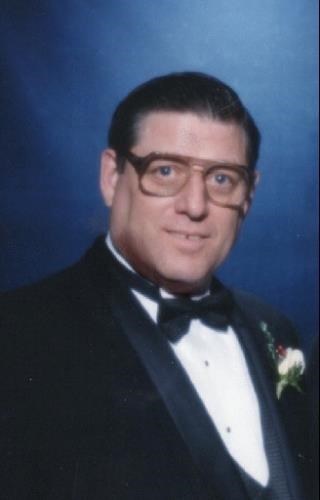
Christopher Harborne does not court the spotlight. He is an intensely private former McKinsey consultant who splits his identity between British records and Thai documentation, where he is known as Chakrit Sakunkrit. He moves between investments in aviation fuel, military technology, and blockchain networks with the quiet agility of a ghost. Yet, despite his aversion to public scrutiny, Harborne has quietly become the second-largest political donor in modern British history.
His fortune does not flow from factories, land, or legacy corporations. It flows from a 12% stake in Tether, a cryptocurrency company that generates profits outstripping global fast-food empires, all while employing a fraction of the staff.
To the uninitiated, Tether sounds like technical jargon. To the global financial system, it is the oxygen of the alternative economy. It is a stablecoin—a digital token pegged strictly to the value of the US dollar. Think of it as a casino chip for the entire internet. If you want to trade volatile digital assets without constantly converting your wealth back into traditional bank accounts, you buy Tether.
The mechanism is simple: users hand over real dollars, and Tether issues digital tokens in return, promising that every single token is backed by a dollar held in reserve. But while those billions sit in Tether’s accounts, the company invests them into US government debt, raking in billions of dollars in pure interest.
It is a spectacularly lucrative flywheel. The more people need a digital dollar, the richer the token’s creators become.
But there is a dark side to this frictionless liquidity. The exact mechanism that makes a stablecoin attractive to a legitimate day-trader makes it a godsend for bad actors. When British investigators launched Operation Destabilise, they tracked a massive laundering network facilitating sanctions evasion and funneling capital into the Russian war effort. The currency of choice for these illicit networks wasn't the ruble, nor was it the physical greenback. It was Tether.
Harborne’s lawyers have argued, with fierce logic, that blaming an early investor for how people use a digital token is akin to claiming the US Treasury is an accomplice to street crime because it prints physical hundred-dollar bills. There is no evidence suggesting Harborne is personally implicated in these illicit networks. But the inescapable truth of the digital age is that demand drives value. Every transaction, whether it belongs to a speculative tech bro in London or a sanctions-busting syndicate, feeds the same central machine.
The Dinosaur and the Architect
Power has always sought a vector. For centuries, that vector was the traditional banking sector—highly regulated, slow, and fiercely protective of national sovereignty. Cryptocurrencies were built to break that monopoly. But to survive, the creators of these digital assets need to ensure that nation-states don't build competing versions of their own.
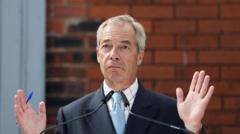
Consider the quiet boardroom of the Bank of England. In September, Nigel Farage walked in to meet the Governor, Andrew Bailey. It was not a casual chat about inflation. Farage used the private audience to fiercely lobby the Governor, demanding that the central bank drop its plans for a state-backed digital currency—a project informally dubbed "Britcoin".
A state-issued digital pound would threaten the very existence of private stablecoins. Why hold a token issued by a private firm in El Salvador when you can hold a digital asset backed directly by the British state?
Farage was blunt. He told the Governor he was being a "dinosaur". He publicly claimed he would be prepared to go to prison to thwart the state's digital plans. Within months of receiving his undocumented five-million-pound gift, the politician who had previously spent decades railing against European bureaucrats was suddenly using his platform to champion the deregulation of digital currencies.
"I can't be bought by anybody," Farage insisted, declaring the money was given on a completely unconditional basis.
Yet the timing leaves a striking trail. A massive donation lands; a series of pro-crypto policy announcements follows. A multi-million-pound war chest is built while the donor’s lawyers are simultaneously pausing defamation lawsuits against international media outlets due to severe medical episodes. The money keeps moving, the political rhetoric shifts, and the line between personal security and corporate interest blurs into non-existence.
The Unverifiable State
We are moving into an era where wealth is becoming completely untethered from geography. A billionaire can reside in Thailand, own a piece of a firm headquartered in El Salvador, and reshape the domestic policy of the United Kingdom by funding its most disruptive politicians.
This isn't just about campaign finance or transparency loopholes. It is about a fundamental shift in who owns the infrastructure of influence. Traditional institutions operate on the premise of visibility. You fill out the forms, you register the interests, you declare the gifts. The system relies on the paper trail to maintain the illusion of control.
But when the trail disappears into an encrypted ledger, the old rules fail. The regulators are left chasing ghosts, trying to determine if a five-million-pound transaction was a shield for a politician’s physical life or an investment in his legislative voice.
The stakes are far higher than the political survival of a single member of parliament. The real issue is whether democratic systems possess the tools to regulate a form of capital designed specifically to evade regulation. As long as the digital dollars keep flowing, the ledger will continue to update, line by invisible line, rewriting the balance of power while the rest of the world watches the theater on the stage.