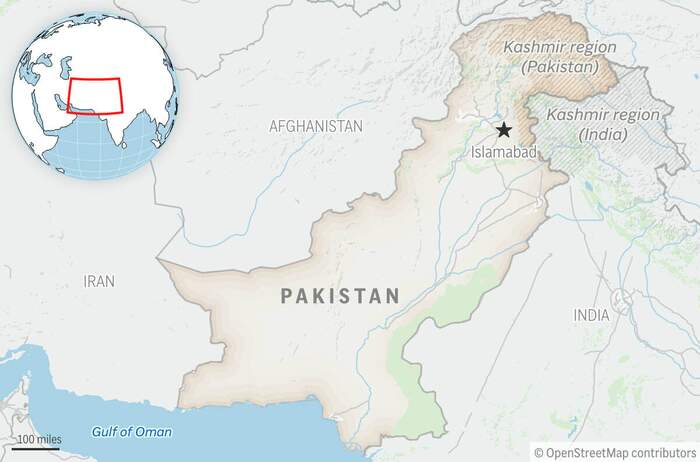
Eleven lives vanished at a roadside checkpoint in northwestern Pakistan, extinguished by a suicide bomber whose target was a routine security outpost in Khyber Pakhtunkhwa province. The attack, which left numerous others wounded and forced regional authorities into an emergency posture, is far from an isolated incident. It represents a calculated escalation in a multi-pronged insurgency that continues to erode the security architecture of South Asia's borderlands.
For two decades, the mountainous terrain straddling the Durand Line has served as a crucible for state failure and militant reorganization. When security forces erected checkpoints across the former Federally Administered Tribal Areas, the strategic intent was clear: establish a permanent footprint, monitor logistical corridors, and interdict insurgent movement. Yet these concrete barriers have increasingly transformed into stationary graves. A fixed position in hostile territory is not a fortress; it is a fixed target.
The mechanics of this latest strike reveal a sobering tactical evolution among radical factions operating in the region. Local law enforcement and paramilitary units face relentless attrition. Militants no longer require complex conventional assaults to achieve their objectives. Instead, asymmetric tactics, utilizing improvised explosive devices and suicide bombers embedded within local civilian networks, systematically break the morale of frontline personnel.
The Breakdown of the Borderlands
Geopolitics rarely operates in a vacuum. To understand why eleven security personnel died on a stretch of asphalt in Khyber Pakhtunkhwa, one must examine the shifting dynamics of regional governance. The administrative merger of the tribal districts into the Khyber Pakhtunkhwa province promised economic integration, legal reform, and an expanded security apparatus. Promises, however, do not substitute for institutional capacity.
Funding shortfalls plague local police departments. Officers assigned to high-threat outposts frequently lack basic intelligence infrastructure, counter-IED training, and secure communications gear. When a suicide bomber approaches a barricade, the defense relies on split-second human judgment often unsupported by electronic surveillance or biometric screening tools.
Furthermore, the ideological spillover from neighboring Afghanistan cannot be ignored. The return of fundamentalist governance in Kabul altered the regional balance of power. While regional authorities continuously deny providing sanctuary to cross-border elements, militant networks retain deep tribal affinities, economic lifelines, and operational freedom of movement on both sides of the frontier.
Strategic Vulnerability of Fixed Infrastructure
Military doctrine dictates that fixed defenses without mobile reserves or active intelligence operations invite destruction. Yet checkpoints remain the primary instrument of state presence in these volatile districts.
Critics within the security establishment argue that an over-reliance on static defense creates a false sense of security. Checkpoints invite stagnation. Troops stationed at these posts become predictable targets, adjusting to daily routines that insurgents exploit with ruthless precision. Intelligence assets indicate that reconnaissance teams monitor shift changes, logistical supply runs, and local civilian traffic for weeks before launching an assault.
The human cost of this strategic rigidity is borne almost entirely by junior officers and enlisted personnel. These are not elite counter-terrorism units with advanced tactical support. They are local constables and paramilitary soldiers tasked with holding the line against battle-hardened ideologues armed with modern weaponry and sustained by external funding streams.
The Intelligence Deficit
Information remains the most critical currency in counter-insurgency operations. The capacity to preempt a suicide attack depends on actionable human intelligence and signals interception before the operative reaches the target zone.
Recent security failures highlight deep fractures in the intelligence-gathering apparatus. Local populations, caught between the brutal enforcement methods of militant organizations and the heavy-handed responses of state security agencies, often retreat into silence. Trust is difficult to build when communities feel unprotected by day and subjected to suspicion by night.
Without deep-rooted community cooperation, security forces operate in the dark. A suicide vest is easily concealed beneath traditional garments, and a determined operative requires only a few minutes of vulnerability to breach a poorly fortified perimeter. Until the state bridges the trust deficit with civilian populations in the frontier districts, defensive perimeters will remain porous.
The Broader Economic Toll
Insecurity does not exist in a geopolitical quarantine. The persistent threat of violence in northwestern Pakistan throttles economic development, infrastructure investment, and regional trade. Investors avoid a province where routine travel requires navigating a gauntlet of armed checkpoints, and where the threat of sudden violence hangs over every marketplace and administrative hub.
Youth employment programs and development initiatives stall when funds must be diverted toward emergency security responses and casualty compensation. This economic stagnation feeds a vicious cycle. Disaffected youth, lacking viable economic alternatives, become prime targets for radical recruitment networks that offer both a salary and a distorted sense of purpose.
Breaking this cycle requires more than heightened alert statuses and retaliatory kinetic strikes. It demands a fundamental reassessment of counter-terrorism strategy, prioritizing intelligence-led operations, specialized training for provincial law enforcement, and genuine economic integration for marginalized border communities.
The smoke has cleared from the checkpoint tarmac in Khyber Pakhtunkhwa, but the structural vulnerabilities that allowed the tragedy to unfold remain entirely unaddressed.