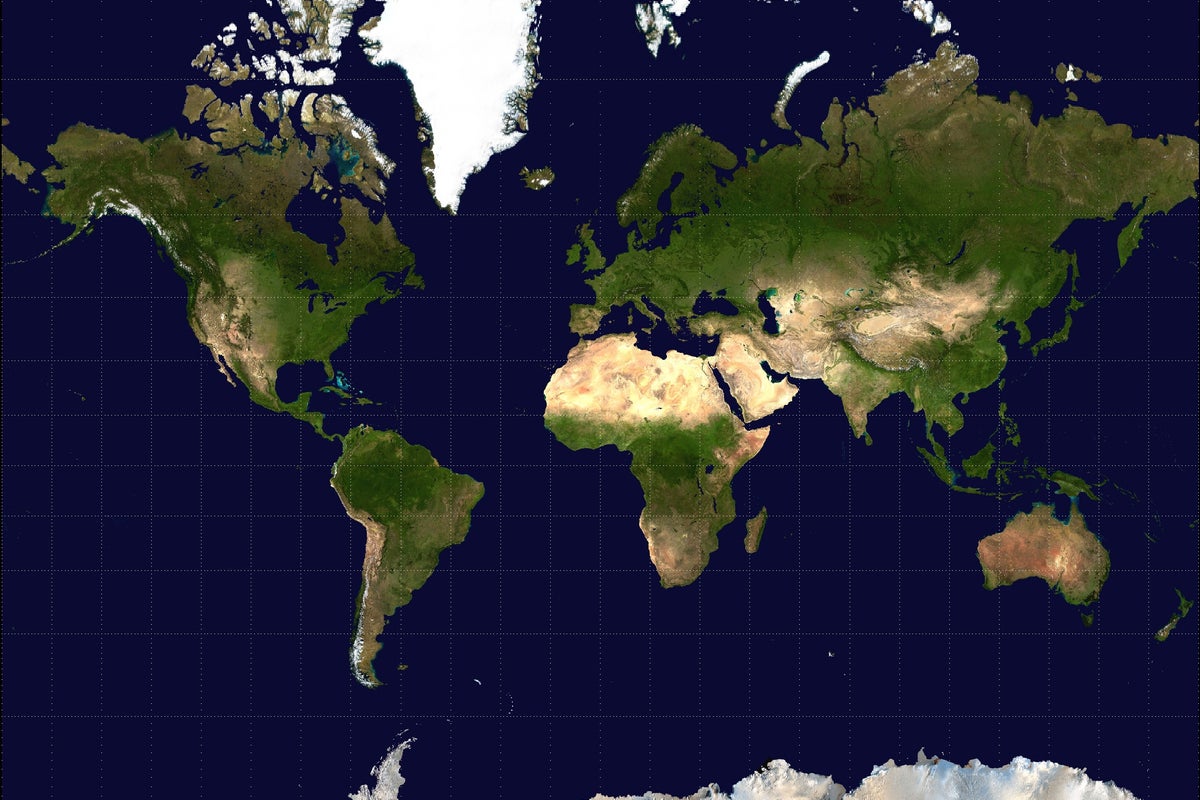
The map on the wall of the basement command post does not care about your intentions. It cares only about geometry, supply lines, and the quiet arithmetic of attrition. I stood in a room much like that years ago, watching officers trace red grease pencil lines across a translucent screen, realizing with a cold drop in the stomach that power is not a reservoir. It is a bucket with a hole in the bottom. When you pour water into the Middle East to quench a fire in Tehran, the bucket drains somewhere else entirely. Right now, it is draining into the frozen mud of eastern Europe, and Vladimir Putin is holding out his cup.
Consider the physics of attention. A superpower can roar, rattle carriers through the Strait of Hormuz, and scramble squadrons of jets to intercept proxy drones over the Persian Gulf. Every single one of these actions consumes finite resources. The interceptor missiles cost millions of dollars apiece. The maintenance hours on a carrier deck stretch mechanics to the breaking point. The bandwidth of national security advisers narrows until the map of Ukraine becomes a blurred smudge at the edge of a whiteboard. Washington has convinced itself it can fight everywhere at once, chewing on the illusion of infinite capacity.
History is littered with empires that died of distraction. Rome did not fall because its legions forgot how to fight. It fell because its emperors panicked at every border skirmish, pulling the centurions away from the Rhine to deal with political theater in the East, leaving the gates unguarded against the Goths. We are watching a modern replay of that ancient blindness.
Let us step inside a hypothetical operations room in Moscow to understand how this looks from the other side of the glass. Imagine a colonel in the Russian General Staff, sitting beneath the pale glare of fluorescent lights, watching CNN or reading intelligence cables from Washington. Every time a United States official stands before a microphone to pledge unshakeable resolve against Iranian proxies, that colonel smiles. Not because he loves the mullahs in Tehran—Moscow and Tehran are partners of convenience, not soulmates—but because every Patriot battery diverted toward the Gulf is one less battery protecting a grain silo in Odesa or a power grid in Kyiv.
The strategy is breathtakingly simple. You do not need to defeat your primary adversary in a direct clash if you can orchestrate a theater of perpetual crisis elsewhere. You light small, hot fires on the periphery. You encourage your allies to rattle cages, fund militias, and launch rockets. You wait for the leviathan to take the bait. The leviathan always takes the bait. Domestic politics demand it. Editorial boards demand it. The reflexive muscle memory of thirty years of hegemony demands that every flare-up in the Middle East be met with an overwhelming, consuming response.
Meanwhile, the ammunition factories in the American Midwest hum along at a measured pace, constrained by bureaucratic inertia and congressional paralysis, while North Korean artillery shells and Iranian kamikaze drones flow into Russian depots by the freighter-load. The asymmetry is staggering. Iran learns how to build better drones by testing them against American air defenses in the Red Sea. Russia learns how to jam Western guidance systems in the trenches of the Donbas. And the two axes of revisionist power trade notes over encrypted channels, sharing telemetry, tactics, and mutual contempt for a distracted hegemon.
We are told by diplomats that foreign policy requires compartmentalization. You can manage the Middle East and support Europe simultaneously, they insist, speaking in the soothing cadence of committees and think tanks. But human beings run these systems. Cabinets have only twenty-four hours in a day. Presidents can only make so many hard calls before fatigue sets in. When the crisis ticker screams of burning tankers and intercepted ballistic missiles, long-term strategic investments in European deterrence get pushed to the bottom of the briefing binder.
The cost of this myopia is measured in human flesh.
Walk through a field hospital outside of Kupiansk. The smell of antiseptic fails to mask the copper tang of blood and burning rubber. A surgeon with dark circles bruised deep beneath his eyes pulls off his latex gloves after a twelve-hour shift, looking out the frosted window at the falling snow. He does not care about the geopolitical chess match in the Persian Gulf. He cares about tourniquets. He cares about the dwindling supply of hemostatic gauze. He cares about the hollow echo of distant artillery that sounds closer today than it did yesterday. Every time a congressional debate stalls a funding package for Ukraine because a new crisis has flared up in the Levant, that surgeon pays the price with his patients.
Putin knows this. He is a patient man who spent his formative years in the KGB studying the art of active measures—operations designed to shape the adversary's environment until the adversary defeats themselves. He does not need to launch a blitzkrieg across the Fulda Gap. He simply needs the West to look the other way while he grinds down the Ukrainian defensive lines through sheer, brutal persistence.
The tragedy of this dynamic is that it is entirely self-inflicted. By treating every regional adversary as an existential threat requiring an overwhelming military footprint, the United States invites exhaustion. True strength is not reacting to every provocation; it is possessing the iron discipline to distinguish between a strategic threat and a regional nuisance. When you allow a secondary actor like Iran to dictate your global posture, you surrender the initiative. You become a reactive giant, stumbling from one brushfire to the next while the real existential challenge to the liberal international order hardens its borders and reloads its guns.
The snow continues to fall over the plains of Eastern Europe. In Moscow, the champagne glasses clink quietly behind heavy oak doors. In Washington, another emergency meeting is convened to address the latest provocation five thousand miles away. And on the frozen frontline, the line holds, just barely, waiting for a world that has forgotten how to look at the whole map at once.