The Silence Before the Static
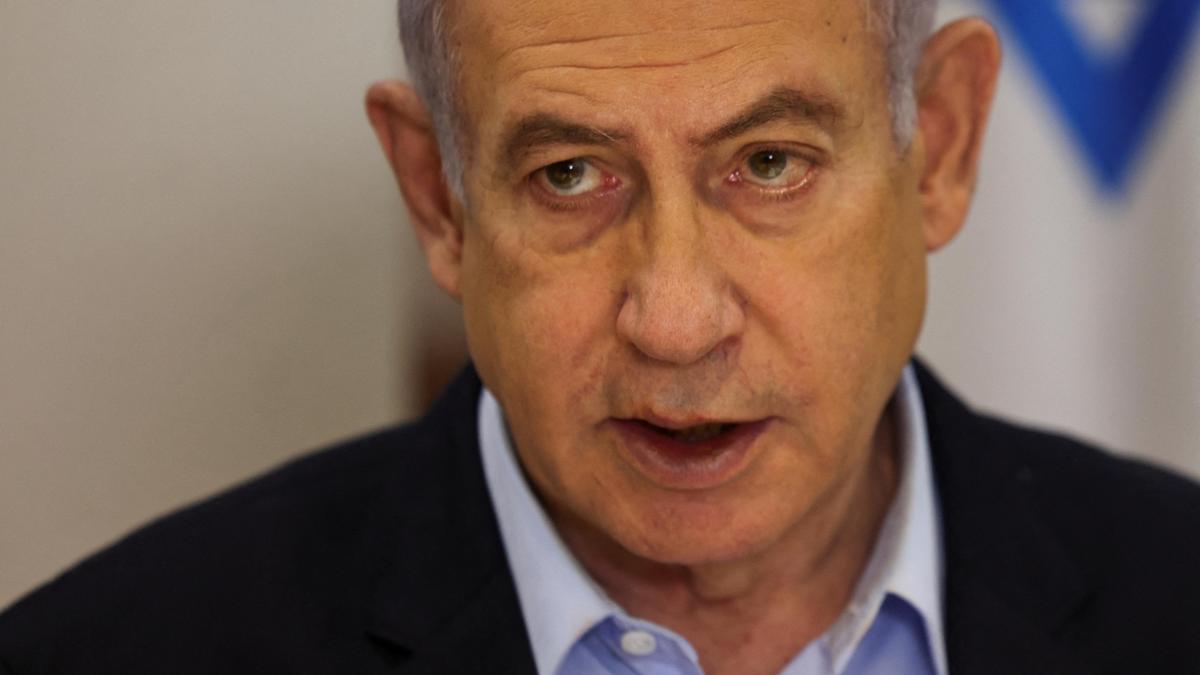
In the Kirya—Israel’s equivalent of the Pentagon—the air often smells of floor wax and over-brewed coffee. It is a sterile, subterranean environment where the weight of the world is measured in satellite feeds and encrypted whispers. When Benjamin Netanyahu stands before a microphone here, he isn't just speaking to a press pool. He is speaking to the nervous pulse of a nation that sleeps with one eye open.
The recent headlines were clinical. They spoke of "identical goals" and "preparedness for any scenario." But behind those sanitized phrases lies a gritty, sweating reality. To understand what is actually happening between Jerusalem and Washington, you have to look past the podium. You have to look at the map—a jagged, unforgiving piece of geography where a few miles represent the difference between a quiet Tuesday and a national tragedy.
Consider a young reservist named Ari. He is a hypothetical composite, but his experience is the lived reality of thousands. Ari isn't thinking about diplomatic communiqués. He is thinking about the battery life on his radio and whether the coordinated radar systems between his unit and the U.S. Navy ships in the Mediterranean will catch the blur of a drone before it clears the treeline. For Ari, "identical goals" isn't a political slogan. It’s a lifeline.
The Invisible Architecture of Alignment
The relationship between a superpower and its most volatile ally is rarely a straight line. It’s more like a high-stakes dance on a sheet of thin ice. When Netanyahu asserts that the U.S. and Israel are in total lockstep, he is attempting to project a singular, unbreakable wall of intent.
This isn't just about friendship. It’s about physics.
Modern warfare moves at speeds that defy human reaction. If a missile is launched from a silo hundreds of miles away, the decision to intercept it happens in milliseconds. That decision requires a shared language of data. The "identical goals" Netanyahu mentions refer to this deep, subterranean integration of technology and intelligence. If the two nations weren't synchronized, the shield would fail.
But why the sudden emphasis on being "prepared for any scenario"?
The phrase is a polite way of describing a nightmare. It suggests that the regional chess board has reached a point where the next move might not be a choice, but a reflex. We are talking about the long shadow of Iran, the simmering tensions in the north, and the fractured landscape of a region that has forgotten how to rest.
The Friction in the Machine
It would be a mistake to assume that "identical" means "easy."
Even when two countries want the same outcome—a stable region, the neutralization of threats—their methods often clash. Washington views the world through a wide-angle lens, balancing global oil prices, domestic elections, and a dozen other fires across the globe. Israel, by contrast, uses a macro lens. Their focus is sharpened to a razor's edge on the immediate perimeter.
This creates a hidden tension.
Imagine two people tied together in a dark room, both trying to find the door. They have the same goal, but if one lunges left while the other pivots right, they both fall. Netanyahu’s recent rhetoric is an attempt to convince the world—and perhaps his own people—that the rope is slack, that the movements are fluid, and that there is no daylight between the two partners.
The reality is messier. It involves late-night phone calls where voices are raised. It involves "red lines" that get moved or blurred in the heat of the moment. The "preparedness" he speaks of is as much about managing this internal friction as it is about facing an external enemy.
The Cost of the Shield
We often talk about military aid in terms of dollars and hardware. We see the billion-dollar price tags and the sleek silhouettes of F-35s. But the true cost is measured in the psychological toll on the people living under that shield.
When a leader says the nation is ready for "any scenario," he is asking the public to prepare for the worst. He is telling the shopkeeper in Haifa and the tech worker in Tel Aviv that the normalcy they enjoy is a fragile construct. It is sustained only by a constant, exhausting vigil.
There is a specific kind of exhaustion that comes from being "prepared." It is a low-grade hum of anxiety that never quite disappears. You hear it in the way people talk about the future—with a caveat, a "hopefully," a shrug.
The alliance with the U.S. provides the hardware for survival, but it cannot provide the peace of mind. That has to be built, or fought for, on the ground.
The Unspoken End Game
What happens if the "scenarios" actually manifest?
The rhetoric suggests a seamless transition from diplomacy to action. But history is a graveyard of "seamless" plans. The true test of the U.S.-Israel alignment won't be found in a joint press conference. It will be found in the chaotic first hour of a multi-front conflict, when the "identical goals" are tested by the fog of war.
Netanyahu’s words are a gamble. By claiming total alignment, he is tying his fate to the shifting winds of American politics. By claiming total readiness, he is setting a standard that leaves no room for error.
The world watches these announcements for signs of weakness or cracks in the facade. But the people living within the blast radius are looking for something else. They are looking for a sign that the shield will hold, and that the "scenarios" will remain confined to the briefing rooms and the maps.
As the sun sets over the Mediterranean, the lights in the Kirya stay on. The coffee gets colder. The satellite feeds continue their silent, digital crawl. The promise of "identical goals" remains hanging in the air—a heavy, necessary, and deeply complicated vow.
The shield is up. The sensors are humming. The rest is just waiting for the static to break.