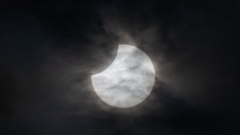
When the Moon slips directly between the Earth and the Sun, the immediate visual drama commands millions of upturned faces. Across the island of Ireland, a profound celestial alignment will soon block a significant portion of the solar disc, plunging towns from Belfast to Cork into an eerie, premature twilight. Observers often treat these spectacles as fleeting tourist attractions or casual astronomical oddities to be viewed through certified cardboard glasses. Yet beneath the thin veneer of public spectacle lies a complex operational stress test for modern infrastructure, energy grids, and public communication channels.
Solar eclipses are fundamentally matters of physics governed by orbital mechanics, but their modern consequences belong entirely to electrical engineers and grid operators. When sunlight dims abruptly over a densely populated region, the power supply reacts instantaneously. Ireland, like much of Western Europe, depends heavily on renewable generation to keep the lights on. Photovoltaic installations dotted across residential roofs and commercial parks provide a substantial percentage of daily electrical capacity. When a lunar shadow sweeps across the island, those solar panels stop generating power within minutes.
Understanding how the energy sector prepares for this sudden drop requires looking past the romanticism of amateur astronomy. Traditional power plants must ramp up production to compensate for the lost megawatts. If thermal or gas-fired stations fail to step in at the exact minute the shadow deepens, the frequency across the entire transmission network drops, risking widespread blackouts. The upcoming solar eclipse over Ireland is not merely a pretty sight for weekend stargazers. It represents a formidable logistical hurdle for system operators who must balance supply and demand down to the second.
The Grid Operator Balancing Act
EirGrid and its Northern counterpart, SONI, manage the electricity networks across the island. These organizations treat celestial events with the same gravity as severe winter storms or unexpected plant outages. Modern power grids function on a knife-edge of equilibrium. Generation must match demand continuously, with virtually zero margin for error.
A partial solar eclipse introduces a predictable yet violent shock to the system. As the Moon obscures the Sun, power generation curves resemble a steep cliff followed by an equally rapid recovery. Solar farms that were producing at peak capacity moments prior suddenly flatline.
Engineers mitigate this through sophisticated forecasting models. They analyze weather patterns, historical cloud cover, and the exact trajectory of the lunar shadow down to the second. Flexible generation assets, including fast-acting gas turbines and massive utility-scale battery storage facilities, stand ready to bridge the gap.
Why Home Solar Changes Everything
Ten years ago, a partial eclipse across Ireland caused barely a ripple in national power management. Rooftop solar panels were a rarity, restricted mostly to off-grid cabins or experimental domestic installations. The energy landscape today looks entirely different. Generous grants and rising utility bills have turned tens of thousands of Irish homes into micro-generators.
This decentralization creates a unique vulnerability. While utility-scale solar farms are monitored directly by grid controllers through high-speed data feeds, domestic arrays are largely invisible in real time. Operators cannot easily predict exactly how much residential generation will vanish when the sky darkens over housing estates.
To compensate for this blind spot, grid managers rely on conservative forecasting. They assume the worst-case scenario where every rooftop panel ceases production simultaneously. This requires burning additional fossil fuels to maintain a spinning reserve of backup power, a bittersweet irony for a nation striving to decarbonize its energy portfolio.
Atmospheric Disruptions and Local Climate
Beyond the electrical grid, a sudden loss of solar radiation triggers immediate, measurable shifts in the lower atmosphere. The drop in temperature is the most obvious consequence. Within minutes of peak obscuration, thermometers register a noticeable chill. Winds often shift direction or die down completely as thermal updrafts collapse over landmasses.
Meteorologists note that cumulus clouds frequently dissipate during eclipses because the ground stops heating the air from below, halting the formation of rising thermals. For a country already known for changeable weather, these localized micro-climates add an extra layer of complexity for aviation and marine navigation.
Wildlife reacts with instinctive confusion. Birds cease their afternoon songs, assuming dusk has arrived prematurely. Insects retreat to foliage. Farm animals exhibit evening behaviors, settling into pastures before midday. These biological responses highlight how deeply embedded solar rhythms are in living organisms, long before human technology attempted to harness that same sunlight for electricity.
Public Safety and the Perils of Observation
While engineers sweat over control panels, public health officials worry about human behavior. Staring directly at the Sun, even when eighty percent obscured by the Moon, causes permanent retinal damage within seconds. The human eye lacks pain receptors in the retina, meaning severe solar burns occur without any immediate warning sensation.
Every major eclipse brings a surge of patients to ophthalmology clinics suffering from solar retinopathy. Cheap, counterfeit viewing glasses flood online marketplaces ahead of such events, lacking the certified filters required to block harmful ultraviolet and infrared radiation. Public information campaigns struggle to cut through social media noise, where sensationalized warnings often compete with dangerous viral challenges encouraging direct observation.
Schools and community groups often attempt to organize safe viewing events using pinhole projectors or professional solar telescopes. Yet many individuals rely on improvised methods like exposed photographic film or sunglasses, risking their vision for a fleeting glimpse of a shadowed star.
The Broader Lesson of Celestial Shocks
The fascination with solar eclipses reveals a persistent tension between human technological progress and natural cycles. We build complex, interconnected grids designed to power modern life seamlessly, yet we remain entirely dependent on a volatile, burning star ninety-three million miles away.
When the shadow crosses Ireland, it serves as a stark reminder of our place in the solar system. It exposes the fragility of automated systems that assume stable inputs. The engineers keeping the lights on during those darkened minutes are performing an invisible magic trick, masking the raw violence of nature behind steady household voltage.
The event will pass within a few hours. The Sun will emerge fully from behind the Moon, solar panels will roar back to life, and the grid will settle into its familiar rhythm. But the underlying vulnerability remains. As renewable energy deployment accelerates across Europe, managing the unexpected whims of the sky will become the defining challenge of modern electrical engineering.
The shadow will lift, leaving behind a normal afternoon, but the hidden machinery of human survival will have been tested once again against the indifferent mechanics of the cosmos.


