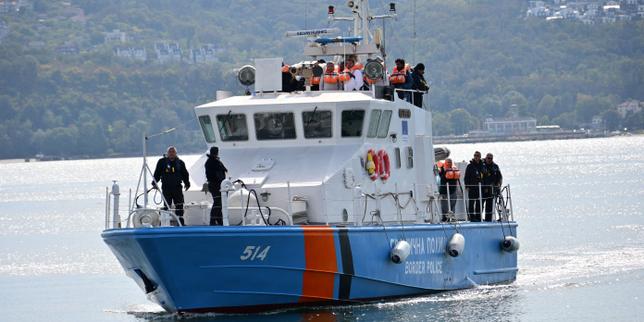
Saltwater does not care about borders. It never has.
For centuries, the Black Sea has been a maritime crossroads, a basin where empires traded wheat, wine, and steel under a shifting horizon. Today, that horizon is fractured. Far from the televised front lines, away from the muddy trenches of the mainland, a quiet, electronic war is creeping toward the coastal waters of Bulgaria and Romania.
Out on the open water, where the horizon blurs into a heavy, leaden grey, the air smells of diesel, salt, and something sharper. Something burning.
Consider the fishermen of Varna or Constanta. They wake before dawn, their hands rough with salt-cracked skin, pulling nets that feel inexplicably lighter these days. It is not just the changing fish stocks. It is the hum in the air. The invisible arcs of radio frequencies, the sudden, jagged blips on radar screens that do not belong to cargo ships or coast guard patrols.
Unmanned vessels skim the surface like predatory water striders. Aerial drones buzz through low-hanging clouds like metallic wasps. They are small, cheap, and utterly indifferent to human life. And they are getting closer to NATO territory.
The Geography of Anxiety
To understand the tension, look at a map, but close your eyes to the lines drawn by politicians. Look only at the water.
Bulgaria and Romania share a coastline that stretches hundreds of kilometers along the western edge of the Black Sea. Behind them lie sleepy resort towns, ancient ports, and millions of citizens who grew up believing that the fall of the Iron Curtain meant the permanent end of European war.
Now, the sea between them has become a testing ground.
Naval mines drift erratically, broken loose from their moorings by autumn storms, washing up on golden beaches where children built sandcastles only weeks before. Commercial grain carriers, vital for feeding populations half a world away, anchor anxiously in shallow waters, their captains staring at their radar scopes with white-knuckled intensity. A single detonation, accidental or targeted, could choke off the last maritime lifelines of the region.
When a drone crashes into a seawall or explodes off the coast, the official statements are measured. Diplomats use words like incident, investigation, and vigilance. But words do not comfort a sailor whose engine room is vibrating from a nearby blast wave.
The Anatomy of an Invisible Threat
Warfare has evolved past the age of ironclad dreadnoughts. Today, it is fought with fiberglass, off-the-shelf microchips, and satellite navigation coordinates.
The drones operating in the western Black Sea are largely autonomous or remotely piloted from hundreds of miles away. They carry high explosives packed tightly into fiberglass hulls, designed to slip beneath the detection thresholds of traditional coastal defense radar. They cost a fraction of the warships they target, yet they project a disproportionate amount of terror.
Imagine sitting in a cramped wheelhouse at two in the morning. The sea is pitch black, swallowing the stars. The rhythmic slap of waves against the hull is the only sound, until a high-pitched whine splits the air—a sound like a lawnmower engine amplified a thousand times. You look up, but you see nothing. Your instruments flicker. The GPS signal stutters, scrambled by electronic warfare systems operating fifty miles offshore.
That is the reality for modern mariners in these waters. It is a war waged in the spectrum of invisible radiation, where the enemy is a pixel on a screen or a sudden, catastrophic concussive blast.
The Ripples on the Shore
Panic is rarely dramatic. Most of the time, it looks like a quiet cancellation.
Bookings at Black Sea resorts drop by double digits. Real estate investors pause their projects. Insurance rates for cargo vessels operating in Romanian and Bulgarian ports skyrocket, turning routine commerce into an expensive gamble.
The economic bleed is real, even if it does not make the evening news. Every time a drone is intercepted near the Romanian port of Sulina, the cost of bread edges upward in Cairo. Every time a stray mine is detonated by military divers off Cape Emine, the fragile confidence of coastal communities frays a little more.
We tend to think of geopolitical friction as a game played by men in suits in distant capitals. We forget that the board is made of real dirt, real water, and real people who simply want to catch fish, ship grain, and watch the sunset without wondering if the next speck on the radar is a seagull or an explosive charge.
Living on the Edge
There is an old maritime superstition that the sea always takes back what belongs to it. For generations, Black Sea communities respected the water's unpredictable moods—its sudden squalls, its treacherous undercurrents.
They never expected the danger to come from the sky in the shape of aluminum and lithium batteries.
Yet, life persists. The nets are still mended. The cafes along the esplanade still serve grilled fish and white wine. People adapt to the shadow because humans are stubbornly resilient creatures, capable of normalizing almost any horror if given enough time.
But normalization is not peace. It is merely holding your breath.
Out on the dark water, beneath the cold autumn stars, the drones continue their silent patrols. The hum of their rotors is faint, almost lost in the sound of the wind, but it is there. Waiting.
And the shore waits with it.
