The air in Limassol doesn't just sit; it pulses. On a clear night, if you stand on the coast and look toward the Akrotiri peninsula, you aren't just looking at a stretch of Mediterranean scrubland. You are looking at one of the most sophisticated nerve centers of global intelligence. But for the people living in the shadow of the Royal Air Force antennas, the view has become a source of profound, vibrating anxiety.
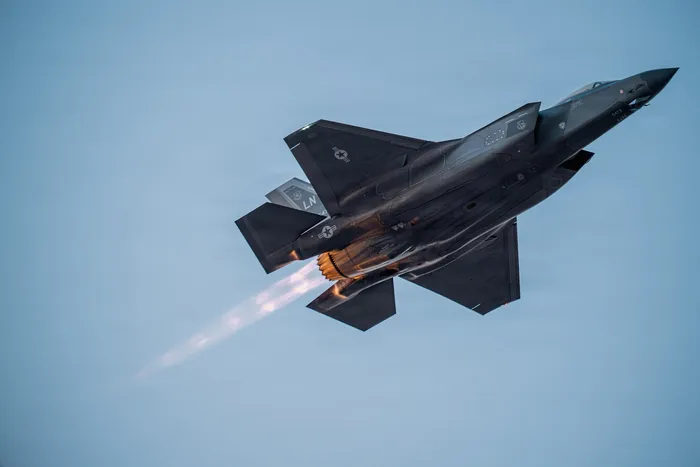
Nikos runs a small taverna within earshot of the perimeter fence. For decades, the roar of British Typhoon jets was merely the sound of the status quo—a noisy reminder that Cyprus was a "bridge" between the West and the Middle East. Lately, the sound has changed. It feels heavier. When the sky ripples with the afterburners of planes heading toward Syrian or Iraqi airspace, Nikos doesn't just see a military maneuver. He sees a bullseye painted on his roof.
This is the reality that President Nikos Christodoulides brought to London. It wasn't a standard diplomatic visit. It was an interrogation of a relationship that has become dangerously asymmetrical.
The tension centers on a Sovereign Base Area that is technically British soil but geographically Cypriot fate. When Keir Starmer’s government hesitated on the world stage—failing to provide a clear, decisive stance on the shifting allegiances of the Levant—he didn't just leave a vacuum in Parliament. He left Cyprus exposed. As Iranian missiles arched over the region in recent months, the island found itself acting as a shield for British interests without ever being asked if it wanted to hold the weight.
The Geography of Risk
Imagine living in a house where your neighbor keeps a collection of highly volatile chemicals in a shed attached to your bedroom wall. You don't own the shed. You have no key to the lock. But if that shed catches fire, your bedroom goes up first.
Cyprus is that bedroom.
The RAF bases at Akrotiri and Dhekelia are not merely refueling stops. They are the eyes and ears of the GCHQ and the launching pad for strikes that ripple through Tehran and Beirut. When the UK uses these bases to intercept Iranian drones or support regional allies, the blowback doesn't land in London. It lands in the Eastern Mediterranean.
The "frank discussion" demanded by Christodoulides is born from a simple, terrifying realization: Cyprus is being used as a combatant by proxy, while being treated like a bystander in policy. The President isn't just asking for better communication. He is asking for a seat at the table before the table is blown apart.
The Cost of Hesitation
Diplomacy often moves at the speed of cooling lava, but the modern Middle East moves like a wildfire. While the British administration under Starmer has been accused of "dithering"—struggling to balance domestic pressures with international obligations—the security situation in Cyprus has deteriorated.
Nature abhors a vacuum, and so does geopolitics. When a superpower or a regional leader shows a lack of clarity, others move to test the boundaries.
For the Cypriot people, the lack of a firm British commitment feels like a betrayal of the Sovereign Base Agreement itself. The deal was always supposed to be: we provide the land, you provide the security. Instead, the presence of the bases is now arguably the single greatest threat to Cypriot security. It is a paradox of protection. The more the UK uses the island to project power, the more the island becomes a target for those who wish to diminish that power.
Consider the logistics of a modern missile strike. Saturation attacks are designed to overwhelm air defenses. If an adversary decides to "neutralize" the RAF's ability to intervene in a regional conflict, they won't just hit the runways. They will hit the infrastructure. They will hit the power grids. They will hit the very ground that Nikos’s taverna sits upon.
A Sovereignty of Shadows
There is a specific kind of frustration that comes with being a "strategic asset." It is the feeling of being a piece on a chessboard that has its own thoughts, feelings, and fears, yet is moved by a hand three thousand miles away.
Christodoulides is pushing back against the "colonial hangover" that characterizes the British presence on the island. The bases are a vestige of a different era, a time when the British Empire needed a coaling station for its path to India. Today, they are a high-tech fortress in a digital war. But the legal framework hasn't caught up to the lethal reality.
The President’s demand for a "frank discussion" is code for something much more radical: a demand for transparency. Cyprus wants to know exactly what is being flown out of Akrotiri. They want to know who is being targeted. Most importantly, they want to know what the British plan is when the inevitable retaliation comes knocking.
Starmer’s perceived indecision has exacerbated this. In the absence of a clear, articulated strategy for the Eastern Mediterranean, Cyprus is left to guess. And guessing, when you are sixty miles from the Syrian coast, is a luxury no one can afford.
The Invisible Stakes
We often talk about geopolitics in terms of maps and arrows. We forget the hum of the electricity. We forget the school runs.
In the villages surrounding the Dhekelia base, the "invisible stakes" are the children who play within sight of the watchtowers. They grow up knowing that the planes overhead are not commercial flights taking tourists to the beaches of Paphos. They are machines of war.
If the UK continues to treat Cyprus as a convenient, silent partner, it risks more than just diplomatic friction. It risks a total breakdown of the social license that allows those bases to exist. You cannot expect a population to host a lightning rod during a thunderstorm and remain quiet when the bolts start hitting.
The British government must realize that "strategic patience" looks a lot like "negligent abandonment" from the shores of Limassol. The island is small. Its resources are limited. Its patience is even thinner.
Christodoulides isn't just talking to Starmer; he is talking to the history of an island that has been conquered, traded, and utilized for millennia. He is saying that the era of being a silent platform is over. If the UK wants to stay, it must pay—not necessarily in money, but in the currency of respect, communication, and shared risk.
The Weight of the Sky
The problem with being a bridge is that bridges are the first things blown up in a retreat.
As the sun sets over the Akrotiri salt lake, the flamingos gather in the shallows, indifferent to the high-frequency hum of the radar arrays. They don't know that the sky above them is a contested space. They don't know that the man in the taverna is watching the horizon with a knot in his stomach.
The "frank discussion" isn't just about military logistics. It’s about the fundamental right of a people to know if their home has become a battlefield. It’s about the difference between being an ally and being an accessory.
Starmer can no longer afford the luxury of a slow response. The Middle East isn't waiting for a white paper or a committee meeting. The missiles are already in the silos, and the coordinates for Akrotiri are already programmed into the guidance systems of men who do not care about the fine print of a 1960 treaty.
Nikos wipes down his tables. The jets are taking off again. The windows rattle in their frames, a low, constant vibration that moves from the glass into his bones. He looks at the lights of the base, flickering like a fallen star on the edge of the world, and wonders if tomorrow the silence will finally be the thing he fears most.
The Mediterranean was once the center of the civilized world. Now, for the people of Cyprus, it feels like the edge of a precipice, and the hand that is supposed to be holding them steady is looking the other way.
Would you like me to analyze the historical treaties that govern the Sovereign Base Areas to see how they might be legally challenged in this new security environment?