Salt tastes sharper when there is no land left to anchor your boots. It stings cracked knuckles, coats the back of your throat until every breath feels seasoned, and turns familiar fiberglass and rigging into something cold and alien under a sudden sky.
Four sailors stepped onto the open ocean expecting the usual negotiations with wind, swell, and tide. They did not expect an ancient, heavy sovereign of the deep to treat their hull like a loose board on a dock.
Thud.
Not a scrape. Not the hollow groan of a deck brushing a sandbar or a forgotten log. A deep, chest-rattling thud that travels straight up through the soles of your shoes and tells your nervous system, before your eyes even register what happened, that the rules of the afternoon just changed.
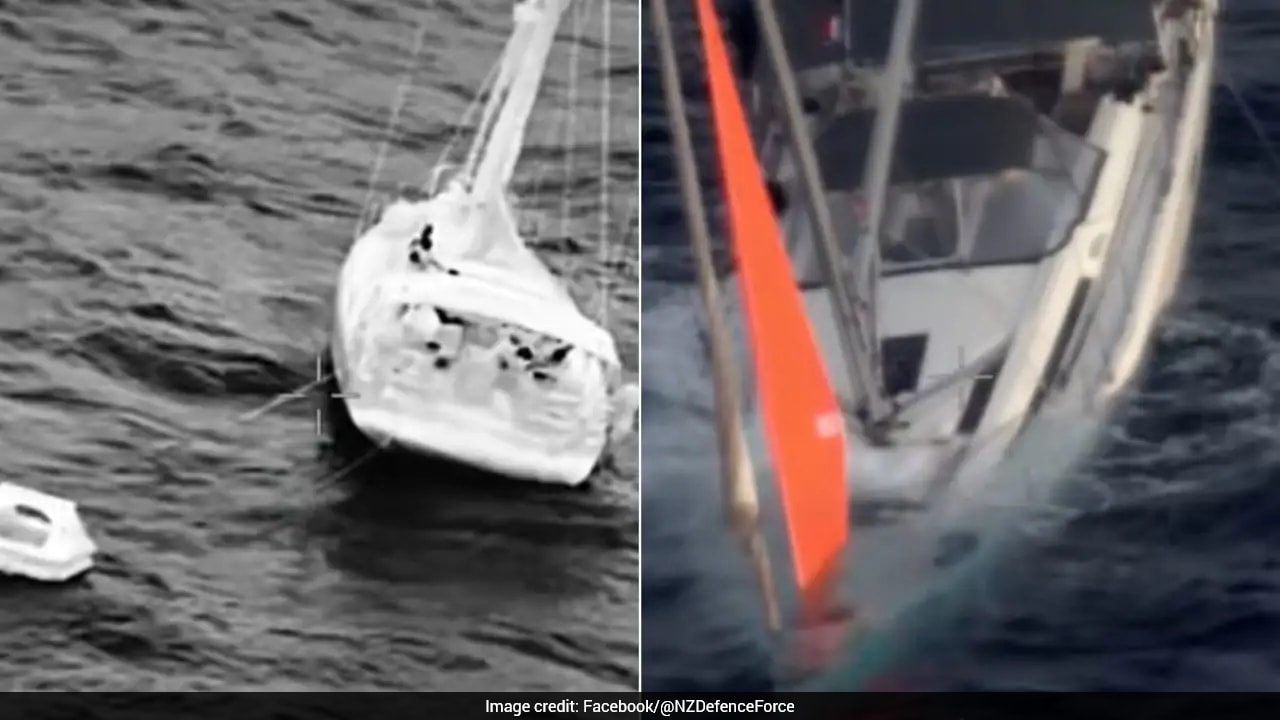
When a massive sperm whale collides with a yacht and leaves four people adrift in open water for seventeen hours, the headline writes itself in cold shorthand. Four sailors survive seventeen hours at sea after huge sperm whale sinks yacht. Clean. Shocking. Easy to scroll past between sips of coffee.
Yet shorthand flattens everything that actually keeps human beings alive when their vessel goes down. It skips the quiet arithmetic of fear. It skips the salt-heavy silence after the engines quit and the bilge stops winning. It skips the invisible stakes hanging over four people bobbing miles from shore while the ocean does what it has always done—keep moving without asking permission.
When the Ocean Reminds You Who Owns the Room
To understand what happens in the minutes after a catastrophic collision at sea, you have to strip away every romantic postcard of sailing. No sunset silhouettes. No breezy playlists. Just water, gravity, and time stretching out like wet rope.
Consider a hypothetical crew—let’s call them Elena, Tomas, Priya, and Sam—crossing deep offshore water on a mid-sized cruising yacht. This scenario is invented to illustrate the human mechanics of a real offshore sinking, though every physical pressure point here comes straight from documented maritime survival realities.
Elena has spent years on coastal passages and blue-water hops. She knows the sound of a healthy hull slicing through chop. She also knows the sickening shift in pitch when water begins rushing into a compartment faster than pumps can clear it.
For a moment, nobody speaks. Shock has a way of turning grown adults into statues staring at gauges that suddenly mean nothing. A sperm whale—the largest of the toothed whales, built like a battering ram of dense blubber, muscle, and spermaceti oil—does not need malice to ruin a boat. Most marine collisions are accidents of geometry, sound, or sudden surfacing. Size alone does the rest. A forty- or fifty-foot whale moving with momentum against a recreational hull creates forces that fiberglass and resin were never engineered to shrug off.
Then comes the tilt.
The deck angles. Gear slides with a metallic clatter that makes everyone flinch. Water rises over floorboards that felt solid ten minutes ago. Suddenly the boat is no longer a shelter; it is a countdown.
Why do some crews make it through a sinking while others unravel before help ever arrives? People often assume survival at sea comes down to pure toughness or Hollywood heroics. In practice, it usually comes down to mundane, unglamorous things practiced long before trouble shows up: keeping a grab bag within reach, staying calm enough to issue a clear distress call, clipping into harnesses, and resisting the urge to panic when cold water hits your shins.
Even so, knowing the rules on dry land is one thing. Living through seventeen hours of uncertainty is another.
The Anatomy of Seventeen Hours
Seventeen hours sounds short on a couch. You can sleep through eight of them, work through eight more, and still have an hour left over to burn dinner.
On open water, seventeen hours is an eternity stitched together out of small anxieties.
Hour one is adrenaline and triage. Grabbing what floats. Checking who is hurt. Watching the line between boat and sea vanish until only bobbing gear, life jackets, or a raft separates you from miles of cold water.
By hour four, the adrenaline begins to thin out, and something heavier moves in: exposure. Even in temperate waters, the sea pulls heat from a human body roughly twenty-five times faster than air at the same temperature. Hypothermia does not arrive like a villain twirling a mustache. It creeps in through shivering, clumsy fingers, slurred thoughts, and a quiet, dangerous temptation to just stop fighting the chop.
Think of survival at sea like carrying a leaking bucket across a wide yard. Every wave is a splash; every gust of wind is a tug at your elbow; every passing hour tests whether your focus is still intact enough to keep walking. If you let your mind race ahead to What if nobody hears us? or What if dark falls before a search plane spots us?, you burn energy you cannot afford to lose.
Tomas might keep scanning the horizon until his eyes burn from glare and salt spray. Priya might focus on keeping everyone talking, because silence in open water invites dread. Sam might feel a wave of nausea and guilt—replaying the exact second before impact, wondering if a ten-degree turn three minutes earlier would have changed everything.
That second-guessing is brutal. Humans are wired to hunt for patterns and blame, even when two massive creatures in a vast ocean simply crossed paths at the wrong instant.
By hour ten or twelve, light shifts, fatigue deepens, and hope starts feeling fragile. Every distant gull looks like a mast. Every shadow on a wave looks like rescue—until the swell drops and leaves nothing behind but empty blue.
And still, seventeen hours is how long four people had to hold together before rescue reached them. Seventeen hours of salt, motion, vigilance, and sheer refusal to surrender to despair.
Why Whales and Yachts Collide in the First Place
When people read about a sperm whale sinking a yacht, the next question almost always follows: Wait—why didn't the whale just swim away?
Fair question. Whales are not monsters lying in wait for sailboats. Sperm whales spend much of their lives diving deep into dark waters for squid and other prey, surfacing to breathe and recover. A yacht moving quietly—or running on auxiliary power—can enter a whale's path right as it rises, turns, or reacts to sound and pressure in the water.
Underwater acoustics are tricky, too. Sound travels fast and far in the sea, bouncing and bending in ways human ears never experience on land. A boat's hull creates vibrations that do not always announce a clear direction to a marine mammal surfacing after a deep dive.
Historically, whaling records from the nineteenth century are filled with accounts of large sperm whales ramming wooden ships—most famously the Essex in 1820, an event that helped inspire Moby-Dick. Back then, men were hunting whales with harpoons, turning the ocean into a battlefield where whales fought back.
Today, the context is radically different, yet the physics remain stubbornly unchanged. Modern boats are lighter and faster than heavy oak whalers, and their hulls are often thinner and more vulnerable to blunt impact. When forty tons of muscle and blubber meet a yacht hull, there is no negotiation. Physics wins every single time.
If I am being completely honest, there is something humbling—and slightly unsettling—about admitting how small human engineering looks out there. We build GPS chartplotters, satellite communicators, carbon masts, and sleek cabins, and we start believing we have tamed the water. Then one heavy body rises out of the swell, and we remember we are guests in someone else's living room.
The Invisible Stakes Nobody Sees in the Headline
A rescue report usually lists names, ages, boat type, hours elapsed, and condition upon arrival. Safe. Alive. Remarkable.
What goes uncounted are the aftershocks.
Surviving a near-death ordeal at sea rarely ends the moment solid ground appears under your boots. Land feels strange at first—almost too still, like the floor is lying to you. Sleep can come in jagged pieces, interrupted by the phantom sway of waves behind closed eyelids.
Then there is the financial and emotional wreckage of losing a vessel. For many sailors, a yacht is not just a toy or an asset; it is a home, a workshop, years of savings, and a piece of identity. Watching it go under takes a quiet toll long after the adrenaline fades.
Even more quietly, survival changes how a person looks at risk. Some sailors step back onto another boat weeks later, steady-eyed and sharper than before. Others feel a knot tighten in their chest every time weather turns gray or deep water opens ahead. Neither response is a failure. Both are human.
There is also a broader lesson for anyone who spends time on the water—or simply likes imagining a life on the waves. Preparation isn't pessimism. Carrying a properly maintained EPIRB or PLB, wearing a life jacket even when the sky looks friendly, briefing your crew on what to do before an emergency happens, and respecting deep-water habitats aren't signs of fear. They are love letters to the people waiting for you at home.
What Seventeen Hours Actually Proves
Seventeen hours at sea does not turn ordinary people into superheroes. Most survivors will tell you they were scared, cold, tired, and counting minutes just like anyone else would be.
What it proves is something quieter and more durable: human beings can endure far more ambiguity than they think when they stay anchored to one another and refuse to quit the present moment. Not tomorrow. Not when rescue arrives. Just this wave, this breath, this next hour.
Out there beyond the headland, where the water turns deep indigo and the horizon stretches unbroken in every direction, a single heavy thud can rewrite an entire voyage in seconds.
And when four people come back from seventeen hours of salt and uncertainty still breathing, the real story isn't just that the ocean took a boat. It's that the sea didn't get the rest of them.
Water keeps moving under every hull, dark and patient and vast, holding its breath until the next crossing begins.