The bread line in north Tehran always moves slowly, but on a Tuesday morning, the silence makes it feel frozen. Old men do not argue over the price of barbari bread. They stare at the asphalt. A taxi driver leans against his yellow Peugeot, his radio tuned to a low, rhythmic chanting that has replaced the usual morning talk shows.
Everyone is waiting for the sirens. Everyone is waiting for what comes after.
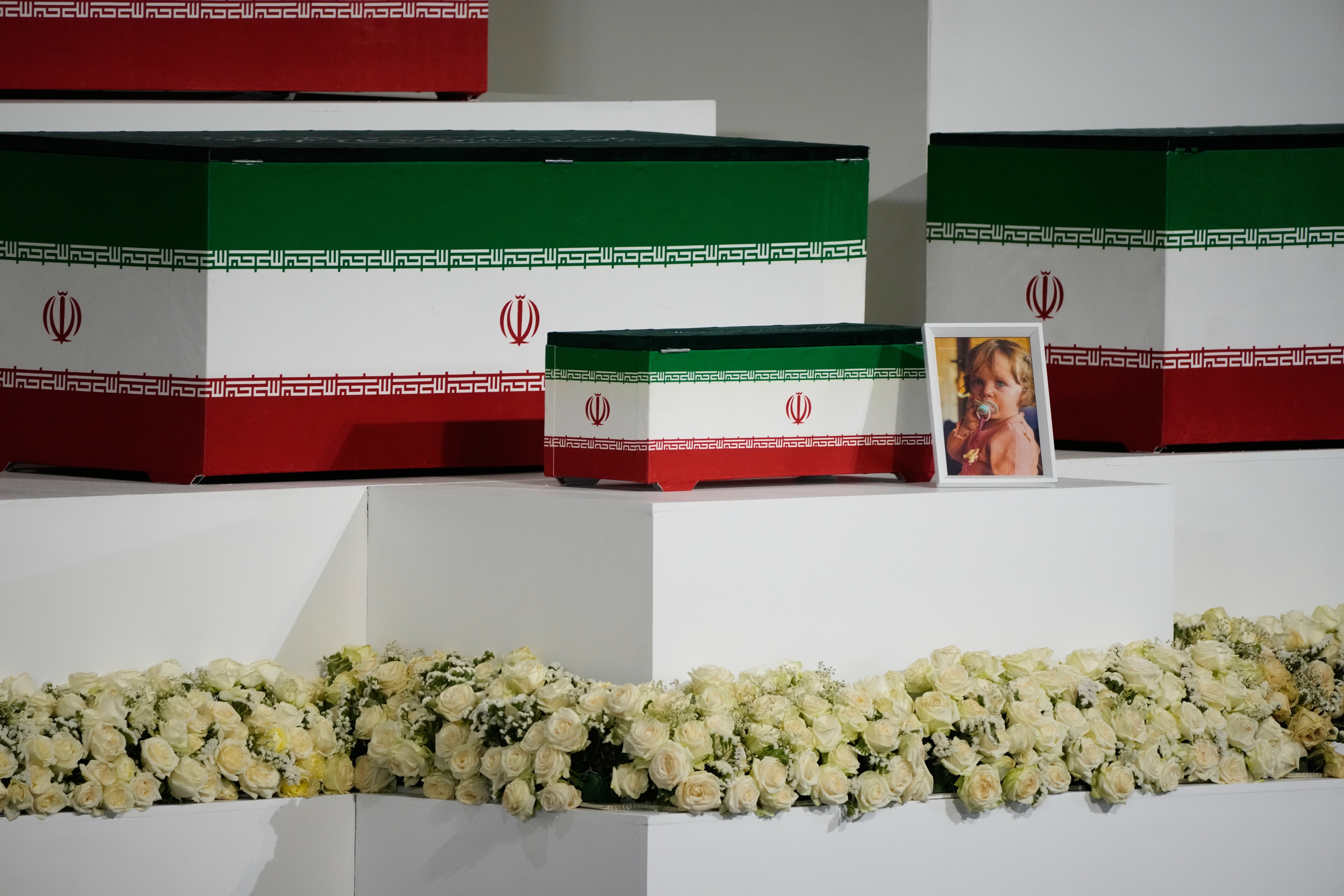
When a nation's absolute leader dies in the crucible of war, the machinery of state does not simply pivot. It stages an intervention on human grief and political survival. The announcement of Ayatollah Ali Khamenei’s death—shrouded in the chaos of military conflict—presents the Islamic Republic with its most volatile crossroad since 1989. The response is not a quiet transition in a closed room. It is a massive, meticulously choreographed, dayslong funeral spectacle designed to freeze time, consolidate power, and project absolute control over a fractured society.
To understand Iran right now, look past the troop movements and the diplomatic cables. Look at the logistics of the public mourning.
The Geography of Grief
A state funeral of this magnitude is theater on a continental scale. It is an exercise in managing millions of human bodies moving through tight urban spaces under the shadow of grief, anger, and profound uncertainty.
The blueprint for the coming days relies on a traveling ritual. The body must move. By transporting the casket through multiple major cities—likely starting in the holy sanctuary of Mashhad, moving through the theological heart of Qom, and culminating in the sprawling capital of Tehran—the regime constructs a physical corridor of legitimacy.
Consider a mid-level municipal planner in Tehran, let's call him Hamid. For years, Hamid’s job involved mundane logistics: bus routes, garbage collection, the timing of traffic lights on Vali-e-Asr Street. Suddenly, Hamid is handed a map that dictates the emotional trajectory of a nation. He must coordinate the distribution of millions of free bottles of water. He must secure open plazas against potential drone strikes or domestic sabotage. He must ensure that the black cloth draping the city squares does not look hurried or cheap.
For the authorities, the crowd is the ultimate shield and the ultimate weapon.
Every square meter of packed humanity photographed from a state helicopter is an argument directed at Washington, Tel Aviv, and the dissidents watching from internal exile. The message is simple: We are still here.
But the tension is suffocating. When millions gather under the pressure of wartime anxiety, the line between collective mourning and collective panic is razor-thin. A single loud bang, a rumor of an incoming missile, or a chanted slogan that veers off-script can turn an organized procession into a stampede or a riot. Hamid does not sleep. He drinks tea, stares at monitors, and prays the crowd remains compliant.
The Ghost in the Assembly
While the street belongs to the mourners, the future belongs to an elite body of eighty-eight elderly clerics known as the Assembly of Experts. Their task is supposed to be spiritual and constitutional. In reality, it is a high-stakes poker game played in the dark.
The standard narrative suggests that a successor is chosen through smooth, divinely guided consensus. The reality is far more human, driven by survival instincts and deep-seated rivalries. Imagine the heavy silence in those closed sessions. The air smells of rosewater and anxiety.
The death of a Supreme Leader during an active war strips away the luxury of prolonged debate. The factional divides within the Iranian establishment—between the traditional conservative clerics, the pragmatic technocrats, and the ultra-hawkish commanders of the Islamic Revolutionary Guard Corps (IRGC)—must be ironed out immediately.
- The Clerical Faction: Seeks to maintain the supremacy of theological rule, ensuring the next leader possesses the necessary religious credentials.
- The IRGC Command: Demands a leader who will not blink in the face of foreign aggression, prioritizing military readiness over ideological purity.
The days of public mourning provide these men with a crucial commodity: time.
While the public is focused on the funeral processions, the chanting, and the historical weight of the moment, the real architecture of the next era is hammered out behind closed doors. The lengthy funeral is not just for the public to say goodbye. It is a deliberate pause button. It keeps the country occupied, emotional, and under tight security protocols while the elite decide who will hold the keys to the state.
The Double-Edged Sword of Memory
For the millions of young Iranians who have spent the last decade navigating economic strangulation and social restrictions, this dayslong ritual evokes a complex matrix of emotions. They are not a monolith.
There are those who genuinely mourn, seeing the late leader as a symbol of resistance against foreign intervention, a steady hand in a chaotic region. To them, the funeral is a solemn duty, a moment to reaffirm their identity in a hostile world. They weep openly, clutching photographs, foundering in a deep sense of vulnerability.
Then there are those who watch the state television broadcasts with a cold, detached numbness. They see the mandatory closures of businesses, the suspension of normal life, and the heavy deployment of riot police on every corner as an occupying force. For this demographic, the elaborate funeral is an expensive illusion, a forced performance of loyalty paid for by a populace that can barely afford eggs.
The regime understands this fracture perfectly.
The massive security presence required for a state funeral doubles as a preemptive counter-insurgency measure. Every checkpoint set up to guide mourners also serves to monitor potential agitators. Every drone hovering over the crowd to capture dramatic footage for the evening news is also looking for signs of dissent. The state uses the sacred nature of mourning as an absolute shield; to disrupt a funeral is to commit sacrilege against the faith itself, raising the stakes of protest to a lethal level.
The Horizon Beyond the Casket
By the fifth or sixth day, the public energy inevitably shifts. Exhaustion sets in. The rhythm of the chanting loses its sharp edge, turning into a droning undertone that fills the empty spaces of the city. The black banners begin to gather dust from the Tehran smog.
The true test of this entire apparatus occurs the morning after the burial.
When the international dignitaries have flown home, when the streets are washed clean of the discarded plastic cups and crushed portrait posters, the country will wake up to a cold reality. The war that claimed the leader will still be humming on the borders. The currency will still be struggling. The fundamental questions about the country’s direction will remain unanswered.
A state funeral can pause history, but it cannot rewrite it.
The coming days will show a nation performing its own survival strategy on the world stage, using the ancient, powerful language of public grief to anchor a vessel caught in a geopolitical storm. Whether that anchor holds depends entirely on what happens when the silence finally ends.