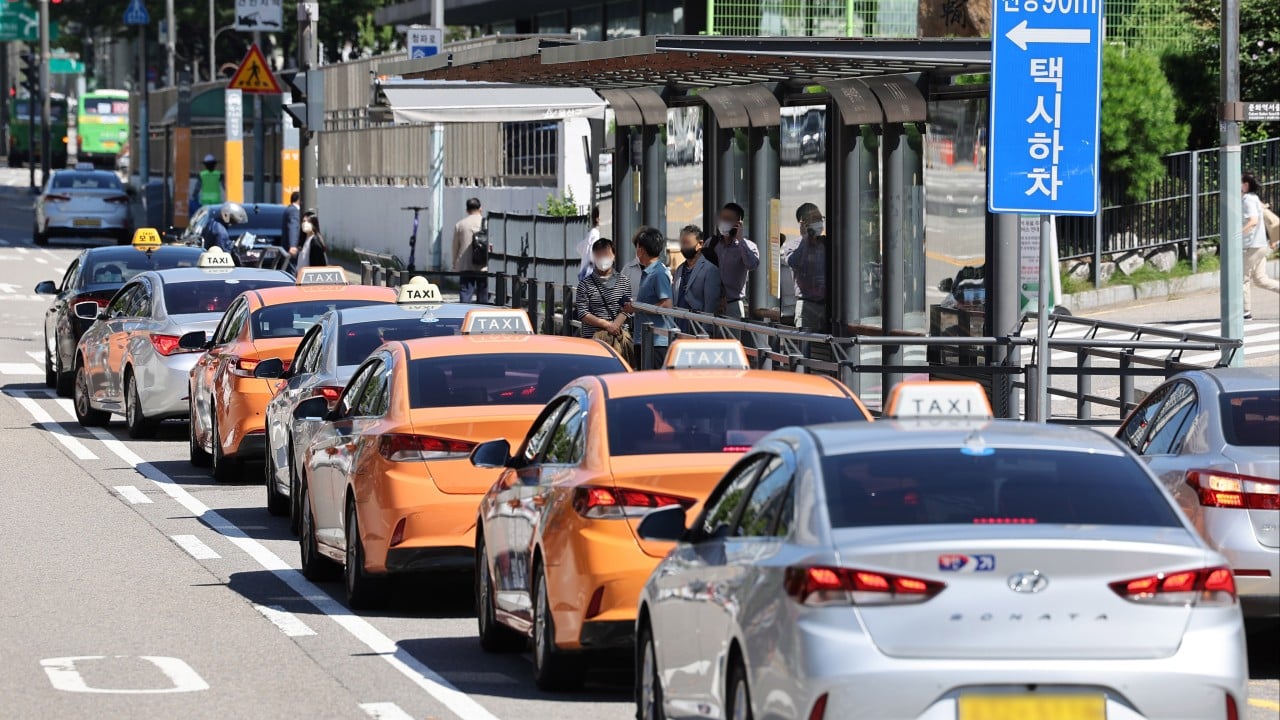
South Korea’s capital is moving to stop Seoul taxi overcharging through targeted enforcement sweeps, multilingual QR code reporting slips at major transit hubs, and stricter penalties against predatory drivers. When a driver demands 45,000 won—roughly $32—for a short cross-town hop from Myeong-dong to Hongdae that should cost a fraction of that amount, the damage goes far beyond a single visitor’s wallet. It corrodes trust in one of the world’s most technologically advanced urban transit systems at the exact moment tourism is driving economic recovery.
I have covered urban transport policy and regulatory cat-and-mouse games long enough to know that announcement season rarely equals reform season. City hall launches a high-visibility crackdown, inspectors fan out around terminals and nightlife districts, television crews catch a rogue cabbie red-handed, and headlines flare. Then the cameras move on, and the structural incentives that tempt drivers to bend the meter quietly reassert themselves.
Understanding why Seoul taxi overcharging persists requires looking past individual bad actors. It demands examining fare structures, language barriers, dispatch economics, and the friction of filing a complaint when you are standing on a curb with luggage and a flight to catch.
How Predatory Fares Actually Happen on Seoul Streets
Most tourists picture a cartoon villain twisting a rigged meter. Reality on the ground is subtler and far more varied.
Drivers exploit information asymmetry. A visitor who does not speak Korean, cannot read Hangul street signs, and has never looked up Seoul’s metered rate structure is operating blind. For a standard Seoul taxi, the base fare starts at 4,800 won for the first 1.6 kilometers, adding 100 won per 131 meters after that, with late-night base fares climbing between 5,800 won and 6,700 won plus time-of-day surcharges that reach up to 40 percent during peak late-night hours between 11 p.m. and 2 a.m. When a driver quotes a flat sum instead of running the meter—or claims the meter is malfunctioning—the passenger has no quick way to verify whether 30,000 won is a wild rip-off or a legitimate late-night cross-city fare.
Consider a hypothetical example to see how quickly the math tilts against a traveler. Suppose two first-time visitors leave a popular restaurant in Myeong-dong after 11 p.m. heading toward Hongdae. A driver waves them in, skips engaging the meter, takes a roundabout arterial route through heavy traffic, and asks for 45,000 won in cash while waving off a credit card. Exhausted after a long day, the passengers pay just to get out of the car. Even if they suspect something is off, proving an un-metered verbal quote without a clear receipt or full license plate number becomes an uphill battle once they walk away.
Other tactics are equally common and frustrating. Some drivers refuse short rides to foreign passengers, which violates South Korean law, because a quick hop through downtown traffic yields low revenue compared to a long airport run. Others tack on phantom extra charges at drop-off or take unnecessarily circuitous routes that pad the legitimate meter.
Why Enforcement Sweeps Struggle to Stick
City crackdowns—including multi-month enforcement campaigns focused on Incheon and Gimpo airports alongside high-traffic districts like Myeong-dong—do real work when inspectors are visibly stationed at pickup zones. Authorities have uncovered hundreds of violations during routine and special inspections covering both overcharging and illegal ride refusals.
Yet periodic sweeps face a classic enforcement bottleneck. Seoul has tens of thousands of taxis moving across a dense metropolis around the clock. Inspectors cannot shadow every cab at every curb.
Moreover, administrative fines often feel like a cost of doing business to the worst offenders. If a driver pockets an extra 25,000 won or 35,000 won on a handful of rides and faces a modest penalty—or escapes detection because a tourist boarded a flight home without filing a formal report—the expected payoff does not deter repeat behavior.
The Hidden Economics Behind Driver Behavior
To judge city policy fairly, you have to look at the pressure inside the cab. Taxi driving in major cities is grueling work marked by long shifts, rising operating costs, congestion, and fierce competition from app-based mobility platforms.
Many drivers play by the rules every single shift. They run the meter cleanly, accept card payments without complaint, and absorb the frustration of gridlock like any other working professional. Painting the entire workforce with the same brush is lazy journalism and bad economics.
Still, economic friction shapes behavior at the margins. When a driver is stuck in bumper-to-bumper traffic for forty minutes only to collect a modest metered fare, the temptation to quote a rounded, inflated "foreigner price" to an unfamiliar passenger spikes—especially late at night when demand is high and options feel scarce.
App dispatch has narrowed that gap considerably. Platforms like Kakao T and Uber provide upfront pricing or transparent trip tracking and digital records, which strips away much of the guesswork that street hailing creates. Yet street hailing outside busy entertainment hubs, train stations, and airport curbs remains deeply ingrained, and tourists who do not set up local ride apps before landing often default to raising a hand on the sidewalk.
| Factor | Street Hailing Without App | App-Dispatched Ride | Official Crackdown & QR Reporting |
|---|---|---|---|
| Fare Transparency | Low if driver skips meter or quotes flat rate | High via upfront estimates and digital logs | Improves accountability after the fact |
| Language & Route Risk | High when directions rely on speech or paper notes | Lower when pickup and drop-off pins are mapped | Multilingual QR forms and hotlines bridge gaps |
| Paper or Digital Trail | Requires asking for receipt and noting plate | Automatic trip record in app history | Essential for authorities to trace violators |
| Immediate Deterrence | Weak unless inspectors are physically present | Moderate via ratings and account tracking | Strongest during active field inspections |
What City Hall Gets Right—and Where the Gaps Remain
Seoul’s push to make reporting easier deserves credit. Distributing QR code complaint cards at airports and supporting reporting in English, Chinese, and Japanese lowers the barrier for visitors who previously had no idea how to navigate municipal bureaucracy from a hotel room. Pairing those tools with established channels like the 120 Dasan Call Center and the 1330 Travel Helpline gives travelers clear escalation paths depending on whether they need local municipal follow-up or broader tourist assistance.
There is a catch, though. Reporting a scam after the ride ends is reactive.
A traveler who gets overcharged on their final night in Seoul rarely wants to spend their last morning tracking down receipts, verifying license plate digits, and translating route details for an administrative review. If the burden of evidence rests almost entirely on jet-lagged visitors, many legitimate violations will go unpunished simply because people cut their losses and move on.
There is also a gray area that catches honest travelers off guard. Not every fare that looks unusual at first glance is illegal. Approved specialty fare plans, toll roads, late-night tiers, and cross-jurisdictional rules can push a legitimate total higher than a quick mental estimate. Good regulation—and good reporting—separates genuine fraud from misunderstandings over complex fare rules.
Practical Steps That Actually Protect Riders
Policy changes take time to filter down to every curb. Travelers and city planners alike benefit from clear, unglamorous habits that close the loopholes drivers rely on:
- Use app dispatch whenever possible: Booking through established ride apps creates a digital record and reduces awkward haggling over rates or destinations.
- Insist on the meter immediately: If a driver quotes a flat sum on a standard cab ride without an approved fixed-fare arrangement, look for another vehicle.
- Capture plate numbers and receipts: A photo of the license plate and a printed or digital receipt turn a vague complaint into an actionable case for municipal investigators.
- Know the right number for the moment: Use 120 or the city’s multilingual QR reporting system for Seoul fare disputes, 1330 for broader travel support, and 112 only if there is an immediate safety threat or unlawful restraint.
Real progress against Seoul taxi overcharging will not come from a single seasonal sweep or a stack of QR cards at the arrivals gate. It will come when bad drivers know that an inflated fare carries swift, certain consequences—and honest drivers no longer feel squeezed by a system that rewards shortcuts over straight meters.



