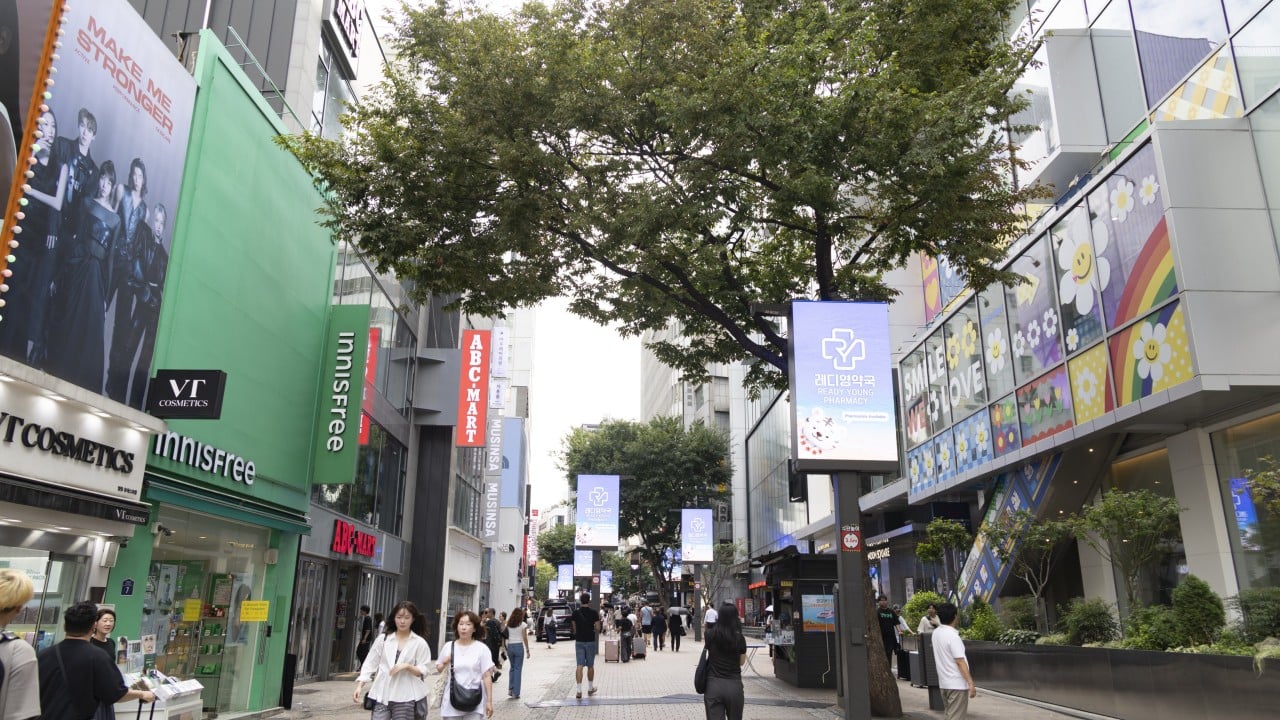
The Bank of Korea has moved once more, pushing its benchmark interest rate to 3% in a direct effort to cool a runaway housing market and persistent inflationary pressures. This consecutive tightening cycle highlights a central bank desperately trying to anchor an economy caught between an explosive semiconductor export boom and a speculative real estate fever concentrated heavily in the capital.
Headline inflation sits at 2.8%, while core inflation has climbed to 2.6%, comfortably above the official 2% target. Yet, consumer price numbers alone do not capture the panic spreading through Seoul's financial corridors. Residential property values in the capital surged by historic margins, with monthly jumps hitting levels unseen in five years. For policymakers, waiting on the sidelines was no longer an option. Discover more on a similar subject: this related article.
The Semiconductor Paradox
South Korea operates on a two-speed economic engine. On one side stands the global technology export machine, supercharged by an insatiable international appetite for artificial intelligence hardware. Second-quarter gross domestic income expanded at its fastest pace in decades, driven entirely by this external trade windfall.
This massive influx of corporate revenue trickles down into domestic circulation, fueling domestic demand and job creation in high-value sectors. Money is moving through the upper tiers of the economy with exceptional velocity. Additional analysis by MarketWatch delves into similar perspectives on this issue.
At the exact same time, ordinary households face a brutal cost-of-living squeeze. Energy prices, shaped by persistent geopolitical instability in the Middle East, continue to bleed into everyday goods. When external trade riches combine with sticky domestic costs, the central bank faces a mandate to drain liquidity before wage-price spirals become permanent fixtures of the economic landscape.
The Seoul Real Estate Addiction
Property remains the default religion of South Korean household wealth. Generations of citizens have funneled their life savings into concrete and land, viewing Seoul apartments as the only reliable hedge against currency depreciation and systemic volatility.
When borrowing costs dropped during previous economic support cycles, capital flooded back into residential real estate. Even with tighter macroprudential controls and stricter debt-to-income caps, buyers have consistently found ways to leverage debt. Speculative purchasing in prime districts pushed month-on-month price growth to alarming heights, shutting out younger demographics and widening social inequality.
Monetary policy is a blunt instrument. Raising the base rate increases mortgage payments for millions of over-leveraged families, but policymakers calculate that the alternative—an uncontrolled asset bubble followed by a systemic financial crash—is vastly worse.
The Road Ahead for Borrowers
Commercial banks are already adjusting their lending desks to reflect the higher base rate. Fixed and variable mortgage rates are drifting upward, putting immediate pressure on household disposable income.
Consider a hypothetical homeowner with a standard floating-rate mortgage of five hundred million won. A quarter-percentage-point increase translates directly into thousands of additional annual interest payments, forcing discretionary cutbacks on retail spending, dining, and non-essential services.
This domestic cooling effect is precisely what the central bank desires. By making debt more expensive, monetary authorities hope to starve the housing market of speculative oxygen without entirely flatlining industrial momentum.
Market Realities and Forward Projections
Financial markets are already pricing in additional tightening moves before the year concludes. Central bank forward guidance indicates that the policy committee remains vigilant, ready to act if housing metrics refuse to stabilize.
The primary vulnerability lies in the fragility of household debt ratios, which rank among the highest in the developed world. Every upward tick in the policy rate tests the breaking point of marginal borrowers who bought near the peak of the previous cycle.
South Korea is walking a narrow financial ridge. The central bank has signaled that safeguarding macroeconomic stability outweighs the short-term pain inflicted on mortgage holders. Whether this thirty-basis-point adjustment proves sufficient to break the psychological grip of Seoul real estate mania will determine the financial health of the nation for the remainder of the decade.