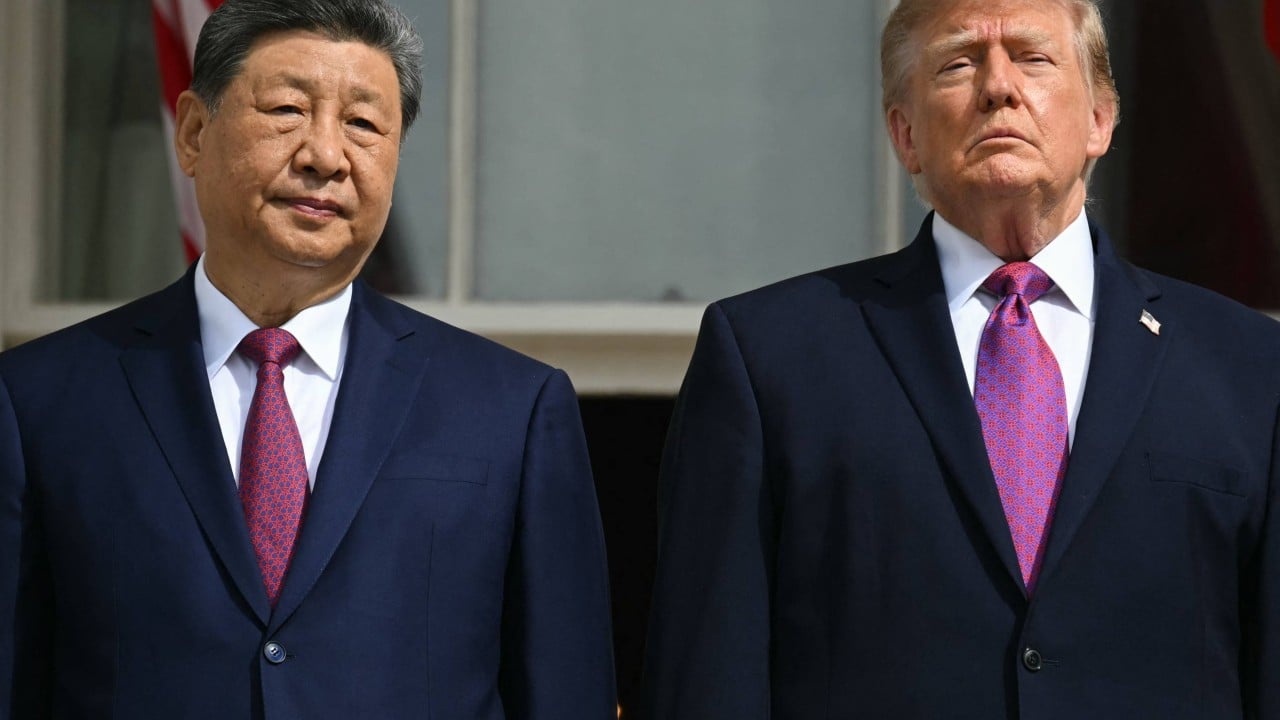
Diplomatic phrasing rarely arrives by accident. When senior officials in Washington and Beijing begin swapping heavy-handed rhetoric for clinical descriptors like "strategic stability" and institutional frameworks, veteran observers know the real work is happening beneath the syntax. The recent shifts in bilateral terminology, punctuated by high-level summits and institutional dialogues, are often heralded in mainstream circles as a breakthrough. That reading misses the point entirely. This is not a softening of geopolitical rivalry; it is an institutionalization of managed friction.
Strip away the communiqué language, and the structural realities of the relationship remain unchanged. Both governments operate under an unyielding imperative of domestic political survival and technological supremacy. For Washington, the priority is maintaining enforcement mechanisms and reciprocity demands without triggering an unmanaged economic shock. For Beijing, the goal is securing diplomatic recognition of its core interests and carving out operational space while pushing back against targeted technological containment. The new lexicon provides a convenient diplomatic container for these opposing vectors, allowing both sides to talk about stability while locking in long-term competition. In other updates, we also covered: What the Flydubai Cockpit Attack Lawsuit Means For Aviation Security.
To understand why this new vocabulary matters, one must look at how past semantic resets functioned. During earlier administrative cycles, terms like "strategic reassurance" or "great power competition" served as signposts for shifting grand strategies. Today's terminology reflects a world that has moved past the illusion of convergence. Neither side expects the other to liberalize or capitulate. Instead, the focus has shifted toward guardrails designed to prevent tactical misunderstandings from cascading into systemic crises, particularly across sensitive domains like artificial intelligence and regional security.
Consider the mechanics of the recent bilateral frameworks. When diplomats agree to terms that emphasize mutual operational parameters, they are creating a shared glossary for conflict management. This is distinct from conflict resolution. A framework for managing competition does nothing to eliminate the underlying contest over semiconductor supply chains, maritime boundaries, or standard-setting bodies. It merely establishes the rules of engagement for the friction. Multinational corporations and global investors who interpret these diplomatic thaw signals as a green light for unchecked expansion are misreading the risk matrix. The structural barriers to trade and technology transfer are baked into the architecture of both economies, regardless of how neatly phrases are managed in joint statements. NBC News has analyzed this fascinating topic in great detail.
The danger of this semantic evolution lies in its potential to obscure reality. When the vocabulary sounds stable, public attention wanes, and the urgency required to address foundational vulnerabilities is lost. Domestic constituencies in both countries demand firmness from their leaders, creating a permanent ceiling on how cooperative official rhetoric can genuinely become. Consequently, the new diplomatic phrasing functions primarily as a pressure release valve, designed to keep channels open for transactional necessity while the deeper race for geopolitical dominance accelerates behind closed doors.
Watch the concrete metrics, not the press releases. Capital flows, technology export enforcement actions, and bilateral supply chain audits tell the true story of where the relationship stands. The words may change to suit the diplomatic calendar, but the architecture of competition is permanent.