The camera lens of a smartphone is about five millimeters wide. Yet, during the swirl of a high-stakes international summit, that tiny piece of glass can swallow an entire room of seasoned diplomats, nuclear-armed leaders, and billions of dollars in geopolitical leverage.
We are accustomed to seeing world leaders framed by marble pillars. We expect them behind heavy mahogany desks, surrounded by flags, their expressions frozen in calculated neutrality. It is a theater of distance. But at the G7 summit in Apulia, Italy, the script was tossed aside for a fleeting five seconds.
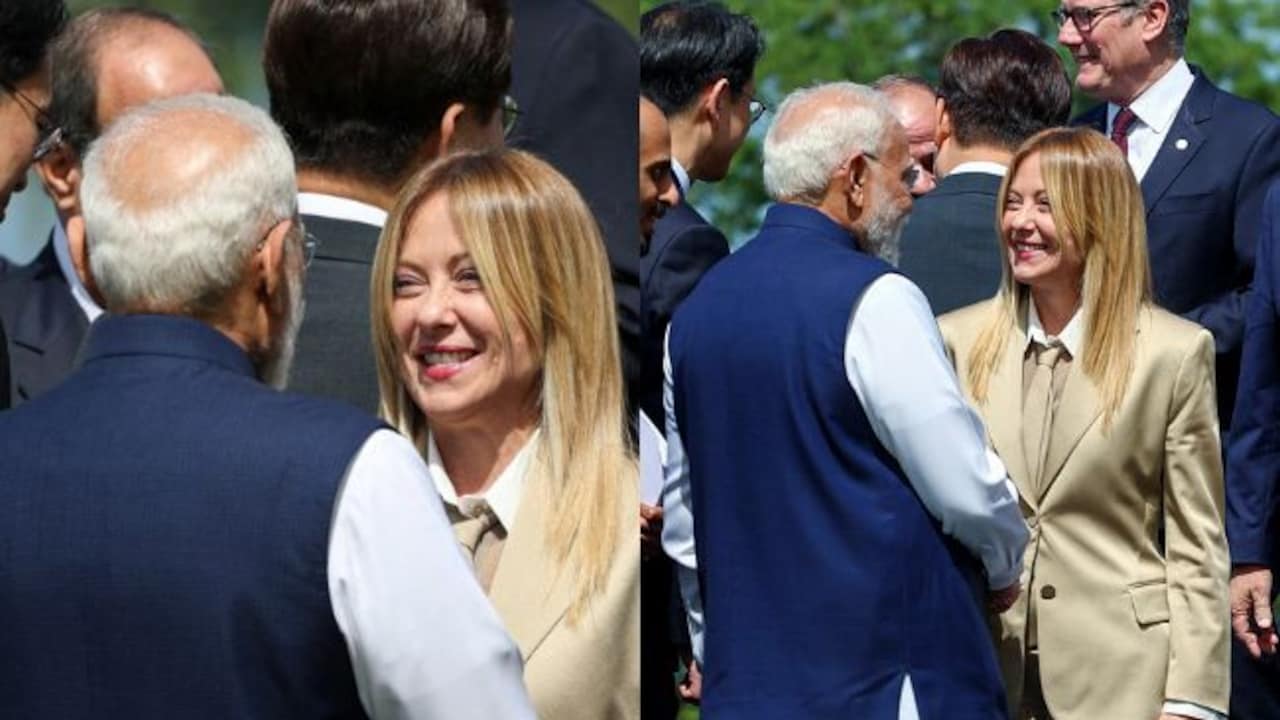
Italian Prime Minister Giorgia Meloni held up her phone. Standing beside her was Indian Prime Minister Narendra Modi. Both leaned in, flashed brilliant, practiced smiles, and waved.
"Hello from the Melodi team," Meloni said, laughing softly.
It was a flash of pure digital-age showmanship. Within minutes, the clip surged across timelines, racking up millions of views, generating memes, and dominating headlines that were supposed to be about global trade routes and security pacts. To the casual scroller, it was a lighthearted moment between two powerful politicians.
Look closer.
Beneath the casual warmth of a viral video lies a masterclass in modern political survival, branding, and the changing architecture of global power. The viral video did not happen in a vacuum. It was the deliberate humanization of cold statecraft.
The Weight Behind the Smile
To understand why a simple five-second video matters, you have to look at the atmosphere of a G7 summit. These gatherings are notoriously grueling. The air in the briefing rooms is thick with the tension of competing national interests, economic anxieties, and the shadow of global conflicts. Leaders walk from meeting to meeting flanked by tight-lipped security details, their faces masks of intense concentration.
For Giorgia Meloni, hosting the summit on her home turf in Italy was a massive test of leadership. For Narendra Modi, arriving fresh off a historic and grueling domestic election, it was a moment to reaffirm India’s position as an indispensable global player.
Then came the phrase that launched a thousand internet commentaries. Reports emerged of Meloni playfully acknowledging the internet's obsession with their diplomatic pairing, reportedly telling Modi that they were the "most famous couple" on social media.
It was a sharp, brilliant piece of self-awareness.
Politicians usually pretend the internet does not exist, or they treat it with stiff, committee-approved caution. Meloni did the opposite. She leaned into the joke. By acknowledging the online fandom—dubbed "Melodi" by thousands of creators across Instagram and X—she instantly bridged the massive gulf between elite backroom diplomacy and the average citizen scrolling on a phone during a lunch break.
The Geometry of Power
International relations often feel like geometry. Lines are drawn, angles are calculated, and alliances are formed based on rigid formulas of mutual benefit. Italy needs strong economic ties outside of the European Union; India seeks deeper integration with European markets and technology.
But humans do not connect with geometry. We connect with faces.
Think about the last time you watched a traditional press conference. Two leaders stand at podiums fifteen feet apart. They read from binders. Their words are vetted by legions of lawyers and policy advisors. It is safe. It is also entirely forgettable.
When Meloni and Modi stepped into the frame of a front-facing camera, they dissolved that distance. The smartphone camera forces intimacy. You have to stand shoulder-to-shoulder. You have to tilt your heads toward each other. In the language of visual psychology, that proximity signals deep trust and alignment far more effectively than a thousand-page joint statement on trade tariffs.
This is not to say the trade treaties do not matter. They are the bedrock of international relations. But in the court of public opinion, the image precedes the policy. If the public believes two leaders genuinely like and respect each other, the complex, often unpopular compromises of international diplomacy become far easier to sell to voters back home.
The Currency of the Digital Age
We live in an attention economy, and politicians are fighting for a share of that market just like everyone else. The traditional media landscape is fragmented. Young voters do not sit down to watch the evening news at 6:00 PM. They do not read policy white papers.
They watch reels. They share shorts.
The "Melodi" phenomenon is an example of a political strategy that meets the audience exactly where they are. By creating a moment that was tailor-made for algorithmic distribution, the two leaders ensured that their meeting was the most talked-about event of the summit.
Consider the mechanics of the video itself. It was brief. It was vertical. It featured a candid, unscripted laugh. It lacked the polished, sterile look of official government broadcasts. It felt real, even if it was executed by two of the most media-savvy individuals on the planet.
This approach carries risks. Critics often argue that this style of "selfie diplomacy" reduces complex global governance to mere entertainment, substituting style for substance. They worry that serious discussions about climate change, economic inequality, and regional stability get lost in the noise of viral trends.
That skepticism is valid. A smile cannot fix a broken supply chain. A viral video cannot negotiate a peace treaty.
Yet, dismissing these moments as mere fluff misses the point of how power operates today. Leadership is no longer just about commanding armies or signed documents; it is about commanding the narrative. The leader who controls the timeline controls the perception of strength.
The Unspoken Alliance
Beyond the optics, the camaraderie displayed in the video signals a deeper, shifting reality in global politics. India’s influence on the world stage has been growing exponentially, positioning the nation as a crucial bridge between the Global South and the West. Italy, positioned at the heart of the Mediterranean, seeks to be a primary interlocutor for that rising power.
When Modi and Meloni stand side by side, laughing for a phone screen, they are sending a message to their domestic audiences and their global rivals alike. To the voters in Rome and New Delhi, the message is one of stability, mutual respect, and international prestige. To the rest of the world, it is a display of a highly functional, friction-free partnership.
The real work of the G7 happened behind closed doors, in long sessions where advisors argued over semicolons in communiqués. Those documents will be filed away in archives, read only by academics and historians.
But the image of two leaders smiling into a five-millimeter lens will remain in the collective digital memory, a vivid reminder of a moment when the highest echelons of global power felt, for a split second, entirely human.