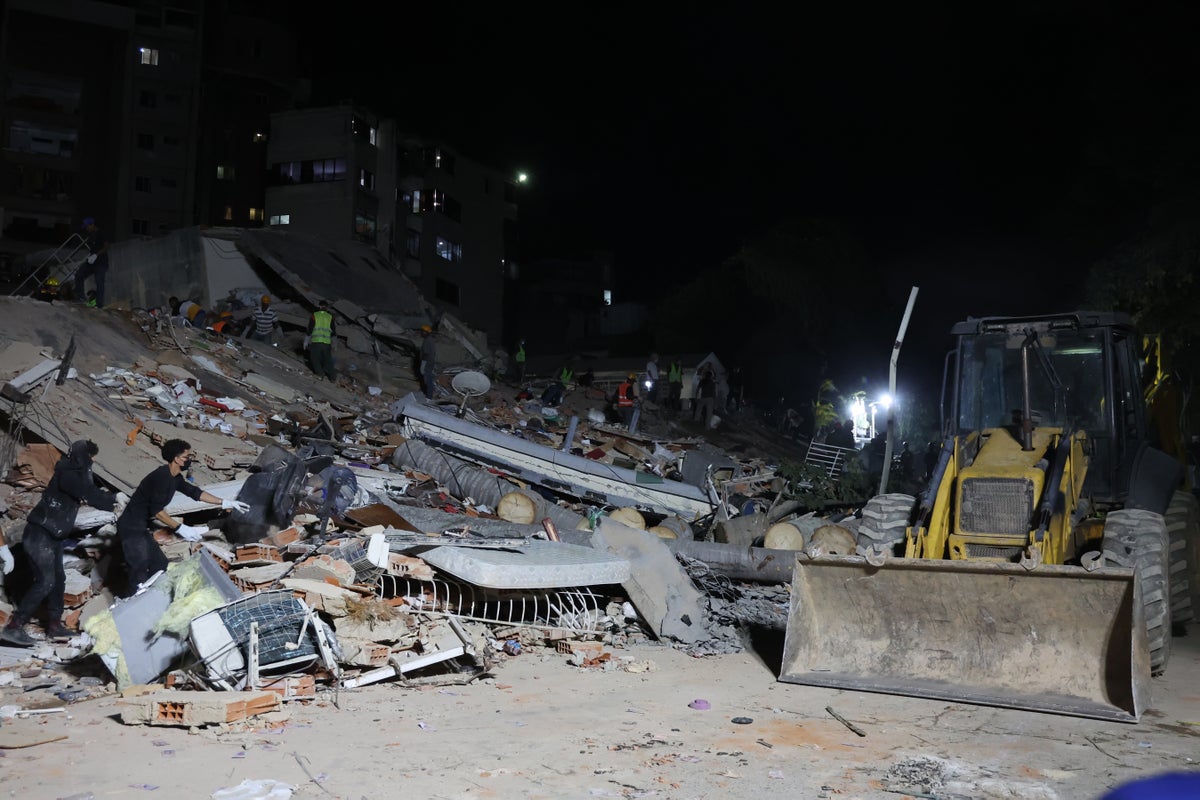
Northern South America represents one of the most complex tectonic environments globally, characterized by the oblique collision and strike-slip interaction between the Caribbean and South American plates. Media coverage of regional seismic events frequently relies on sensationalism or vague terminology to explain unexpected devastation. To understand the true risk profile of this zone, particularly regarding the phenomenon known as an earthquake "doublet," requires evaluating the precise mechanics of stress transfer, fault geometry, and structural vulnerability.
The core issue is not simply that the region experiences earthquakes, but that the structural configuration of northern Venezuela predisposes it to cascading failures. By deconstructing the physical mechanisms of fault ruptures and the socio-economic variables of urban vulnerability, we can map the true systemic risk of the region. Building on this topic, you can find more in: Information Asymmetry and State Blockades The Structural Collapse of Crisis Communications in Venezuela.
The Mechanics of Structural Duplicity: Defining the Earthquake Doublet
A standard seismic event follows a predictable decay pattern: a mainshock occurs, followed by a series of lower-magnitude aftershocks that decrease in frequency and intensity over time according to Omori’s Law. An earthquake doublet disrupts this empirical model.
A doublet occurs when two major earthquakes of comparable magnitude happen close to each other in both time and space, typically within days or weeks, and along interrelated fault segments. Experts at NPR have also weighed in on this situation.
To differentiate a true doublet from a standard mainshock-aftershock sequence, seismologists analyze three specific criteria:
- Magnitude Parity: The secondary event possesses a magnitude ($M_w$) virtually identical to or occasionally exceeding the first, typically within 0.1 to 0.3 units on the moment magnitude scale.
- Spatial Proximity: The hypocenter of the second event is located outside the immediate slip zone of the first rupture but remains within the modified strain field, usually on an adjacent fault or a distinct segment of the same fault system.
- Temporal Clustering: The time interval between events is shorter than the expected background seismicity rate would dictate, yet delayed enough to indicate that the second rupture was triggered by static or dynamic stress transfer rather than instantaneous propagation.
The causal mechanism behind doublets is governed by Coulomb Stress Transfer. When a fault ruptures, it releases strain energy along its slipped surface. However, this displacement shifts the mechanical load onto the ends of the rupture zone, increasing the shear stress on adjacent, unruptured fault patches. If these neighboring patches are already locked and near their critical failure threshold, the imported stress triggers a second independent rupture. This creates a compounding hazard profile; structures weakened by the initial shock are subjected to a second, equally violent period of acceleration before any remediation can occur.
The Tectonic Architecture of the Caribbean-South American Boundary
Venezuela's high susceptibility to destructive seismic activity is a direct consequence of its positioning along the plate boundary zone between the Caribbean Plate and the South American Plate. This boundary does not consist of a single clean line, but rather a broad, deformed zone roughly 100 kilometers wide that accommodates a relative right-lateral strike-slip motion of approximately 20 millimeters per year.
This plate motion is distributed across three primary, interconnected fault systems that cut through the most heavily populated regions of Venezuela:
The Boconó Fault System
Running southwestern to northeastern along the Mérida Andes, this system acts as a strike-slip boundary that accommodates the northward escape of the Maracaibo block. It is characterized by high seismicity and deep valleys that channel population centers directly along the fault trace.
The San Sebastián Fault System
Positioned just offshore along the northern coast, this system accommodates the lateral movement of the Caribbean plate past the central Venezuelan mainland. Its proximity to Caracas creates a severe near-source shaking hazard for the capital city.
The El Pilar Fault System
Extending through the eastern stretch of the country across the Sucre state and the Gulf of Paria, this fault accommodates highly shallow strike-slip movements. The shallow depth of these events means that even moderate magnitudes transfer immense energy directly to the surface.
The geometry of these fault systems includes numerous step-overs, en echelon fault strands, and micro-plates. This fragmented architecture is highly conducive to triggering doublet events. When one segment of the El Pilar fault slips, the pull-apart basins and step-overs smoothly transfer the strain directly to adjacent segments, multiplying the probability of a secondary major rupture.
The Amplification Framework: Subsurface and Built Environment Dynamics
The hazard of a seismic event is a function of geology; the disaster itself is a function of human engineering and geography. In Venezuela, the physical threat of tectonic ruptures interacts with two critical amplification vectors: sedimentary basin amplification and structural engineering deficits.
Sedimentary Basin Amplification
Large portions of Venezuela’s urban infrastructure, including Caracas, are built within deep sedimentary basins. When seismic waves transition from high-velocity bedrock into low-velocity, unconsolidated alluvial sediments, the waves slow down. To conserve energy, their amplitude increases dramatically.
$$A \propto \frac{1}{\sqrt{\rho v}}$$
Where $A$ is amplitude, $\rho$ is material density, and $v$ is seismic wave velocity. As velocity drops within the basin fills, amplitude spikes. Furthermore, the geometric boundaries of these basins trap seismic energy, causing the waves to reflect back and forth. This prolongs the duration of the shaking and creates resonance effects that selectively destroy buildings of specific heights.
The Structural Vulnerability Index
The built environment across major Venezuelan cities presents a compounding vulnerability due to decades of economic stagnation and inconsistent enforcement of building codes (such as the MINDUR/FUNVISIS standards). The vulnerability is segmented across two distinct urban typologies:
- Informal Settlements (Barrios): Millions of residents inhabit self-built, non-engineered masonry structures stacked on steep hillsides, particularly around Caracas. These structures lack lateral load-resisting systems, ring beams, or proper foundation anchoring. A minor seismic trigger can initiate widespread progressive structural collapse and trigger massive landslides on unstable slopes.
- Aging High-Rise Inventory: Mid-to-high-rise residential and commercial structures built during the mid-20th century boom often feature "soft-story" defects—ground floors with open layouts for parking or retail that lack the shear walls found on upper floors. Under cyclic seismic loading, these soft stories experience catastrophic shear failure, causing upper levels to pancake.
The presence of these structural vulnerabilities means that the introduction of a doublet earthquake scenario would be entirely catastrophic. The first event would degrade the stiffness and shear capacity of these vulnerable structures without causing immediate collapse. The second event, arriving shortly thereafter, would encounter a building stock with zero structural reserve, leading to exponential increases in mortality and total systemic failure of emergency response pathways.
Strategic Engineering Implementations and Risk Mitigation Resiliency
Mitigating the risk of catastrophic seismic failure within this tectonic framework requires abandoning reactive emergency responses in favor of proactive, localized engineering interventions. The economic constraints of the region dictate that broad, sweeping asset replacement is impossible; therefore, optimization of existing assets is the only viable pathway.
The first priority must be the targeted structural retrofitting of critical lifeline infrastructure using low-cost, high-impact techniques. Soft-story vulnerabilities in high-density areas can be mitigated by introducing steel braced frames or shotcrete shear walls into ground-floor open spaces, preserving the functional footprint while drastically increasing lateral stiffness. For informal settlements, interventions must focus on community-level soil stabilization and the installation of retaining walls along critical access corridors to prevent secondary landslide isolation.
Simultaneously, the national seismic monitoring agency (FUNVISIS) must integrate real-time Coulomb stress mapping protocols into their post-event workflows. Following any seismic event exceeding $M_w 6.0$, automated stress transfer modeling must be executed within hours to identify adjacent fault segments that have been pushed closer to failure. This data must directly dictate the immediate deployment zones for emergency services and drive selective evacuations of high-risk structural zones, turning seismological data into actionable, life-saving logistical deployment.