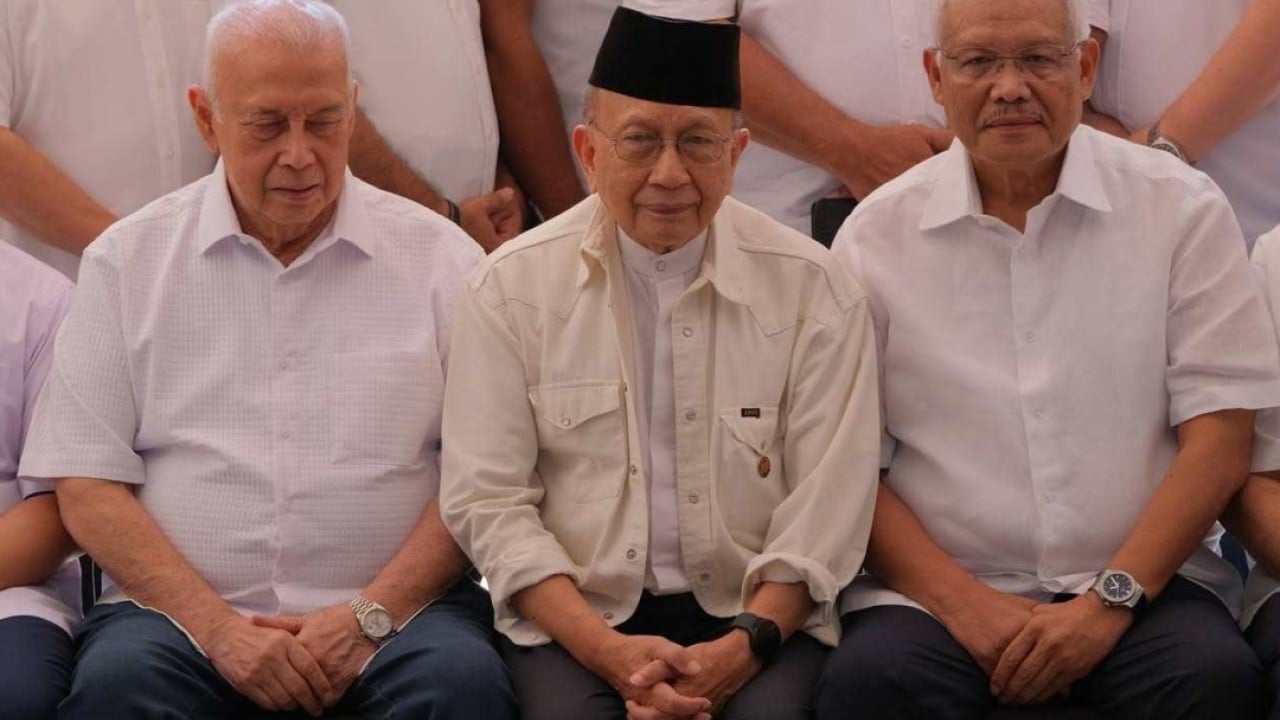
Tan Sri Dr Mohd Rais Yatim stood inside the Ayer Keroh Sessions Court on a humid morning in late September, entering a plea of not guilty to a charge that would have sounded entirely surreal decades ago. A former Dewan Negara president, a former federal minister who spent decades steering state apparatuses under successive administrations, and an intellectual heavyweight of UMNO's old guard now found himself cornered by the Sedition Act 1948. His offense was not financial malfeasance or abuse of office, but verbal transgression. Specifically, prosecutors pointed to comments he uttered at a resort in Alor Gajah back on June 5, remarks that allegedly crossed the fine, volatile line drawn around the ongoing Negeri Sembilan royal crisis.
The arraignment of Rais Yatim is far more than an isolated court appearance for an aging politician. It serves as a flashing neon warning light for anyone attempting to analyze the complex mechanics of power, tradition, and law in contemporary Malaysia. When a man who helped author and defend state power structures for half a century becomes the target of a sedition investigation over a royal succession dispute, the ground beneath the political establishment has manifestly shifted. Understanding how this prosecution came to pass requires stripping away partisan talking points and examining the deep, structural tectonic plates grinding against each other in Negeri Sembilan. For a more detailed analysis into similar topics, we suggest: this related article.
The Anatomy of a Customary Crisis
To comprehend why a former cabinet minister is facing criminal charges over a succession row, one must look closely at the peculiar constitutional architecture of Negeri Sembilan. Unlike the absolute or hereditary primogeniture models governing other Malay states, Negeri Sembilan operates on a unique elective monarchical system rooted in the ancient Minangkabau matrilineal customary traditions known as Adat Perpatih. The Yang di-Pertuan Besar is chosen not by direct paternal descent, but by the Undang Yang Empat, the four ruling chieftains of Sungei Ujong, Jelebu, Johol, and Rembau.
This traditional machinery remained relatively undisturbed for decades. Yet, an internal customary administration dispute festered inside the Luak of Sungei Ujong, eventually snowballing into a broad constitutional fracture. Disagreements over leadership legitimacy within the customary hierarchy metastasized into a state-wide institutional paralysis. By mid-2025 and into 2026, the friction escalated dramatically when rival factions and certain ruling chiefs challenged the recognized position of Tuanku Muhriz as the reigning Yang di-Pertuan Besar. For further details on this topic, detailed coverage is available on Al Jazeera.
The crisis took an extraordinary turn with the installation of Tunku Nadzaruddin as a rival pretender to the throne, backed by a faction of the Undang Yang Empat and shifting political alignments at the state government level. This dual-claimantship shattered the administrative peace. State executive council members found themselves caught in an impossible bind between royal decrees and shifting parliamentary alliances. When Tuanku Muhriz invoked his constitutional powers to dismiss ten members of the state executive council, excluding only Menteri Besar Ismail Lasim, the state administration fractured entirely.
Into this volatile theater stepped Rais Yatim. As chairman of Parti Wawasan Negara and an elder statesman with deep personal ties to the region's cultural fabric, Rais made public statements that questioned the rigid enforcement of official royal legitimacy and lent verbal support to Tunku Nadzaruddin’s faction. Those spoken words, broadcast across digital channels and debated in coffee shops from Seremban to Kuala Pilah, triggered the state's intervention. For the prosecution, expressing support for a disputed pretender in a live royal succession battle breached the boundaries of permissible public critique and threatened the foundational stability of institutional royalty.
The Weaponization of the Sedition Act
The legal instrument deployed against Rais Yatim carries profound historical irony. The Sedition Act 1948 is a statutory relic of British colonial rule, originally engineered to suppress anti-colonial dissent, labor strikes, and communist insurgency. Decades after independence, critics across the political spectrum have repeatedly called for its repeal or severe curtailment, arguing that it suppresses legitimate political expression and stifles accountability. Yet, successive federal administrations have preserved the law, finding it a convenient tool for managing sensitive discussions involving race, religion, and royalty, collectively known in Malaysian political discourse as the 3Rs.
When applied to royal succession disputes, the Sedition Act transforms from a standard penal statute into an absolute shield for institutional status quo. In Malaysia, criticizing a ruling monarch or questioning the validity of a reigning sovereign has always carried severe legal risks. However, when a royal house is internally divided and competing factions claim competing legitimacy under customary law, the application of sedition law enters dangerous territory.
By charging Rais Yatim, the authorities are sending an unmistakable message to the political elite. Openly taking sides in a royal succession dispute is no longer viewed merely as a difference of opinion or an academic debate over constitutional interpretation. It is treated as a direct challenge to public order and the sanctity of the throne. This broad interpretation creates a chilling effect across civil society, academia, and political parties. If a former minister and constitutional scholar cannot openly debate the merits of a rival royal claim without facing criminal indictment, ordinary citizens are left with zero margin for error when discussing matters of public governance and state heritage.
Political Collateral Damage and Executive Survival
The prosecution of Rais Yatim does not happen in a vacuum. It is deeply intertwined with the survival instincts of state and federal politicians who are trying to navigate a minefield of conflicting loyalties. In Negeri Sembilan, the political leadership under Menteri Besar Ismail Lasim has had to tread a precarious path. Navigating a government while the state executive council is partially dismantled, state secretaries face suspension threats, and the judiciary is petitioned for emergency injunctions requires absolute mastery of political survival.
Federal leaders in Kuala Lumpur, led by Prime Minister Anwar Ibrahim's administration, face their own delicate balancing act. On one hand, the federal government champions institutional reform, transparency, and the rule of law. On the other hand, interfering directly in royal disputes or royal succession matters risks sparking a catastrophic confrontation with the Conference of Rulers. The federal strategy has thus relied on judicial containment and strict criminal enforcement against high-profile agitators to deter others from escalating the crisis.
Rais Yatim's arrest and subsequent arraignment serve as a warning shot to political figures who might be tempted to exploit royal succession divisions for short-term political leverage. The political factions that thought aligning with a pretender could alter the state balance of power now realize that the legal fallout can strike at the highest levels of their own leadership. The court case scheduled for its next mention in late October will test whether the judiciary can independently parse the boundary between criminal sedition and legitimate constitutional discourse in a matter involving customary succession.
The Unresolved Tensions of Custom and Modernity
At its core, the Negeri Sembilan royal crisis and the prosecution of its most vocal commentators highlight a deeper existential friction within the Malaysian state. The collision between ancient customary laws like Adat Perpatih and modern statutory criminal codes creates a legal twilight zone where traditional arbiters, modern politicians, and federal prosecutors all claim exclusive jurisdiction over legitimacy.
When customary disputes are dragged into modern criminal courts under colonial-era statutes, the resolution does not bring clarity; it deepens the alienation between the governed and the governing. The legal system is forced to adjudicate matters of royal dignity and hereditary legitimacy that were historically resolved through consensus, arbitration within the traditional councils, and customary negotiation.
As the trial proceedings advance, the focus will inevitably shift back to the fundamental question of who holds the ultimate authority to define constitutional order when the traditional pillars themselves are at war. Rais Yatim sits at the center of this storm, a veteran actor in a drama where the rules of the play are being rewritten in real time by prosecutors, judges, and ruling chiefs.
The courtroom doors in Ayer Keroh closed temporarily after bail was set at RM8,000, but the underlying constitutional friction across the southern peninsula remains completely unabated.