The Warning Signs That Went Unheeded
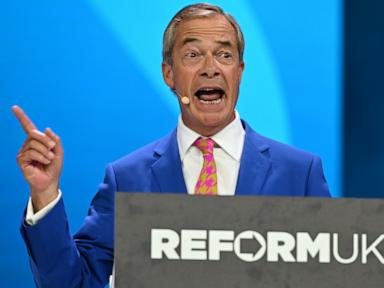
Security failures rarely arrive without warning. Long before a terror plot reaches the indictment phase, the architecture of prevention usually begins to strain against institutional complacency. When British political figures raise alarms regarding national vulnerability, the standard bureaucratic reaction is dismissal. Recent developments surrounding terrorism charges involving Reform UK leader Nigel Farage and his security posture have brought these structural tensions into sharp relief.
Deputy leader Richard Tice recently articulated a blunt assessment. He argued that political establishments consistently ignore warnings regarding domestic security threats voiced by Farage. This critique follows the formal charging of an individual linked to an alleged plot targeting the prominent political figure. Beneath the immediate legal proceedings lies a deeper institutional friction. Security analysts have long tracked the widening gap between state-allocated protection details and the escalating rhetoric aimed at high-profile figures in public life.
To understand why these warnings fail to gain traction early, one must examine how threat assessments operate within official channels. Intelligence services and police forces evaluate risk through rigid matrices. These frameworks prioritize immediate, verified operational indicators over generalized hostile environments or the atmospheric danger created by online radicalization. When a politician highlights systemic security gaps, threat evaluation units frequently categorize the statements as political posturing rather than actionable intelligence. This administrative blind spot creates severe operational vulnerabilities.
The Mechanics of Modern Political Threat Generation
The evolution of modern extremism has rendered traditional close-protection models obsolete. Lone actors do not require structured command hierarchies to mobilize. They operate within decentralized digital ecosystems where grievance acts as the primary accelerator. For years, critics have noted that high-profile figures occupying polarized positions in public discourse become focal points for radicalized individuals.
When a security threat materializes into an active charge, public debate inevitably shifts toward blame. Yet the more critical inquiry centers on resource allocation and threat prioritization. Law enforcement agencies face immense pressure across multiple fronts. Counter-terrorism commands juggle international plots, domestic right-wing extremism, and left-wing radical factions alongside organized crime. In this resource-constrained environment, individual politicians often find themselves navigating a precarious middle ground. They require specialized protection, yet the bureaucratic apparatus is slow to adapt to sudden spikes in hostility.
Richard Tice's assertions tap into a genuine frustration shared by security professionals who operate outside political constraints. Intelligence sharing between private security details and state authorities is rarely frictionless. Bureaucratic silos impede the rapid transfer of threat data. When a political party leader identifies recurring security breaches or alarming communications, the path to escalating those concerns to counter-terrorism units is encumbered by protocol.
Institutional Inertia and the Cost of Delay
Reform UK has repeatedly pointed out that mainstream political discourse often minimizes the personal danger faced by figures outside the traditional governing parties. This dynamic is not entirely unprecedented. Historical precedents show that populist or insurgent political movements frequently generate intense public polarization. That polarization manifests in elevated threat levels for leadership figures.
However, intelligence agencies operate under a mandate of neutrality. They must assess threats based on verifiable evidence rather than the political temperature of the moment. This creates a paradox. By the time a threat meets the strict legal threshold for a formal terror charge, the window for proactive disruption has narrowed significantly. The system relies on reactive prosecution rather than preventative containment.
The individual recently charged in connection with the plot against Farage underscores the reality of these modern risks. Investigators must now trace how the suspect transitioned from digital radicalization to active preparation. More importantly, oversight bodies will need to examine whether prior warnings from the politician's inner circle were subjected to adequate analytical scrutiny.
The Breaking Point for Executive Protection
Protecting public figures in a digital democracy requires a fundamental overhaul of threat evaluation protocols. State security apparatuses must bridge the gap between intelligence agencies and the political figures who find themselves on the front lines of ideological conflict. Ignoring warnings from politicians simply because they originate from contentious figures compromises the integrity of national security as a whole.
The friction between political actors and security administrators will only intensify as public discourse remains fractured. When security threats are filtered through a political lens, response times lengthen and vulnerabilities multiply.
The legal process surrounding the recent terror charge will eventually run its course in the courts. Yet the broader structural questions will remain unaddressed long after the verdicts are delivered. Until institutional frameworks learn to decouple threat validation from political partisanship, high-profile figures will continue to operate in an environment where warnings are acknowledged only after tragedy has been narrowly averted.