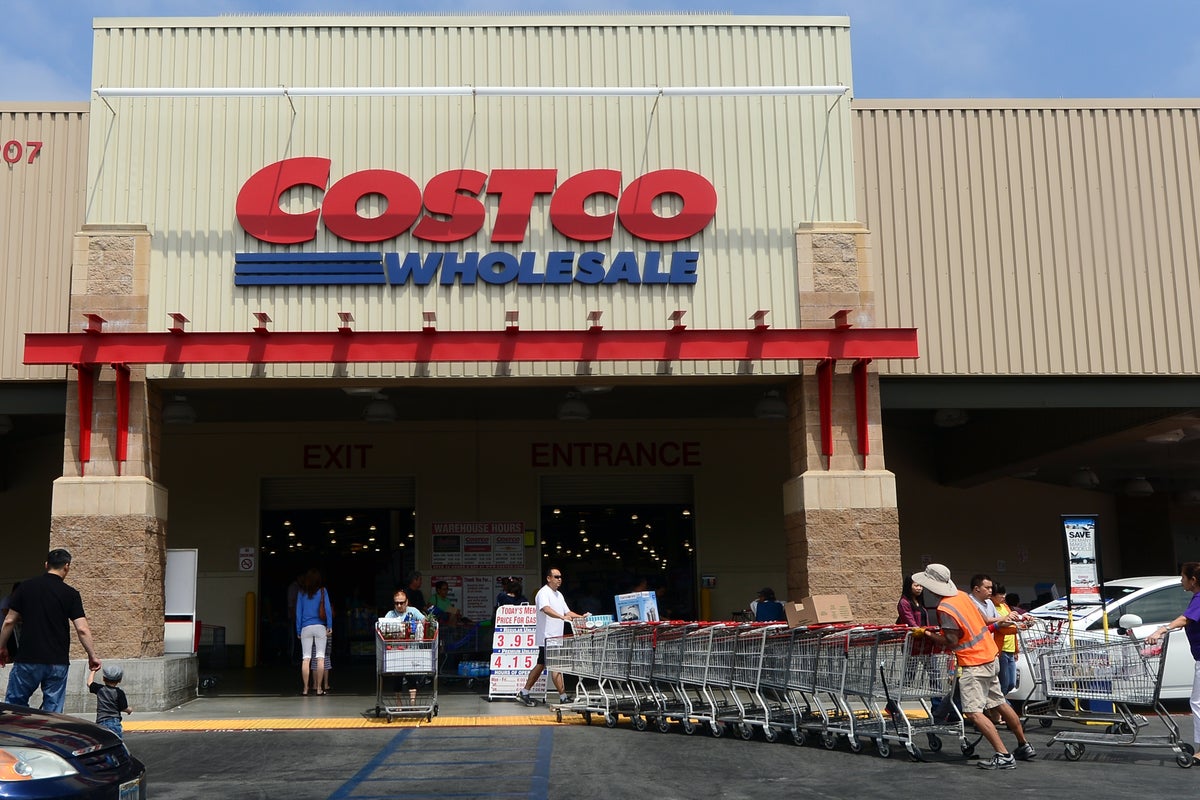
Linoleum does not negotiate. It holds no malice, offers no warning, and harbors no seasonal cheer. It simply waits under the harsh fluorescent glare of the bulk-aisle warehouse, engineered for maximum durability, minimal friction, and absolute indifference to the human foot crossing its expanse.
On a Tuesday morning that began like any other, seventy-two-year-old Eleanor Vance pushed a flatbed cart through the cavernous aisles of a suburban warehouse club. She was looking for parchment paper. She was thinking about soup. Her mind was occupied with the quiet, mundane arithmetic of retirement—choosing between two brands of canned tomatoes, wondering if she had enough foil at home, mentally checking off a list that mattered to precisely no one else in the world.
Then came the floret.
It was a rogue piece of brassica, a solitary floret of broccoli that had detached from its cluster in the produce department and traveled seventy feet on a rubber boot sole before finding its final resting place in aisle fourteen. To a passerby, it looked like a bit of green confetti dropped by a careless stocker. To Eleanor, it was a tripwire.
One moment, she was upright, existing in the smooth continuum of her routine. The next, her heel found the slick moisture of the vegetable, the rubber sole lost its grip on the polished concrete floor, and physics took over with ruthless efficiency. Gravity made no exceptions for her age, her careful habits, or the canvas shopping bag tucked under her arm.
She hit the floor hard. Her right hip absorbed the initial impact, a sharp, white-hot fracture of pain that radiated up her spine and echoed against the towering stacks of paper towels overhead.
Silence followed. Not the peaceful kind, but the sharp, ringing silence that descends when a body experiences sudden, violent trauma in a public space.
People stopped. Carts halted. A man holding a gallon jar of mayonnaise stared down at her with a look of profound, paralyzed confusion, as if a spaceship had landed between the cereal and the cleaning supplies. Store employees materialized with walkie-talkies and plastic clipboards, their training kicking in before their empathy could. They brought ice. They brought a wheelchair. They asked her if she wanted an ambulance.
Eleanor said no. She was too proud, too accustomed to bearing her own weight, too terrified of the financial and logistical undertow of a hospital visit to ask for help until the pain simply bypassed her pride and forced her hand. By the time the paramedics arrived, cutting through the murmurs of the curious crowd, her hip was already swelling beneath her trousers, and the structural integrity of her independent life had been fundamentally compromised.
What follows a fall like that is rarely just a physical injury. It is a slow, grinding collision with the modern administrative machinery of risk management.
Weeks later, the broccoli floret was gone, swept up and thrown into a compacted dumpster, but its ghost remained trapped in legal correspondence. Eleanor’s family, watching a vibrant woman trade her garden clippers for a walker and a regimen of painkillers, did what families do when they feel helpless against institutional indifference. They called a lawyer. They drafted a notice of claim. They threatened a lawsuit against the multi-billion-dollar retail giant, pointing to a simple, unassailable truth: someone dropped the vegetable, someone failed to pick it up within a reasonable window of safety, and a grandmother paid the price with her mobility.
The retailer, naturally, has a playbook for this. It is a thick, leather-bound volume of legal deflection written by corporate defense attorneys whose entire professional existence is dedicated to the proposition that a warehouse floor is an inherently hazardous environment where shoppers must tread at their own peril. They will argue comparative negligence. They will scrutinize Eleanor’s footwear. They will pull the security footage frame by frame to determine whether the broccoli had been on the floor for four minutes or forty, as if a ticking clock transforms a slip hazard from negligence into an act of God.
This is where the human element vanishes behind footnotes and liability waivers.
We live in a culture that treats public spaces as frictionless zones of consumption. We expect our aisles to be wide, our parking lots paved, our shelves stocked to the ceiling with affordable abundance, and our floors as clean as a kitchen counter. We forget that behind the clean aesthetic of modern retail lies an army of low-wage workers stretched thin across cavernous floor plans, expected to spot a green floret on a green-tinted concrete floor while managing inventory, restocking palettes, and answering customer inquiries.
The grocery store slip is the ultimate equalizer. It does not care about your net worth, your political affiliations, or your grandchildren's graduation dates. It is a sudden, brutal reminder of our biological fragility in environments engineered exclusively for commerce.
When Eleanor Vance fell, she did not just injure her hip. She fell out of her own life. She fell out of the spontaneous walks through her neighborhood, the Saturday morning trips to the farmers market, the simple, quiet dignity of moving through her home without calculating the distance to the nearest piece of furniture to steady herself.
The lawsuit, whether it settles for a fraction of her medical bills or drags out through years of depositions and motions, will never restore the cartilage in her hip or give back the autumn afternoons she spent staring at the ceiling of an orthopedic ward. A check from an insurance adjuster’s desk cannot re-knit bone or cure the sudden, lingering hesitation that grips an elderly person every time they approach a hard, shiny floor.
Consider the architecture of our daily errands. We walk through these monumental temples of abundance with our eyes fixed on eye-level displays, trusting implicitly that the ground beneath us will hold. We outsource our safety to corporations whose primary fiduciary duty is to their shareholders, not to the structural soundness of a grandmother's femur.
When the floor fails, the machinery of corporate defense swings into motion immediately, erecting walls of legalese designed to prove that the victim was simply looking in the wrong direction, walking at the wrong speed, or wearing the wrong shoes. The burden of proof shifts downward, resting squarely on the person who is currently lying flat on their back, wondering if they will ever walk unassisted again.
There is a profound cruelty in how we process these accidents. We treat them as punchlines or administrative nuisances, the background noise of litigious modern life. We read headlines about slip-and-fall claims and roll our eyes at the perceived greed of plaintiffs seeking payouts from corporate giants. We imagine people diving purposefully onto wet tiles for a quick settlement, divorced entirely from the reality of what it actually means to break a bone in a warehouse club aisle.
Ask anyone who has spent their seventh decade on earth recovering from a major orthopedic injury if it was worth the trouble of a legal battle. They will tell you about the sleepless nights, the phantom pain when the weather turns damp, the indignity of needing help to stand up from a chair, and the quiet, persistent grief of realizing that your body has suddenly betrayed you.
The broccoli floret is gone now. The floor has been buffed to a high, reflective shine. New shoppers push their flatbed carts past the produce section, their eyes scanning the shelves for bargains, their footsteps falling lightly on the linoleum. They do not look down. They have no reason to.
Somewhere across town, an elderly woman sits in a high-backed armchair with a heating pad pressed against her hip, listening to the afternoon traffic hum past her window. She is waiting for word from a lawyer who speaks in terms of liability caps and medical liens. She is waiting for justice from a system that views her pain as a line item on an actuarial spreadsheet.
And the floor stays clean, cold, and entirely empty, waiting for the next small thing to fall.