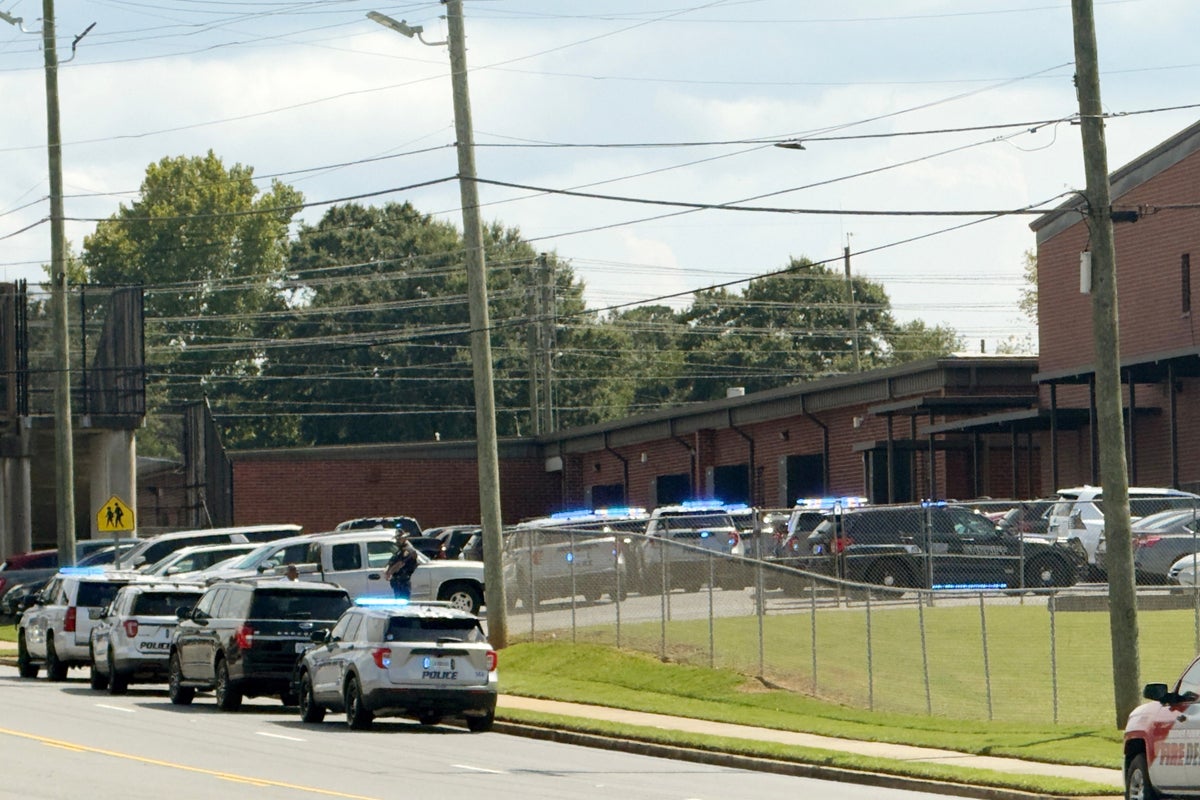
A restroom altercation inside a Georgia high school escalated into gunfire, shattering the fragile illusion of institutional safety and exposing deep-seated vulnerabilities in how administrators manage student conflict. When a dispute between students culminates in a firearm discharging inside a campus facility, the incident ceases to be a routine disciplinary infraction. It becomes a critical security failure demanding rigorous public accountability. This shooting at a Georgia high school underscores a terrifying reality for parents and educators alike. Campus violence has outpaced the conventional defenses erected by school districts, leaving students exposed within the very corridors meant for their education.
Reporting on school violence requires looking past the immediate shock of the headline. Decades of covering institutional safety failures reveal a predictable cycle. An incident occurs. Administrators express dismay. Politicians offer superficial condolences paired with polarized policy proposals. Metal detectors are wheeled in temporarily, or security budgets are scrutinized for a single news cycle before public attention drifts elsewhere. Meanwhile, the structural breakdowns that allowed a student to introduce a lethal weapon into a school restroom remain entirely unaddressed.
The Anatomy of a School Restroom Confrontation
Restrooms represent a unique architectural blind spot in modern school design. They are intentionally private spaces. Surveillance cameras cannot legally or ethically monitor the interior of a restroom, creating zones of complete autonomy shielded from administrative oversight. Students know this. Bullies know this. And adolescents intent on settling scores outside the watchful gaze of teachers invariably gravitate toward these isolated pockets.
The Georgia high school shooting did not happen in the middle of a crowded cafeteria or a monitored hallway. It happened where supervision drops to zero.
Consider the physical environment. High-traffic bathrooms in large comprehensive high schools often serve hundreds of students during a standard passing period. Doors swing shut, masking sounds. Stall partitions offer physical concealment. In many underfunded or overcrowded districts, staff members assigned to hall monitoring are spread too thin to maintain a consistent presence near these critical junctions.
When a physical fight breaks out under these conditions, escalation happens rapidly. Without an adult intervention window measured in seconds rather than minutes, minor provocations turn violent. When one of those combatants carries a firearm, the absence of an immediate deterrent transforms a fistfight into a life-threatening crisis.
Why Traditional Perimeter Security Fails Inside the Building
School boards love hardware. Millions of dollars flow toward electronic access control systems, reinforced single-point entryways, and visitor management software. These measures create a hardened perimeter. They make it difficult for an outside intruder to breach the front doors during instructional hours.
They do virtually nothing to stop internal threats.
A student walking through the front doors with a concealed handgun bypasses perimeter fortifications entirely because that student belongs in the building. Metal detectors, where installed, are often bottlenecked at morning arrival points. They are rarely operational or staffed for random checks throughout the middle of the school day. Furthermore, many districts resist installing permanent screening apparatuses due to financial constraints, civil liberties concerns, or the stark, prison-like atmosphere such measures project.
The result is a false sense of security. Districts point to their sophisticated visitor badging systems as proof of safety while ignoring the reality that the primary threat vector often comes from within the student body itself.
The Economics of Understaffed Hallways
Security is ultimately a labor problem, not just a technological one. During my years investigating institutional safety protocols, I have walked through dozens of campuses where hall supervision relies heavily on exhausted teachers burning their planning periods or low-wage monitors juggling impossible spatial geometries.
A single security guard might be responsible for an entire wing containing multiple multi-stall restrooms, stairwells, and blind hallways. When an incident occurs in one location, that guard is invisible to the rest of the sector.
Budgets dictate presence. When school boards face funding shortfalls, student support services and security personnel are frequently the first line items targeted for reduction. Counselors, social workers, and campus security aides are swapped out for software licenses or administrative bloat. The consequence of these budgetary choices manifests in places like Georgia, where overworked staff cannot possibly monitor every friction point across a sprawling campus.
The Breakdown of Adolescent Conflict Resolution
Technology and staffing tell only part of the story. To understand why a restroom fight ends in gunfire, one must examine the psychological ecosystem of the contemporary teenager.
The social pressures bearing down on adolescents have mutated over the last decade. Online disputes do not stay online. Taunts, threats, and territorial posturing initiated on social media platforms spill directly into physical hallways. By the time two students square off in a school restroom, the confrontation has usually been marinating digitally for days, amplified by peer audiences demanding escalation rather than de-escalation.
Fear also drives weapon acquisition. A disturbing number of students who carry firearms to school report doing so out of a perceived need for self-protection rather than premeditated malice. They believe, rightly or wrongly, that someone else in the building is armed or looking to do them harm. This arms race mentality within the student body turns ordinary teenage disputes into high-stakes existential threats.
When the threshold for carrying a lethal weapon drops this low, every shoving match in a hallway or restroom carries the potential for mass casualty.
Institutional Denial and the Public Relations Reflex
Immediately following the Georgia high school shooting, the standard public relations machinery swung into operation. District spokespeople released carefully worded statements praising the quick response of local law enforcement and emphasizing that the situation was contained.
Containment is not prevention.
Public officials frequently treat these events as statistical outliers, isolated tragedies carried out by troubled individuals rather than symptoms of systemic decay. This framing protects institutions from liability and difficult structural overhauls. If a shooting is merely an unpredictable anomaly, the administration bears no responsibility for failing to catch the underlying warning signs.
Yet, investigative reviews of previous school shootings consistently reveal a trail of missed signals. Threat assessment teams that lacked training. Tips from peers that went uninvestigated. Disciplinary records that tracked escalating aggression without triggering coordinated intervention.
Blaming a tragedy entirely on the individual perpetrator allows school districts to avoid asking harder questions about their own operational failures.
Rethinking Campus Infrastructure and Intervention
Fixing the vulnerabilities exposed by the Georgia incident requires abandoning magical thinking about campus safety. There is no single gadget or policy pivot that will eradicate violence from public schools. Real reform demands a multi-pronged approach that tackles architecture, staffing, and student mental health concurrently.
School design must evolve. The traditional multi-stall restroom model, tucked away down long, unmonitored corridors, is obsolete. Modern architectural standards for educational facilities should prioritize open-layout restroom designs with communal handwashing sinks positioned in full view of main hallways, while individual toilet stalls maintain privacy through floor-to-ceiling doors. This design philosophy, common in progressive commercial spaces, eliminates the hidden interior blind spots where assaults and illicit activities thrive.
Simultaneously, staffing allocations must shift from administrative overhead back to boots-on-the-ground support. Districts must ensure that human eyes and ears are present in high-density zones during peak transition times.
The Cost of Inaction
Every time a school shooting occurs, society expresses collective exhaustion before returning to business as usual. This fatigue is dangerous. It signals to students, teachers, and administrators that periodic bloodshed is an acceptable tax to pay for public education.
It is not acceptable.
The student who pulled a trigger in that Georgia restroom was failed long before he walked through the school doors. He was failed by a system that missed his escalation, by an environment that allowed him to secure a weapon, and by an infrastructure that prioritized optics over functional safety. Until school boards and policymakers confront these uncomfortable truths with structural changes rather than press conferences, the next restroom confrontation is already countdown-ready in a hallway near you.