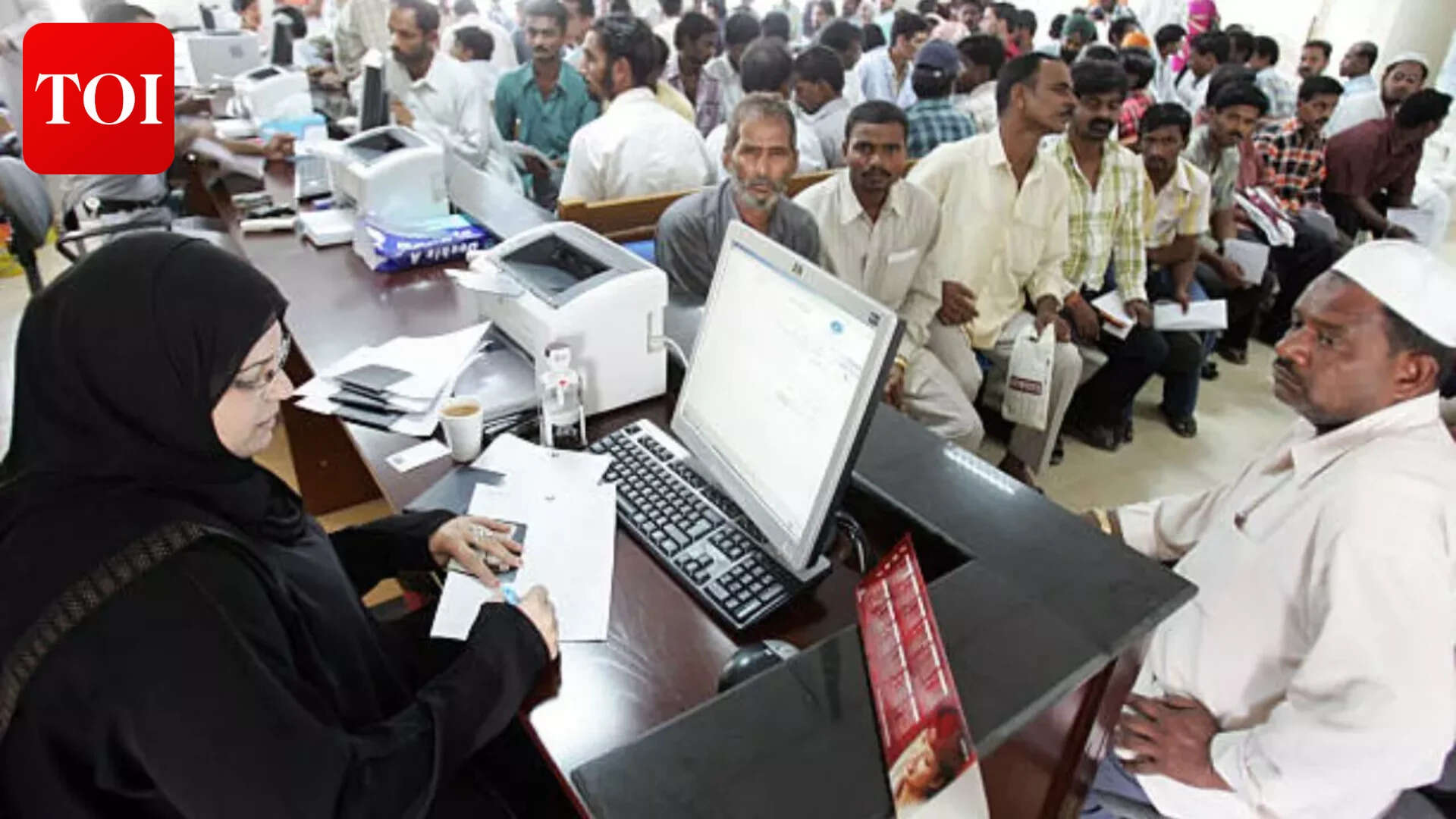
Fear sells better than nuance. That is why every major outlet is currently screaming about the Saudi Ministry of Interior’s latest crackdown on visa violators. You’ve seen the headlines: SR100,000 fines, six months in a cell, and a one-way ticket out of the Kingdom for anyone caught helping an illegal worker.
The media wants you to see a draconian wall closing in. They want you to believe the Saudi market is becoming a minefield of risk. If you liked this piece, you should look at: this related article.
They are wrong.
If you are a serious operator, these fines aren't a threat. They are the sound of the floor being raised. For years, the Saudi economy was dragged down by a "shadow labor market" that depressed wages, stifled innovation, and allowed lazy businesses to survive on cheap, undocumented sweat. By nuking the black market for labor, the Kingdom is forcibly professionalizing its private sector. For another look on this story, refer to the recent update from The Motley Fool.
If you can’t afford to play by the rules, you don't belong in the G20’s fastest-growing economy.
The Death of the "Wasta" Shortcut
The lazy consensus says that heavy fines kill small businesses. The reality is that these fines kill inefficient businesses.
In the old Saudi "landscape" (a word I hate, but let’s call it the old playground), companies survived by cutting corners on residency (Iqama) fees and insurance. They hired "freelance" workers who were technically sponsored by someone else. It was a race to the bottom.
When the Ministry of Interior (MoI) announces that an individual providing transport or shelter to a violator faces a six-figure fine, they aren't just punishing a crime. They are destroying a business model based on liability-shifting.
Why the "Helper" Fine is the Real Story
Most people focus on the worker being deported. That’s a mistake. The real disruption lies in the SR100,000 penalty for the enabler.
- Financial Disincentive: For a small-to-medium enterprise (SME), a $26,600 USD fine per violation is a terminal event.
- The Reputation Tax: Once your name is in the MoI system for a violation, your chances of securing government contracts or "Golden Visas" for your C-suite vanish.
I have seen companies in Riyadh try to "math" their way out of this. They think the probability of an inspection is low enough to justify the savings on recruitment. That is a 2015 mindset. In 2026, the integration between the Ministry of Human Resources and Social Development (MHRSD) and the "Absher" platforms means your digital footprint is your destiny.
The Efficiency Paradox: Higher Costs, Higher Returns
The critics argue that forcing everyone into official channels increases the cost of doing business. They are right—and that is exactly why you should be happy about it.
When labor is artificially cheap because it is undocumented, there is no incentive to automate. Why buy a sophisticated logistics software or a high-end construction crane when you can just throw thirty underpaid, "unofficial" workers at the problem?
By enforcing these fines, Saudi Arabia is creating an Efficiency Mandate:
- Forced Innovation: If you have to pay full market rates plus benefits for every single head on your site, you start looking for ways to need fewer heads.
- Quality Control: A documented worker is a traceable worker. In sectors like hospitality and tech, the "ghost worker" was always a security and quality nightmare.
- Leveling the Field: International firms often complain they can't compete with local shops that dodge labor costs. Well, the playing field just got leveled with a sledgehammer.
Dismantling the "Harshness" Myth
Is SR100,000 "fair"? Who cares. Fairness is for philosophy classrooms. In the world of sovereign transitions, predictability is the only currency that matters.
The Saudi government isn't being "harsh" for the sake of it. They are protecting the Saudi Vision 2030 investment. You cannot build a global tourism hub or a world-class manufacturing base on a foundation of "maybe-legal" workers.
Imagine a scenario where a major tech hub in NEOM is staffed by people with expired permits because a subcontractor wanted to save 5% on his margins. One security audit would tank the project’s international credibility. The fines are a pre-emptive strike against that kind of amateurism.
The Real Risks Nobody Mentions
If you’re reading this and thinking, "I’ll just be careful," you’ve already lost. The risk isn't just a random raid. The risk is the Total Digital Lockdown.
Saudi Arabia's digital infrastructure is now so interconnected that a labor violation in one department can trigger:
- Freezing of corporate bank accounts.
- Suspension of "Qiwa" platform access (meaning you can't renew any employee contracts).
- Blacklisting from the General Organization for Social Insurance (GOSI).
The SR100,000 fine is just the tip of the spear. The shaft of that spear is the complete cessation of your ability to function as a legal entity.
How to Win While Others Panic
Stop looking for loopholes. The "fixer" who says he can make your visa problems go away is a liability, not an asset. If he gets caught, you pay the SR100,000. He just disappears.
1. Audit Your Supply Chain
If you are a contractor, you are responsible for your subcontractors. If their workers are "violators," the PR blowback and potential legal entanglement will land on your doorstep. Demand to see the "Ajeer" permits for every soul on your site. If they can’t produce them, kick them off. Immediately.
2. Embrace the "Premium" Labor Market
Yes, the cost of recruitment through official channels (like the Musaned platform or accredited agencies) is higher. Pay it. It’s an insurance premium against a business-ending fine.
3. Move from Quantity to Quality
If these fines make your business model "unprofitable," your business model was a parasite on the Kingdom's regulatory loopholes. Pivot. Move into high-value services where labor cost is secondary to output quality.
The Brutal Truth About "People Also Ask"
You’ll see people asking online: "Can I get my fine reduced?" or "Is there a grace period?"
The honest answer is: No. The era of "grace periods" ended years ago with the "Atonement" (Amnesty) programs. The government has given ample warning. Seeking a "special favor" to bypass a labor fine in 2026 is like trying to use a coupon at a high-stakes poker table. It shows you don't understand the game being played.
The Ministry of Interior isn't looking for excuses. They are looking for revenue and compliance. In that order.
Stop Crying and Start Competing
The crackdown on visa violators is a filter. It filters out the grifters, the corner-cutters, and the "wasta-dependent" relics of the 1990s.
If you are a global investor, this is the best news you’ve had all year. It means your competitors can no longer cheat. It means the labor market is stabilizing. It means the rule of law is being enforced with a level of financial bite that demands respect.
Don't fear the fine. Be the company that is too organized to ever receive one.
The Kingdom is moving at a speed that ignores the hesitant. You can either complain about the cost of compliance or you can capitalize on the vacuum left by the companies that are about to be fined out of existence.
Choose wisely.