Silence.
That is the first thing that happens when a political boundary breaks, right before the noise arrives—the sudden, breathless intake of air across a newsroom, a parliamentary corridor, or a living room where someone is scrolling through their phone at midnight.
Consider a hypothetical scenario. Picture a young staffer sitting at a desk in Canberra late on a Tuesday evening, the fluorescent lights humming overhead, a cold mug of coffee beside a glowing monitor. Their job is simple: monitor the day’s political media, track public sentiment, and flag anything that might require a response before the morning news cycle begins. They click on a newly uploaded animated video produced by a major political party. Expecting the usual fare—exaggerated caricatures, policy jabs, maybe a clumsy joke about taxes or energy prices—they lean back. Instead, they watch an animated depiction of a sitting cabinet minister being murdered.
The coffee goes untouched. The screen feels suddenly colder.
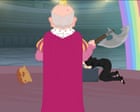
This is not an abstract thought experiment about internet culture or the outer edges of anonymous forums. In Australian politics, this exact collision between cartoon satire and depictions of lethal violence became a flashpoint when Labor condemned animated videos published by Pauline Hanson’s One Nation party—cartoons that depicted Foreign Minister Penny Wong being killed, even as Hanson maintained that the videos were "not going anywhere."
To understand why a few minutes of animation triggered such fierce condemnation—and why the debate over where political satire ends and incitement begins matters to every citizen in a democracy—we have to look past the pixels and examine the machinery of modern political communication.
The Architecture of a Modern Controversy
On the surface, the dispute looks like a familiar clash between two opposing instincts in public life.
On one side stands the Australian Labor Party, along with critics across the political spectrum who argue that depicting the murder of an elected official—even in cartoon form—crosses an unforgiving moral and civic line. According to Labor representatives, normalizing images of lethal violence against a sitting minister degrades democratic norms and lowers the threshold for real-world harm.
On the other side stands Pauline Hanson, leader of One Nation, who defended the animated series Please Explain—a long-running satirical cartoon produced for her party—by framing it as political satire and free expression, insisting publicly that the videos are "not going anywhere." Defenders of this approach often argue that political cartoons have always been sharp, irreverent, and uncomfortable, and that outrage from political opponents is merely an attempt to police speech they dislike.
Both arguments tap into deep, genuine currents in democratic societies. Free speech is not a decorative ornament; it is the oxygen of self-government. Satire, from eighteenth-century woodcuts to modern television, has long relied on absurdity and exaggeration to puncture the self-importance of the powerful. Yet democracies also depend on an unspoken social contract: that political opponents are rivals to be defeated at the ballot box, not enemies to be eliminated.
When those two principles collide, the friction is intense. And the consequences rarely stay confined to Parliament House.
Why Cartoons Carry Real Weight
There is a temptation, especially among people exhausted by outrage cycles, to wave away animated videos as trivial. It’s just a cartoon. Nobody takes it literally. Politicians need thicker skin.
I have spent years watching how public language shapes private behavior, and if there is one lesson that repeats itself across decades and continents, it is this: symbols are rehearsals.
Think of political norms like the guardrails along a mountain highway. On a clear, sunny afternoon, those steel barriers look unnecessary—an ugly interruption to the view. Drivers speed past them without a second thought. You only discover why the guardrails exist when the fog rolls in, the road turns slick, and a single miscalculation sends a vehicle skidding toward the edge.
In a healthy democracy, the taboo against depicting the killing of political opponents is one of those guardrails. It exists not because politicians are fragile, but because societies are.
History offers sobering reminders of what happens when violent imagery becomes routine background noise in politics. Researchers who study political violence and online radicalization point to a phenomenon known as stochastic terrorism—the public demonization of a person or group in a way that increases the statistical likelihood of a violent act by an unpredictable individual, even without a direct order or explicit call to action. Nobody needs to issue a command when the culture itself repeatedly rehearses the image.
Consider what happens next in the real world, far away from the editing suite where an animator renders a scene for clicks and laughs.
In the United Kingdom, Members of Parliament Jo Cox in 2016 and Sir David Amess in 2021 were murdered while carrying out routine constituency duties. In the United States, lawmakers from both parties—including Gabby Giffords and Steve Scalise—have survived assassination attempts, while plots against governors and members of Congress have repeatedly surfaced in federal courtrooms. In Australia itself, intelligence agencies and federal police have documented a measurable rise in threats, harassment, and stalking directed at elected officials and their staff.
Against that backdrop, an animated depiction of Foreign Minister Penny Wong being killed does not land in a vacuum. It lands in an environment already charged with hostility, where security briefings for politicians have grown thicker and public appearances require tighter perimeters.
The Thin Line Between Punching Up and Crossing Over
Satire works best when it exposes hypocrisy, illuminates flawed policy, or reveals a hidden truth through humor. Think of Jonathan Swift’s A Modest Proposal, or the sharp editorial cartoons that have graced newspapers for two centuries. Even at their most biting, those works aimed at ideas, power structures, and public failures.
Depicting a specific, living person being murdered operates on a completely different frequency.
There is no policy critique embedded in watching a cartoon character modeled on a real human being die violently. It does not explain a disagreement over foreign aid, trade agreements, or diplomatic strategy. Instead, it reduces a political disagreement to a visceral image of destruction.
For women in public life—and particularly women of color like Penny Wong, Australia’s first Asian-born cabinet minister and openly gay senior parliamentarian—the weight of violent imagery carries an additional edge. Studies on online abuse consistently show that female politicians and minority representatives receive a disproportionate share of violent and sexualized threats compared to their male counterparts. What might be brushed off by creators as edgy humor often echoes the exact language found in the threatening emails and messages landing in those officials’ inboxes every week.
To admit this is not to claim certainty about every viewer’s reaction. Human beings interpret media differently, and intent is notoriously hard to prove from the outside. Perhaps the creators saw themselves as pushing boundaries for attention in an algorithm-driven media ecosystem that rewards shock value above all else. Perhaps they genuinely believed that framing something as comedy insulates it from serious consequence.
Yet intent does not erase impact.
The Algorithm’s Appetite for Outrage
If we want to be honest about how we arrived at a moment where a political party doubles down on cartoons showing a minister’s death, we cannot lay all the blame on a single politician or production team. We also have to look at the stage on which modern politics performs.
Social media platforms do not reward nuance. They reward velocity.
A thoughtful three-minute speech on Senate procedure might reach a few thousand dedicated viewers. A thirty-second animated clip filled with shock value, personal mockery, and violent slapstick can rack up hundreds of thousands of views in hours, driven forward by outrage from critics and applause from supporters alike. Every angry share expands the audience. Every condemnation becomes free publicity.
When Pauline Hanson stated that the videos were "not going anywhere," she was speaking not only to her base, but also to the logic of modern attention economics. In an era where visibility equals political survival, backing down looks like weakness, while defiance keeps the cameras rolling.
But look closely at the cost of that bargain.
When political parties treat violent imagery as a legitimate marketing tool, they force everyone else into an impossible trap. Stay silent, and the behavior becomes normalized by default. Speak out, and you amplify the very content you are trying to condemn. Meanwhile, the public square grows noisier, angrier, and more cynical—until ordinary citizens decide that public service is simply too toxic to consider.
What Happens When Good People Walk Away
The invisible casualty of this kind of politics is rarely the seasoned cabinet minister surrounded by security protocols. It is the twenty-six-year-old community organizer thinking about running for local council. It is the schoolteacher considering a bid for state parliament. It is the quiet, conscientious citizen who looks at the state of political discourse, sees cartoons depicting the murder of elected officials defended as routine entertainment, and decides to stay home.
Democracies do not collapse all at once. They erode through attrition.
They weaken each time the threshold of acceptable behavior drops another notch, each time a boundary once considered sacred is treated as a punchline, and each time leaders choose applause over restraint.
You do not have to agree with Penny Wong’s politics, Labor’s foreign policy, or the government’s legislative agenda to recognize that basic truth. In fact, the principle matters most when it protects someone whose views you oppose. If depicting the murder of a Labor minister is acceptable today, then depicting the murder of a Coalition minister, a Greens senator, or a One Nation representative becomes acceptable tomorrow. Once the guardrail is gone, nobody on the road is safe from the drop.
The Choice Beneath the Noise
We often talk about democracy as if it were a machine—a collection of constitutions, courts, and voting booths that runs automatically once set in motion. It is not. It is a habit. It is a daily, collective agreement to resolve our fiercest disagreements through words, laws, and ballots rather than force, intimidation, or the fantasy of violence.
Cartoons fade from feeds. News cycles move on to the next outrage by Friday afternoon. Yet the images we normalize leave a residue in the culture long after the trending hashtags disappear.
Picture that same Canberra office late at night, the glow of the monitor reflecting off the window against the dark outside, where a single click sends another animated frame out into a country still deciding what kind of public life it wants to inhabit.