Static.
For decades, if you lived anywhere between Casablanca and Muscat, that hiss was the sound of the evening news—the polite, sanitized drone of state-run television telling you that the harvest was bountiful, the leader was wise, and nothing bad had happened anywhere near your street. You watched it while the tea cooled in small glass cups, knowing the script before the anchor even opened his mouth. You nodded. You kept quiet. You survived.
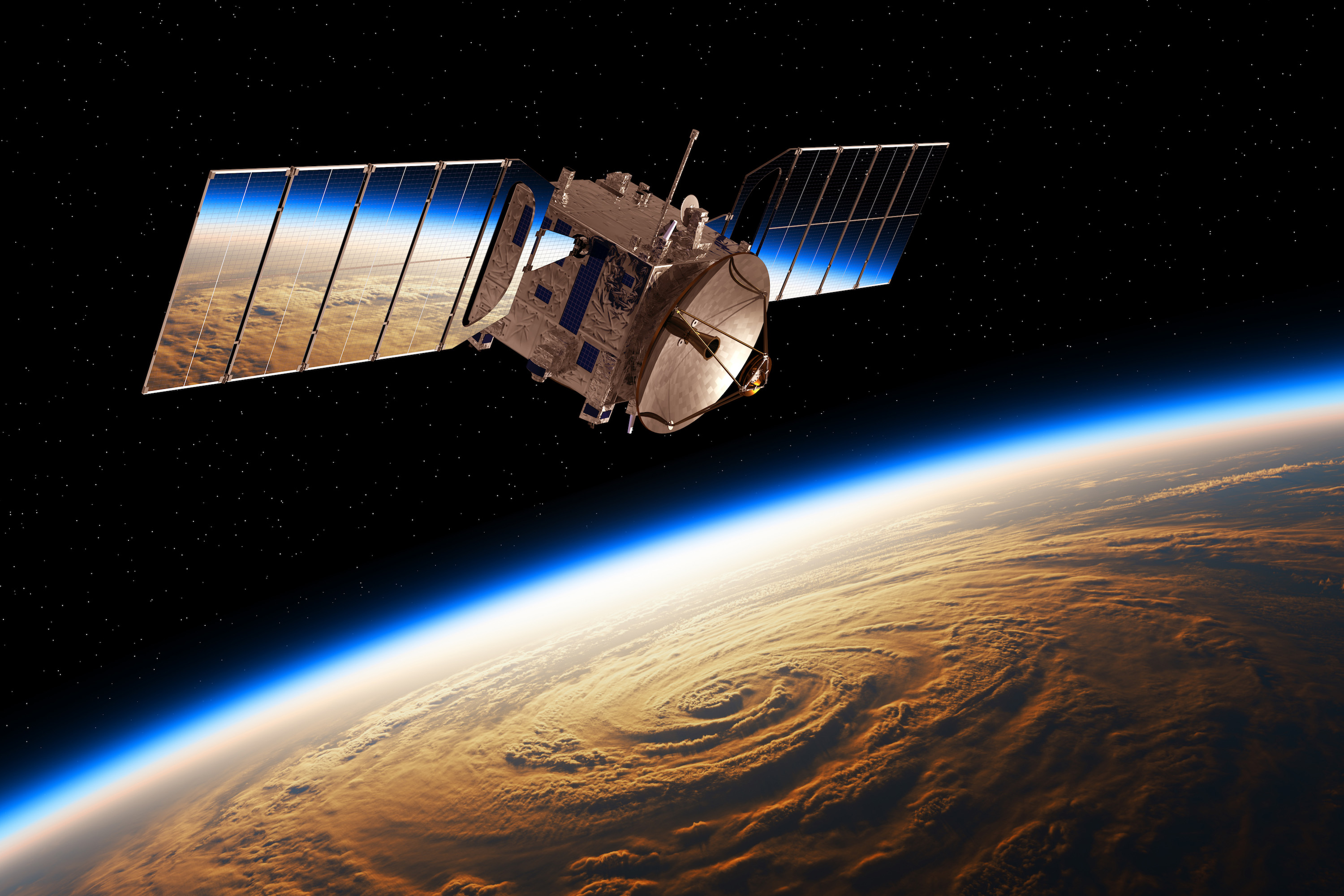
Then, on a warm November evening in 1996, a signal bounced down from a satellite over Doha, Qatar, and hit a cheap metal dish bolted to a concrete balcony.
Nobody knew yet what it would cost.
To understand what happened over the next thirty years, forget corporate timelines and media conglomerates for a moment. Picture a hypothetical living room in Amman or Cairo in the autumn of 1996. Let us call the man sitting on the edge of the sofa Tariq—a forty-something high school history teacher with chalk dust still on his cuffs and a transistor radio he no longer trusts. When Tariq flips to a brand-new channel bearing a golden calligraphic logo shaped like a drop of water, he expects the usual parade of ribbon-cuttings and airport handshakes. Instead, he sees a live debate where a guest actually interrupts the host, shouts an accusation against a sitting minister, and nobody cuts the feed.
Tariq leans forward. His tea goes cold.
That electric shock in a million living rooms is the real story behind Al Jazeera’s thirtieth anniversary in 2026. When a network survives three decades in one of the most volatile regions on earth, dry press releases love to talk about global reach, digital expansion, and editorial milestones. Those numbers are real—hundreds of millions of viewers, dozens of bureaus, a massive English-language arm launched in 2006 that forced Western broadcasters to share the stage. Yet reducing thirty years of Al Jazeera to broadcast statistics is like describing a hurricane by measuring the diameter of the raindrop. The true story is about what happens when a region used to whispered rumors suddenly gets a megaphone, and the brutal, complicated price paid by the people holding the microphone.
The End of the Single-Channel Monologue
Before 1996, Arab television operated like a heavily guarded gated community. Information moved downward from ministries of information to passive audiences, scrubbed clean of dissent, failure, or messy humanity. If a border skirmish broke out or a bread riot erupted three towns over, you heard about it days later on the BBC World Service through a crackle of shortwave static, or you didn't hear about it at all.
Al Jazeera shattered that monopoly overnight, largely because of a historical accident. Earlier that year, the BBC had shut down its short-lived Arabic television partnership with Saudi-backed Orbit Communications after censors objected to a documentary on executions in Saudi Arabia. Dozens of sharp, Western-trained Arab journalists suddenly found themselves out of work in London. Around the same time, Qatar’s new Emir, Sheikh Hamad bin Khalifa Al Thani, wanted to put his tiny, gas-rich peninsula on the geopolitical map. He provided a $137 million loan, hired those displaced BBC veterans, and gave them a mandate unheard of in the region: report the news without asking permission from neighboring palaces.
Their motto—The Opinion and the Other Opinion—sounded almost quaint in English. In Arabic, it was pure dynamite.
For the first time, viewers saw Israeli officials interviewed live in Hebrew and translated into Arabic, sharing split-screens with Palestinian leaders. They watched fierce, unscripted shouting matches on programs like The Opposite Direction, hosted by Faisal al-Qassem, where taboos around religion, corruption, and authoritarian rule were torn apart on live television. It was messy. Sometimes it was loud, sensational, and deeply polarizing. Critics in Washington and Riyadh alike accused the channel of stoking anger rather than cooling it.
And yet, you could not look away. Think of the media ecosystem before 1996 as a locked room with painted-over windows; Al Jazeera didn't gently open the blinds—it threw a brick through the glass. Fresh air rushed in, carrying both the oxygen of free debate and the choking dust of every unresolved grievance in the Middle East.
Cameras in the Crosshairs
It is easy to celebrate press freedom from the safety of an air-conditioned studio. It is another thing entirely when the story you are covering decides to shoot back.
By the early 2000s, Al Jazeera had stopped being merely a regional curiosity and become the primary witness to the defining conflicts of the twenty-first century. When the United States invaded Afghanistan in 2001 and Iraq in 2003, Western networks largely embedded with coalition troops, showing the war through night-vision lenses from behind advancing tank columns. Al Jazeera’s cameras were on the other side of the horizon—inside Kabul, inside Baghdad, standing in the rubble of civilian neighborhoods before the smoke had cleared.
That proximity turned the network into a lightning rod. In November 2001, a U.S. missile struck Al Jazeera’s Kabul bureau. Less than two years later, in April 2003, an American airstrike hit the network’s Baghdad office, killing veteran correspondent Tareq Ayyoub on the roof while he was preparing for a live broadcast. Washington called both incidents tragic accidents; journalists inside the network saw a terrifying pattern.
Consider what that feels like in the gut. Imagine putting on a blue flak jacket stenciled with the word PRESS in thick white letters, knowing that those five letters might act less like a shield and more like a target. I have spent enough years watching conflict coverage from the Middle East to know that the hardest part of journalism there isn't finding the story—it is deciding whether your family can survive you telling it.
Over thirty years, that danger never faded; it only mutated. During the 2011 Arab Spring, Al Jazeera’s live feeds from Tahrir Square in Cairo and the streets of Tunis became the heartbeat of mass uprisings, beaming real-time proof to millions that fear had finally changed sides. Governments responded by revoking press credentials, jamming satellite frequencies, and throwing reporters into prison cells. In Egypt, journalists like Peter Greste, Mohamed Fahmy, and Baher Mohamed spent more than four hundred days behind bars on widely condemned terrorism charges simply for doing their jobs.
More than a decade later, during the devastating war in Gaza that began in late 2023 and stretched across the following years, that toll reached an unthinkable peak. Dozens of Al Jazeera journalists and their family members were killed in airstrikes—including senior correspondent Shireen Abu Akleh earlier in 2022 in the West Bank, and Gaza bureau chief Wael Al-Dahdouh, who lost his wife, children, and grandson in strikes yet returned to the air hours later, his voice steady even as grief hollowed out his face.
Watching Wael Al-Dahdouh stand in front of a camera in a dusty press vest after burying his own family forces an uncomfortable question onto anyone who consumes the news casually on a phone screen: What right do we have to turn away when someone is paying that price just to keep the lens open?
The Paradox of the Patron
Still, honesty demands looking straight at the contradiction sitting at the very center of Al Jazeera’s story. You cannot tell the truth about this network without acknowledging the elephant in the Doha newsroom.
Al Jazeera is funded by the state of Qatar.
For thirty years, that single fact has fueled endless skepticism, diplomatic fury, and genuine ethical tension. How can a broadcaster bankrolled by an absolute monarchy champion democracy, protest movements, and accountability across the Arab world while rarely turning the same blistering investigative spotlight onto Doha itself?
Detractors have never hesitated to point out the double standard. During the 2017 Gulf diplomatic crisis, Saudi Arabia, the United Arab Emirates, Bahrain, and Egypt severed ties with Qatar and issued a list of thirteen demands to end the blockade—near the very top was a demand to shut down Al Jazeera completely. To its regional rivals, the network wasn't an independent newsroom; it was an instrument of Qatari soft power, amplifying political Islam and destabilizing neighbors while Doha played host to both American military bases and exiled political dissidents.
Even sympathetic viewers wrestle with this tension. Watch Al Jazeera Arabic on a Tuesday night and compare it to Al Jazeera English on the same evening, and you sometimes feel like you are watching two distant cousins who grew up in different hemispheres. The Arabic channel often leans into raw, visceral emotion and populist fury tailored to street-level sentiment across the Middle East; the English channel speaks in the measured, investigative cadence of international public broadcasting, winning Peabody and Emmy awards for deep-dive documentaries on global corruption, climate change, and human rights.
Does state funding invalidate the journalism? If you reject every outlet with state backing, you would have to switch off the BBC, France 24, Deutsche Welle, and NPR alongside Al Jazeera. No media organization floats in a vacuum free of money, politics, or national interest. Yet admitting that complexity doesn't erase the doubt. Readers and viewers are right to ask who pays the bills, and smart enough to cross-check what they see. In fact, the smartest thing Al Jazeera ever taught its audience wasn't blind trust—it was the habit of comparison. Once people realized they could flip between Doha, London, Dubai, and local social media feeds, the days of passive belief were finished forever.
Surviving the Age of the Algorithm
By the time Al Jazeera reached its thirtieth year in 2026, the battlefield had shifted once again. The threat was no longer a state censor cutting a cable or a rival government jamming a satellite transponder over the Mediterranean.
The threat was a fifteen-second vertical video clip on a teenager’s phone.
In 1996, breaking the information monopoly required millions of dollars, orbital satellite bandwidth, and an army of broadcast engineers. Today, anyone with a cracked smartphone screen and a shaky internet connection can livestream a protest, a flood, or an airstrike before a news van even clears traffic. Meanwhile, algorithmic feeds reward outrage over verification, flattening complex geopolitical tragedies into tribal memes and synthetic deepfakes.
Watching a legacy giant adapt to that reality is like watching a massive ocean liner learn to steer through a harbor crowded with speedboats. Over the past decade, Al Jazeera poured resources into digital-first storytelling—launching AJ+ to speak the visual language of younger, mobile-first audiences, building investigative units that sift through open-source satellite imagery and leaked documents, and expanding across the Global South from Nairobi to Kuala Lumpur.
Why does a thirty-year-old television network still matter when everyone carries a camera in their pocket?
Because raw footage is not journalism. A shaky phone video shows you a building burning; a seasoned correspondent tells you whose building it was, why the fire started, who is lying about it, and what happens to the families displaced when the cameras leave tomorrow morning. Without trained editors verifying metadata, challenging official spin, and contextualizing chaos, a flood of citizen video just creates a louder, faster version of the old static.
The Signal That Refused to Fade
Return for a moment to that hypothetical living room in 1996—to Tariq, the history teacher with chalk on his cuffs, staring at a television screen that had suddenly learned how to argue back.
Tariq is retired now. His hair is silver, his knees ache when the winter rain hits Amman, and his grandchildren rarely look up from their phones long enough to notice what is playing on the living room television. The golden drop-shaped logo in the corner of the screen feels as familiar to them as the furniture—just another icon in a crowded digital sky.
They don't remember the silence before it arrived. They don't remember what it felt like to live inside a room where every window was painted shut, where the truth about your own neighborhood had to be smuggled in on shortwave radio waves from thousands of miles away, and where asking the wrong question on television was unthinkable.
Thirty years on, Al Jazeera remains imperfect, fiercely debated, scarred by grief, and bound to the complicated realities of the region that birthed it. Governments have tried to bomb its bureaus, jail its reporters, jam its frequencies, and legislate it out of existence. None of it worked.
Out on millions of balconies from North Africa to the Levant, rusted by three decades of salt air, desert dust, and summer heat, those cheap metal satellite dishes are still bolted to the concrete—tilted stubbornly toward the sky, waiting for the next truth someone tried to keep quiet.


