Hold a modern smartphone in your hand. It feels solid, cold, and entirely self-contained. It is easy to look at that smooth slab of glass and metal and believe it is a product of pure intellect—software spun out of thin air by engineers sitting in sunlit Silicon Valley offices.
But it isn't.
If you crack open that casing, past the battery and beneath the copper shielding, you find something deeply fragile. Silicon. Tiny, microscopic skyscrapers of carved rock that hold your photos, your banking passwords, and the digital remnants of your entire life. For decades, we treated the creation of these chips like an administrative afterthought, outsourcing the messy, chemical reality of manufacturing to factories half a world away. We assumed the supply lines would always hold. We assumed the ships would always sail.
We were wrong.
When the global supply chain fractured a few years ago, it wasn’t just a corporate headache. It was a visceral shock to the system. Car factories ground to a halt, leaving thousands of workers holding wrenches with nothing to assemble. Hospital administrators scrambled for medical equipment that lacked basic processing units. The invisible thread holding our digital lives together didn't just stretch; it snapped.
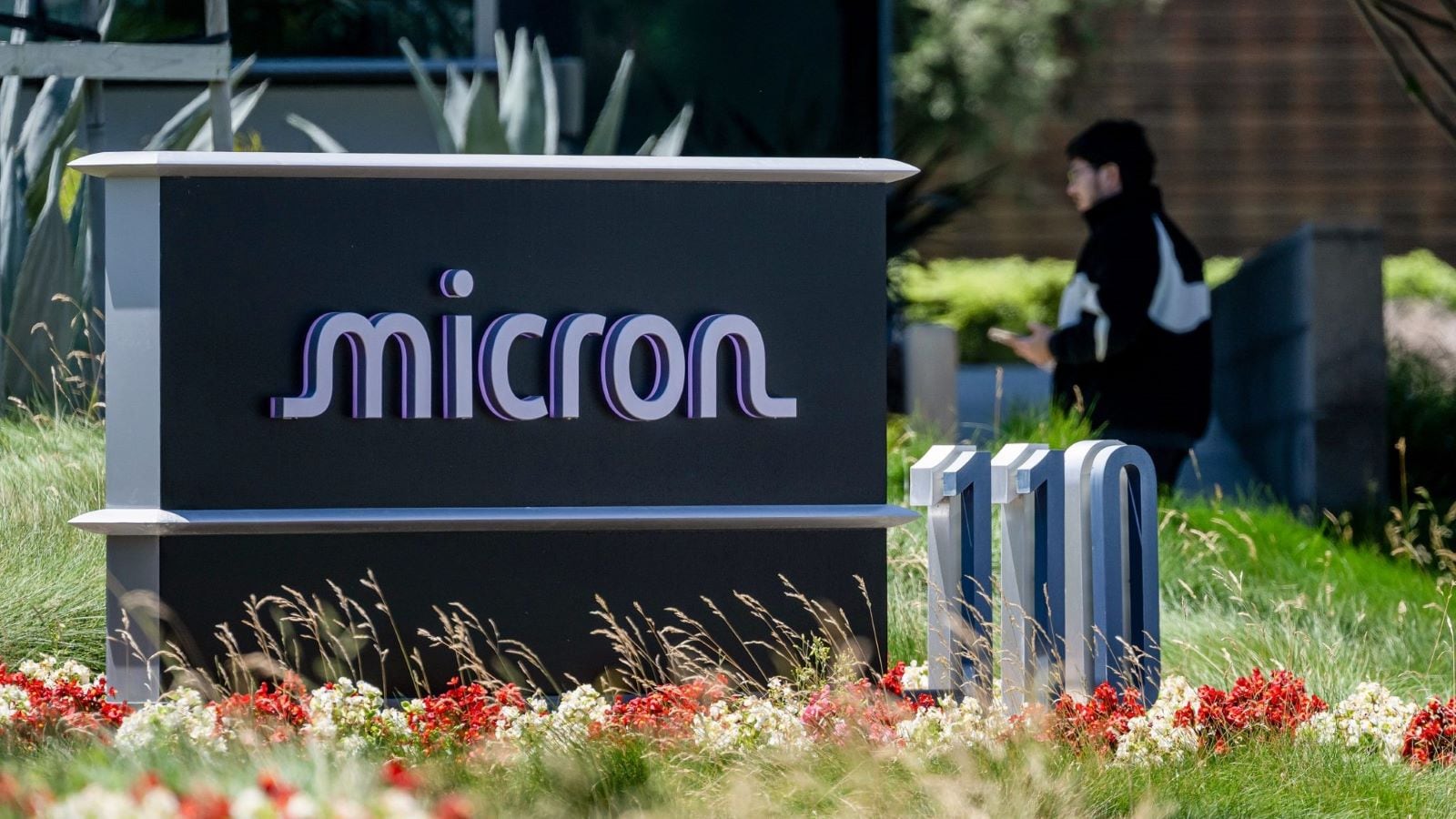
Now, a quiet reclamation project is underway in the American heartland. Micron Technology is pouring up to $3 billion into expanding its manufacturing footprint in Manassas, Virginia. On paper, it looks like a standard corporate press release filled with big numbers and boilerplate optimism. In reality, it is a frantic, high-stakes gamble to bring the physical soul of our technology back home.
The Million-Dollar Speck of Dust
To understand why a $3 billion investment matters, you have to understand the sheer, terrifying difficulty of making a memory chip.
Imagine a hypothetical technician. Let's call her Sarah. Sarah spends her shift wrapped in a white, head-to-toe Gore-Tex suit, breathing filtered air through a mask, walking through a room flooded with yellow light. This is a cleanroom. The air inside is scrubbed constantly, making it thousands of times cleaner than the air in a hospital operating theater.
Why the paranoia? Because a single, invisible flake of human dandruff falling onto a silicon wafer during production is the equivalent of dropping a massive boulder onto a city street. It obliterates the microscopic circuits. It ruins millions of dollars of work in a heartbeat.
For years, the United States excelled at designing these intricate digital cities but grew complacent about building them. Manufacturing shifted heavily to Asia, where labor was cheaper and government subsidies were aggressive. The U.S. share of global semiconductor manufacturing plummeted from over 30% in 1990 to just around 12% in recent years. We became a nation of architects who forgot how to swing a hammer.
Micron’s expansion in Virginia is an attempt to remember. This investment isn't just about pouring concrete; it is about building the specialized infrastructure required to house these hyper-sensitive manufacturing environments. It is about creating a domestic stronghold for dynamic random-access memory (DRAM) and storage chips—the essential components that allow your computer to think in real-time.
The Fragile Architecture of Everyday Life
It is tempting to think of memory chips as components meant strictly for teenagers playing video games or corporations running massive data centers. But the stakes are much closer to home.
Consider what happens next as our world becomes increasingly automated. The modern automobile is no longer just a mechanical beast of pistons and gears; it is a rolling supercomputer. A single electric vehicle can require thousands of individual chips to manage everything from anti-lock braking systems to steering sensors.
When a hospital deploys an advanced ventilator, or a city upgrades its electrical grid to handle renewable energy, they are betting their operations on the availability of these silent silicon components. If the factory making those chips is located on a coast vulnerable to geopolitical tension or natural disasters, that entire infrastructure rests on a foundation of sand.
By anchoring a massive production hub in Virginia, the goal is to create a buffer against global chaos. If a conflict halts shipping lanes in the South China Sea, or a new pandemic closes ports in Asia, a domestic supply chain ensures that critical infrastructure doesn't starve for components. It is a massive financial insurance policy for the stability of the Western economy.
The Gravity of Big Numbers
Three billion dollars is an abstraction. It is a number so large it loses meaning.
To ground it, look at the ripple effect on a single community. A manufacturing expansion of this scale acts like a gravitational well, pulling in an entire ecosystem of supporting businesses. Chemical suppliers, specialized toolmakers, logistics experts, and construction crews all settle around the primary facility.
The expansion is projected to create hundreds of high-skilled engineering and technician jobs, alongside thousands of indirect positions in the surrounding region. These are not positions that can be easily automated or shipped overseas. They require human hands, localized expertise, and years of specialized training.
But building the facility is only half the battle. The harder part is finding the people to run it. Decades of outsourcing mean that the generational knowledge of semiconductor manufacturing has largely faded in the domestic workforce. We have plenty of software developers, but a severe shortage of the specialized technicians who know how to calibrate a multi-million-dollar lithography machine. Micron’s investment forces a massive reinvestment in local universities and community colleges, creating training pipelines to teach a new generation how to work with atoms instead of just bits.
The Unreasonable Cost of Certainty
Let's be completely honest: this transition is going to be painful, expensive, and incredibly slow.
Building or expanding a semiconductor fabrication plant—often called a "fab"—takes years. It requires billions before a single usable chip ever rolls off the line. Furthermore, manufacturing in the United States carries higher labor costs and stricter environmental regulations than manufacturing in developing nations.
This means that localized supply chains might make technology more expensive in the short term. The consumer has grown accustomed to cheap electronics subsidized by vulnerable, hyper-efficient global supply lines. Transitioning to a secure, resilient model means acknowledging that certainty has a price tag.
Are we willing to pay a premium for a smartphone or a car if it guarantees the factory down the street stays open, and the hospital down the road can always source its parts? That is the underlying question this investment poses to the market.
Shifting the Momentum
We are witnessing the beginning of a massive historical pivot. The era of globalization driven solely by chasing the lowest possible price is fracturing. In its place, a new doctrine of economic resilience is emerging.
Micron's moves in Virginia are part of a broader, messy collective realization that physical things still matter. We can create the most sophisticated artificial intelligence software on Earth, but it is entirely useless without the physical silicon servers to host it. We can design the most beautiful electric cars, but they are just heavy lawn ornaments without the memory chips to run their software.
The concrete is being poured. The cleanrooms are being built. Step by step, the United States is attempting to re-learn the precise, unforgiving art of manufacturing the future. It is a long journey back to the sandbox, and success is far from guaranteed. But as the foundations settle in the Virginia soil, the message is clear: the digital world can no longer afford to float in the cloud. It needs a place to land.