The diesel exhaust cuts through the sea spray long before you see the boat.
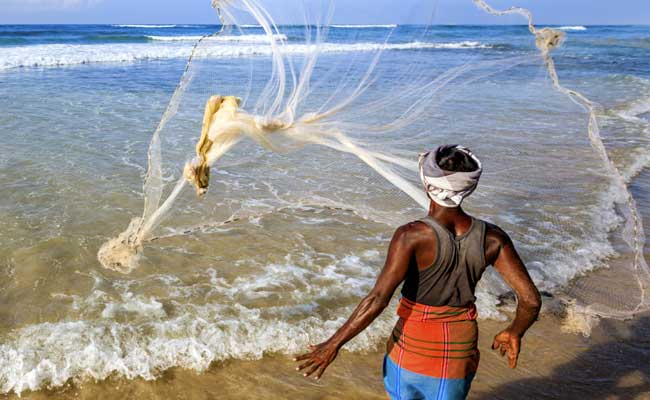
It is 3:00 AM off the coast of Rameswaram, a sliver of land reaching out from the southern tip of India toward Sri Lanka. The air smells of salt, engine grease, and dried shrimp. On a wooden trawler built for fifteen-mile runs, nine men sit in silence. Their hands are calloused, stained black by years of fixing greasy nylon nets and handling cold diesel engines.
They do not use GPS units off the showroom floor. They use the stars, the wave patterns, and a deep, instinctual memory passed down through generations. But instinct does not draw invisible lines across the Palk Strait.
When the grey steel hull of a Sri Lankan Navy patrol boat cuts through the dark water, the lights do not illuminate a criminal syndicate. They illuminate nine terrified men whose only crime was following the fish.
An Invisible Wall in Golden Water
The Palk Strait is narrow. At its tightest pinch, barely twenty-two miles of turquoise water separate India’s Tamil Nadu from northern Sri Lanka. For centuries, the Tamil communities on both shores shared a common life. They spoke the same dialect, sang the same sea songs, and fished the same shallow seabed. The water was not a barrier. It was a bridge.
Then came the treaties of 1974 and 1976.
Politicians in sterile rooms hundreds of miles away drew lines on a map. They ceded the uninhabited islet of Kachchatheevu to Sri Lanka, establishing an International Maritime Boundary Line. On paper, it was clean. Elegant. Decisive.
On the water, it was a tragedy waiting to happen.
Fish do not respect geopolitical treaties. The richest fishing grounds, thick with bottom-dwelling tiger prawns and sea cucumbers, sit right along the boundary, often spilling into Sri Lankan territorial waters. Decades of intensive bottom trawling on the Indian side depleted the seabed. To make a living, Indian fishermen push closer and closer to the line.
Sometimes they cross it deliberately, desperate to pull up enough catch to pay for expensive diesel. Sometimes a sudden squall or a dead engine drifts them across in the dark.
Either way, the result is the same.
The Cost of a Single Night
Consider a fisherman named Selvam. He is hypothetical, but his story is constructed from hundreds of court transcripts, official releases, and dockside interviews in Tamil Nadu.
Selvam took out a loan to buy ten liters of diesel. His wife sold her golden marriage bangles to cover the interest on the boat owner’s advance. If Selvam returns with empty wooden crates, his family does not eat that week. The loan shark comes to his door. His boat remains tethered to the wooden pier, decaying while debts pile up.
So when the sonar screen glimmers with a dense school of fish just a quarter-mile inside Sri Lankan waters, the decision is not made out of malice. It is made out of pure survival instinct.
Then comes the blinding spotlight.
The Sri Lankan Navy operates under strict mandates to protect their own territorial sovereignty and defend the livelihoods of northern Sri Lankan fishermen, who are themselves recovering from decades of brutal civil war. To the navy, these trawlers are illegal poachers destroying the fragile marine ecosystem with invasive nets.
The naval craft maneuvers close. Commands shouted through megaphones cut through the noise of the waves. The motor is cut. Armed sailors board the wooden trawler.
In an instant, nine men are transformed from working-class providers into geopolitical detainees.
Their boat, worth millions of rupees and representing a family’s entire economic existence, is impounded. The catch is confiscated. The men are led away in plastic zip-ties, taken to naval bases in Jaffna or Mannar, and eventually handed over to fisheries officials for legal processing.
The Long Wake
The immediate impact is measured in police blotters and short news releases. Nine Indian fishermen arrested. One boat seized.
The human fallout takes months, sometimes years, to process.
Back home in the fishing villages of Nagapattinam or Pudukkottai, the news arrives by word of mouth before it ever hits the newspapers. A family sits around a plastic radio in a small brick house with a corrugated iron roof. A phone call comes from a local union leader.
The breadwinner is gone.
Now comes the desperate scramble. Legal aid organizations, local politicians, and external ministries begin a slow, bureaucratic dance. Diplomatic notes fly back and forth between New Delhi and Colombo. Consular access is requested. Hearing dates are set in northern Sri Lankan magistrate courts.
While diplomats draft polite statements, the economic engine of a household grinds to a absolute halt.
The impounded boats sit in Sri Lankan harbors, baking under the tropical sun. Wooden planks warp. Motors rust in the salt air. By the time a boat is officially released month or years later, it is often completely unsalvageable—a floating ruin that costs more to repair than to replace.
A Cycle without a Circuit Breaker
Why does this keep happening?
Because the underlying crisis is not military; it is structural.
Indian fishermen are caught in a technological and economic trap. For years, government subsidies encouraged the purchase of mechanized bottom-trawlers—heavy vessels that drag weighted nets along the ocean floor. It was seen as modern efficiency. In reality, it scraped the seabed raw, destroying fish breeding grounds on the Indian side of the strait.
Meanwhile, Sri Lankan fishermen across the narrow strip of water rely largely on traditional, small-scale fishing methods. When massive Indian trawlers enter Sri Lankan waters, they do not just take fish. They tear through local Sri Lankan nets, destroying the equipment of people who are just as poor and vulnerable as they are.
It is a conflict between the impoverished and the impoverished, mediated by gunboats and international law.
Diplomatic releases happen regularly. Following bilateral talks, batches of fishermen are pardoned and repatriated as goodwill gestures. They walk across the land border at Attari or board civil transport ships back to India.
They return home bruised, traumatized, and financially ruined. And within weeks, faced with no alternative livelihood, many of them climb right back into a wooden boat and head back out toward the same invisible line.
Beyond the Headlines
When you read that nine fishermen were detained at sea, it is easy to view it as a distant, minor border friction. A tiny blip on the national radar.
It is anything but minor.
It is the raw, sharp edge of modern border enforcement colliding with human desperation. It is the story of how administrative lines drawn on old paper can alter the trajectory of human lives for generations.
Until sustainable deep-sea fishing alternatives are fully realized, until cross-border marine management becomes a reality rather than a political talking point, the waters of the Palk Strait will remain a place where taking a net out to sea means risking everything you own.
The diesel engine throttles down. The spotlight shines. And somewhere along the coast, nine families sit in the dark, waiting for a boat that isn't coming home tonight.