The headlines are screaming about "weakness" again. Every time the U.S. Treasury Department extends a waiver allowing foreign jurisdictions to process transactions for Russian energy, the armchair geopoliticians start their predictable chant. They claim the sanctions are a sieve. They argue that Washington lacks the spine to actually choke off the Kremlin’s war chest. They see a "waiver" and they read "surrender."
They are wrong. Dead wrong.
The persistent extension of these waivers—specifically General License 8J and its predecessors—isn't a bug in the sanctions regime. It is the most sophisticated feature of the entire architecture. If you want to understand how global power actually functions when the stakes involve the literal movement of the world’s most vital commodity, you have to stop looking at sanctions as a binary switch. It isn't "on" or "off." It is a rheostat.
The Myth of the Total Embargo
Most people operate under the "Cuban Model" of sanctions: you build a wall, you stop the trade, and you wait for the target to starve. That works for island nations with zero exports. It is a suicide pact when applied to the world’s second-largest crude oil exporter.
If the U.S. actually "succeeded" in the way critics demand—meaning a total, 100% removal of Russian molecules from the global market—the result wouldn't be a Russian collapse. It would be a global economic cardiac arrest. We are talking about $200-a-barrel oil. We are talking about double-digit inflation in every Western capital. We are talking about a populist revolt that would sweep every pro-Ukraine government out of office within six months.
The waiver is the pressure valve. It ensures that the oil keeps flowing so the lights stay on in Berlin and the tractors keep moving in New Delhi, while the Price Cap ensures that Russia doesn't actually make a profit on those barrels.
The Price Cap Is a Tax, Not a Ban
Let’s dismantle the biggest misunderstanding in energy finance: the goal is not to stop Russia from selling oil. The goal is to make selling oil an expensive, miserable, and low-margin chore for the Kremlin.
When the U.S. extends a waiver, it isn't giving Russia a gift. It is giving the rest of the world permission to continue being the middleman. By allowing transactions through specific banks for energy purposes, the U.S. maintains the "Price Cap" mechanism.
The mechanics are brutal:
- The Molecule Must Move: If Russian oil stays in the ground, global supply drops and prices spike. Putin wins because his remaining barrels are worth 3x more.
- The Profit Must Die: By allowing the trade but restricting the price (currently pegged at $60 for crude), the U.S. forces Russia to sell at a massive discount compared to Brent or WTI.
- The Friction Is the Point: To move oil under these waivers, Russia has to use a "shadow fleet" of aging tankers, pay exorbitant insurance premiums, and deal with predatory buyers in India and China who know the Kremlin is desperate.
Every time a waiver is extended, the U.S. is essentially saying: "Keep selling your oil for pennies, because we won't let you sell it for dollars." I’ve watched commodity desks handle these trades; they aren't celebrating a "thaw" in relations. They are sweating over compliance paperwork that makes a mortgage application look like a comic book.
Why India and China Are Washington’s Unwitting Compliance Officers
The "lazy consensus" says that India and China are "helping" Russia by buying their diverted crude. In reality, they are gutting Russia’s margins.
Before the invasion, Russia’s Urals grade traded at a tight spread to Brent. Today, thanks to the waiver system and the price cap, India demands—and gets—massive discounts. Russia is effectively subsidizing the Indian economy. The U.S. knows this. Washington would much rather have India fueled by cheap, discounted Russian oil (which drains the Kremlin's treasury) than have India competing for the same Atlantic Basin barrels that Europe and the U.S. need, which would drive prices up for everyone.
It is a transfer of wealth from Moscow to New Delhi, facilitated by the U.S. Treasury. Calling this a "failure" of sanctions is like calling a shark "weak" because it doesn't eat the pilot fish cleaning its teeth. The pilot fish serves a purpose.
The Ghost of 1973
The architects of these waivers are haunted by one thing: the 1973 Oil Embargo. They know that energy is the one variable that can topple a presidency faster than a war or a scandal.
If the U.S. didn't issue these waivers, the G7 would have to sanction the banks of every major trading partner. We would be sanctioning Indian state banks, Chinese lenders, and Turkish intermediaries. You don't build a coalition by firebombing the financial systems of your allies. You build a coalition by creating a "permissioned" lane of travel that forces the enemy to sell his soul just to keep his wells from freezing over.
The Cost of the "Shadow Fleet"
Critics point to the "Shadow Fleet"—the hundreds of mystery-owned tankers moving Russian oil—as proof that the waivers and caps aren't working. This is a fundamental misunderstanding of shipping economics.
Operating a shadow fleet is wildly inefficient. You are using old ships that should be in a scrapyard. You are paying cash for "off-market" insurance that might not even pay out. You are transferring oil ship-to-ship in the middle of the ocean like a drug deal.
All of that is "friction." Every dollar spent on a shadow tanker or a Greek middleman is a dollar that doesn't buy a drone for the front lines in Donbas. The waiver system forces Russia into this high-cost, low-reward shadow economy while keeping the "official" market stable.
The Moral Hazard of "Total Sanctions"
There is a segment of the policy world that believes in moral purity over physical reality. They want the waivers gone because "it's the right thing to do."
Let’s run a thought experiment. Imagine a scenario where General License 8J is revoked tomorrow. No more energy transactions allowed through Russian banks.
- Day 1: 5 million barrels of Russian crude and refined products are effectively blocked from Western-adjacent financial systems.
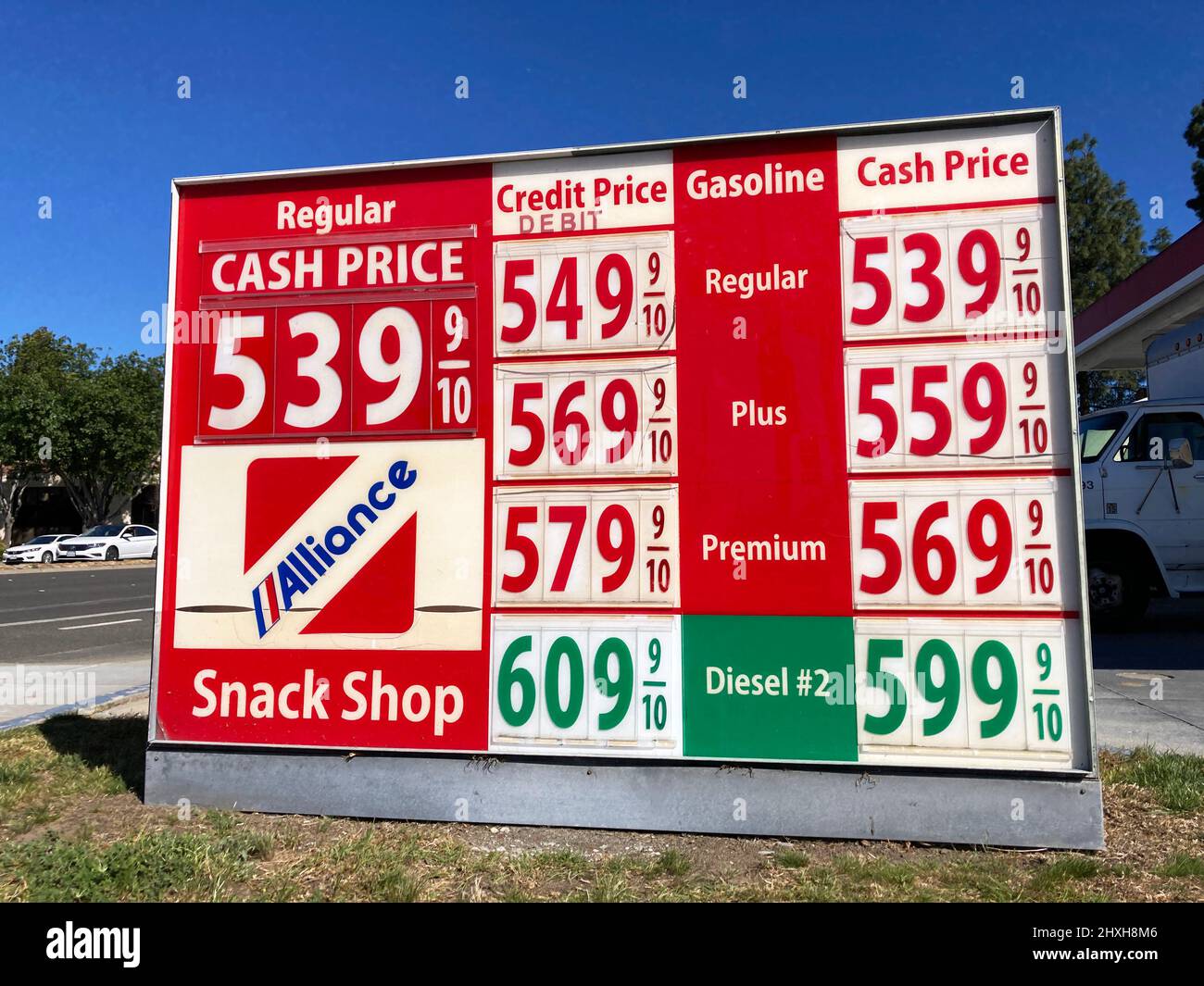
- Day 3: Brent hits $150. Gas prices in the U.S. jump to $7.00 a gallon.
- Day 7: The Eurozone enters a deep recession.
- Day 14: Global shipping costs triple.
- Day 30: Public support for Ukraine in the West evaporates as voters prioritize their heating bills over foreign borders.
The waiver isn't a sign of cowardice; it's the price of maintaining the alliance. It’s the "Geopolitical Tax" we pay to keep the coalition from cannibalizing itself.
The Hidden Data: Russia’s Tax Revenue
If you want the truth, look at the Russian Ministry of Finance’s own data, not the outraged op-eds. Their oil and gas revenues have been slashed significantly compared to pre-war peaks, even as their export volumes remain relatively high.
That is the "Impossible Trinity" of energy sanctions achieved:
- Keep the oil on the market (prevents global shock).
- Keep the price low (hurts the seller).
- Avoid direct conflict with neutral buyers (preserves diplomacy).
The waivers are the mechanism that makes this Trinity possible. They allow the U.S. to maintain a "Cold War" on Russian finances without triggering a "Hot War" on the global consumer.
Stop Asking if the Sanctions "Work"
The question "Are the sanctions working?" is a flawed premise. It assumes the goal was to stop the war in a week. Sanctions are a tool of attrition. They are meant to degrade the industrial base and the financial reserves of an opponent over years, not days.
By extending these waivers, the U.S. is playing the long game. It is keeping the global economy just stable enough to continue the squeeze indefinitely. It is a slow, methodical tightening of the noose, disguised as a series of bureaucratic extensions.
Every time you see a "waiver extended" headline, don't think "weakness." Think "strangulation." The U.S. is keeping Putin’s oil flowing specifically so they can continue to dictate the terms of his poverty.
The real story isn't that Russia is allowed to sell oil. The real story is that Russia has lost the power to set the price for its own most valuable resource. They are now a price-taker in a market where the rules are written by their greatest adversary.
That isn't a loophole. It’s a cage.