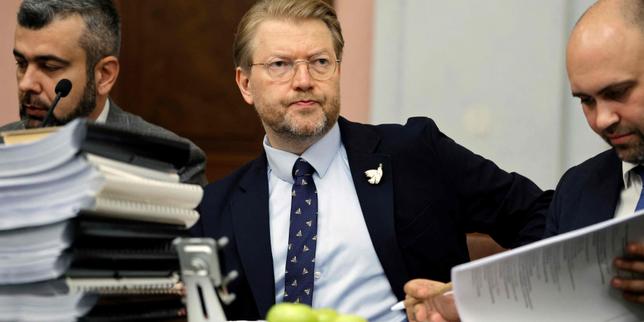
The Russian Supreme Court just dealt a final blow to the country's last legally registered political movement brave enough to openly oppose the war in Ukraine. By removing the Yabloko party from the upcoming parliamentary election ballot, the Kremlin has effectively scrubbed the final vestige of institutional dissent from the electoral process.
It’s a move that feels inevitable in today’s political environment, yet it still stings for those hoping for a legal avenue for change. You might be wondering why this matters if the party wasn't expected to win a majority anyway. It matters because it reveals exactly how the state views even the smallest shred of organized opposition.
What is Yabloko and Why Does it Matter
Founded back in 1993, Yabloko—which literally means "apple" in Russian—has long been a relic of the post-Soviet liberal movement. It wasn't always a fringe group. In the 90s, it was a major voice in the State Duma. Over the years, as the political climate tightened, its influence eroded.
Still, Yabloko remained the only registered party that didn't just quietly fall in line with the "special military operation" narrative. Their platform was simple but dangerous in the eyes of the current leadership: they campaigned on a ceasefire, diplomacy, and a Russia free from fear.
The Supreme Court ruling came after a lawsuit claimed the party received "undeclared campaign support" from foreign sources. The party denies these accusations entirely, calling them a thinly veiled pretext for removal.
The Fear of Organized Dissent
You have to look at the math to understand why this ban happened now. While Yabloko’s polling numbers were hovering around the three percent mark—falling short of the five percent threshold needed to enter the State Duma—they represented a focal point for the anti-war vote.
The Kremlin doesn't just fear election losses. It fears legitimate, organized alternatives that provide a rallying point for the public. Even a small percentage of the vote given to an explicitly anti-war party acts as a statistical headache for the authorities, serving as proof that the "national unity" they broadcast is a carefully curated illusion.
When Yulia Navalnaya, the widow of the late Alexei Navalny, publicly backed the party, it likely only accelerated the pressure on them. The authorities don't want a "peace" option on the ballot. Period.
What Happens When You Remove the Safety Valve
By closing off the ballot, the state isn't just winning an election; they’re effectively narrowing the public’s options for expressing discontent to zero. Throughout history, shutting down moderate, legal channels for protest has rarely resulted in long-term stability. Instead, it pushes frustration into less predictable areas.
We’ve seen this playbook before. Look at the 2024 presidential race, where challenger Boris Nadezhdin—who also ran on an anti-war platform—was disqualified after the Central Election Commission claimed his signature collection process was riddled with "irregularities". The pattern is clear: if you oppose the war, you don't make it to the ballot.
Does This Mean Politics in Russia is Over
The party leadership, including Nikolai Rybakov, has vowed to continue their work despite the court ruling. They’ve stated they aren't halting their campaign and are still looking for ways to support members running in individual constituencies, even if the party itself is barred from the proportional representation list.
Younger supporters, despite the obvious risks, gathered outside the courthouse to chant "Shame!". It’s a rare moment of public defiance in a country where thousands have already been jailed or fined for speaking out since 2022.
If you're looking for where this goes next, keep an eye on how the government handles the remaining local-level candidates and whether the public chooses to use the ballot box as a symbolic protest in other ways, or if they decide the entire process has become too compromised to participate in at all.
Real change in systems like this rarely happens through the front door of an election. When the legal path is blocked, the conversation shifts to what remains possible under intense pressure. The most critical step now for those following the situation is to look beyond the official election results and observe how the anti-war movement evolves outside the halls of power, as the institutional routes are now officially closed.