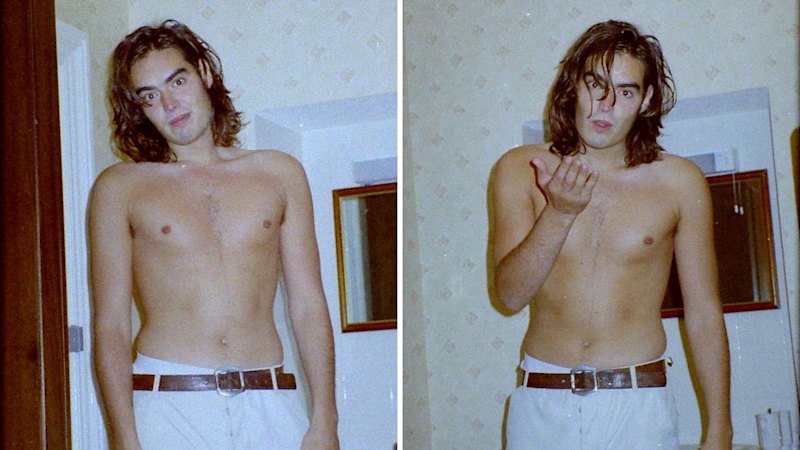
"He just changed suddenly from camp, friendly and effeminate to monster-like." Those words from a witness at Southwark Crown Court in October 2026 cut right through the theatrical fog that surrounded Russell Brand for decades. During testimony in the Russell Brand trial, the woman described how she felt frightened when he made her take half-naked photos of him on her camera moments before a sudden, violent hotel room rape.
Anyone searching about that moment usually wants two things. First, they want the straight facts of what was alleged and what actually happened in court. Second, they're trying to make sense of a jarring contrast—how a persona sold to millions as eccentric, chatty, and harmless could flip so abruptly into something menacing.
Here's the bottom line upfront. The witness told police and the court that Brand's demeanor shifted sharply in that hotel room from theatrical and approachable to dark, demanding, and frightening, right after getting her to photograph him half naked and then forcing himself on her despite her saying no. Weeks later, on November 5, 2026, a London jury convicted Brand of one count of rape and three counts of sexual assault involving four women across offenses dating between 2004 and 2009, leading to a prison sentence of 10 years and six months on November 9.
What Happened in Court During the Russell Brand Trial
Tabloid headlines love a single shock quote. Problem is, single quotes stripped of context flatten real courtroom proceedings into clickbait.
During the three-week trial at Southwark Crown Court, prosecutors presented evidence across charges brought against Brand involving six women over a multi-year span. One accuser gave police and court testimony describing a hotel room encounter where Brand directed her to take photographs of him half naked—a moment she said made her feel uneasy and trapped—before pushing her onto the bed and raping her while she said no and felt like she couldn't breathe or get out. She told the jury that his demeanor shifted abruptly from lighthearted and effeminate to "monster-like," dark, and demanding.
Defense counsel Ian Winter KC pushed back hard during cross-examination, suggesting she had been drawn in by Brand's charisma and magnetic personality rather than overpowered. She rejected that framing flatly, telling the court he felt menacing and scary in that room, not charming.
Honesty compels a clear distinction here. Allegations in a trial aren't verdicts on their own, and the jury didn't convict on every count. Jurors acquitted Brand on two counts of rape and one count of attempted indecent assault, while convicting him on one count of rape and three counts of sexual assault. Brand denied all charges and testified that his encounters were consensual, arguing his past lifestyle was messy and selfish rather than criminal. Still, the jury weighed the testimony, cross-examination, and broader evidence and reached guilty verdicts on four of the six accusers.
Why That Sudden Shift Feels So Unsettling
People get tripped up by predator stereotypes. We picture villains wearing black hats or sneering in shadows. Real life rarely cooperates with Hollywood casting.
In high-profile abuse cases, perpetrators often rely on social disarming. A flamboyant, self-deprecating, or "camp" public routine lowers guardrails fast. When someone seems harmless, quirky, or even slightly ridiculous, targets and bystanders alike often second-guess their own early discomfort.
Psychologists and trauma researchers have documented for years how freeze and dissociation responses work during sudden sexual violence. When fear spikes abruptly—especially in an unfamiliar room with someone larger or backed by status and entourage—the brain doesn't always produce a neat movie-style struggle. Witnesses in this case described feeling frozen, drifting out of their heads, or trying to get through the ordeal as quickly as possible.
That's why defense arguments about "charisma" or delayed reporting hit such a nerve in courtrooms. Charm isn't a character witness against coercion. Sometimes charm is the exact mechanism used to get someone alone in a room before the mask drops.
Fame, "Laddish" Culture, and Institutional Blind Spots
You can't separate individual criminal responsibility from the environment that let it run unchecked for years.
At sentencing on November 9, 2026, Judge Joel Bennathan didn't mince words. Addressing the 51-year-old former comedian and actor, the judge stated that while Brand was clever, funny, and charismatic to many two decades earlier, he had also become a sexual predator with a casual, arrogant disregard for women who said no. Judge Bennathan noted that Brand's entourage and surrounding culture may have brushed off behavior as "laddish"—a convenient label that turns boundary-crossing into a punchline until real damage is done.
Prosecutors from the Crown Prosecution Service echoed that point, emphasizing that fame and status gave Brand access and a sense of impunity that he abused. Following the 2023 Dispatches and The Times / Channel 4 investigations—which the accuser who described the photo request said triggered her to go to police—more women came forward, and after the November 2026 convictions, The Times and The Guardian reported fresh allegations from additional women alongside ongoing police inquiries.
Even after the verdict, the debate hasn't neatly closed. Brand's defenders pointed to his later sobriety advocacy, charity work, and rebrand into wellness and commentary, claiming he was targeted for his outspoken views. Former partner Jemima Goldsmith also publicly alleged coercive control and violence during her relationship with him in a post-sentencing statement. What remains undeniable is how institutions—TV, radio, live circuits, and social circles—rewarded loud, transgressive swagger while overlooking who paid the price behind closed doors.
What Readers and Advocates Can Do Next
If you're following this case or looking for concrete, reliable information rather than rumor mills, stick to primary court reporting and verified support channels.
- Read primary legal and public-interest reporting: Check official updates from the Crown Prosecution Service alongside established outlets like The Guardian and PBS News, paying close attention to exact charges, verdicts, and reporting restrictions that protect victims' anonymity.
- Watch out for sensationalized framing: When reading any account of a criminal trial, separate witness testimony, defense arguments, judicial remarks, and final verdicts instead of treating a single headline quote as the whole story.
- Support survivors directly: If reading about sexual violence brings up personal memories or distress—or if someone you know needs help—reach out to confidential support services such as Rape Crisis England and Wales in the UK or RAINN in the US, where trained specialists offer free, confidential support regardless of when an incident happened.