The cultural obsession with turning football hooligans into political revolutionaries needs to stop.
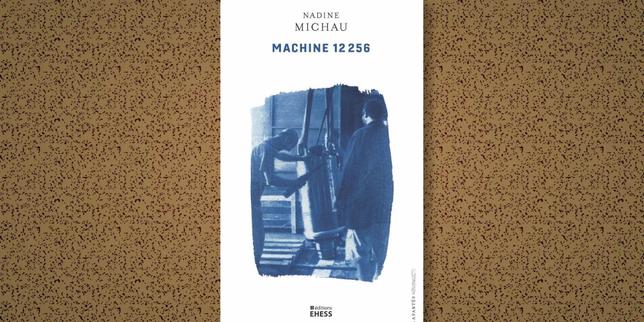
Media outlets love to look at Eastern European football culture through a lens of revolutionary romanticism. They take a book like Nikol Dziub’s Du stade aux barricades—which chronicles the Dynamo Kiev ultras and their transition from the terraces to the Maidan protests—and treat it like a blueprint for grassroots democracy. They paint a picture of passionate, working-class youth using the solidarity of the stadium to fight tyranny.
It is a beautiful narrative. It is also entirely wrong.
What these narratives miss is the dark underbelly of the beast. The transition from the stadium to the barricades is not a triumphant leap toward Western democratic ideals; it is the inevitable weaponization of a highly organized, easily manipulated paramilitary subculture. When we romanticize the "remuant" (restless) supporters of Dynamo Kiev, we are not celebrating freedom fighters. We are celebrating the institutionalization of violence.
The Illusion of Spontaneous Revolution
The lazy consensus among sports journalists and cultural commentators is that football ultras represent a pure, organic form of societal resistance. The logic goes like this: because these groups are fiercely loyal, anti-establishment, and physically brave, they are uniquely equipped to act as the vanguard of political change.
This view ignores how power actually operates in Eastern European football.
Ultras are rarely independent agents of change. For decades, football clubs in Ukraine, Russia, and across the Balkans have been the playthings of oligarchs and political operators. The terraces are recruitment grounds. I have spent years tracking the intersection of sports and geopolitics in Eastern Europe, and the reality is far messier than a simple "people versus the state" dynamic.
Consider how easily these groups are co-opted. The same organizational structures that allow ultras to coordinate massive choreographies (tifos) or launch synchronized attacks on rival fans make them perfect tools for asymmetric warfare.
- The Command Structure: Ultras operate under strict, top-down hierarchies. The "capo" commands absolute loyalty. There is no democratic debate on the terraces.
- The Muscle Memory: These groups train for violence. Combat sports, martial arts, and tactical street fighting are integrated into the subculture.
- The Ideological Vacuum: While often wrapped in intense nationalism, the core ideology of many ultra groups is tribalism and anti-authoritarianism. This makes them highly malleable. When the enemy changes from the police to a rival political faction, the tactics remain exactly the same.
To call this a "awakening of memories" or a celebration of fan culture is intellectually lazy. It masks a dangerous reality: the line between a passionate sports fan and a member of an unregulated militia is terrifyingly thin.
The Cost of Weaponizing the Terraces
Let’s look at the actual data of what happens when stadium violence goes political.
Historically, when football fans become political enforcers, society loses. We saw it in the Balkans during the 1990s. Zeljko Raznatovic, better known as Arkan, recruited the core of his notorious paramilitary unit, the Serb Volunteer Guard (Arkan's Tigers), directly from the North Stand of Red Star Belgrade’s stadium—the Delije ultras. What began as terrace brawls ended in war crimes.
While the Dynamo Kiev ultras fought on the side of national sovereignty during the Maidan revolution and subsequent conflicts, glorifying the method sets a dangerous precedent. When you validate violence as a legitimate tool for political expression just because you agree with the current cause, you lose the right to complain when that same violence turns against the democratic institutions you claim to protect.
The downside to acknowledging this reality is uncomfortable. It forces us to admit that the energy driving the most vibrant atmospheres in world football is inextricably linked to radicalization.
| Country | Prominent Ultra Group | Political/Paramilitary Transition |
|---|---|---|
| Ukraine | Dynamo Kiev / Metalist Kharkiv | Maidan self-defense units, Azov Battalion integration |
| Serbia | Red Star Belgrade (Delije) | Arkan's Tigers paramilitary unit (Yugoslav Wars) |
| Egypt | Al Ahly (Ahlawy) | Key combatants in the 2011 Tahrir Square clashes |
This table does not represent a triumph of sports culture. It represents a failure of civil society. When the stadium becomes the primary laboratory for political action, it means traditional democratic channels have completely collapsed.
Dismantling the "People Also Ask" Delusions
When people look into the history of Eastern European football, they usually ask the wrong questions. They want to know how to channel fan energy into positive civic engagement. They ask how clubs can better manage relations with radical supporters.
These questions rest on a flawed premise. You cannot sanitize an subculture whose entire identity is built on being uncontrollable.
Can Ultras Be Part of a Normal Democratic Society?
No. The core ethos of the ultra movement is explicitly anti-system. They exist in opposition to modern, commercialized, regulated society. The moment an ultra group becomes civilized, compliant, and integrated into standard civic dialogue, it ceases to be an ultra group. It becomes a standard supporters' club. The radical edge that makes them effective on a barricade is the exact same edge that makes them a threat to civil peace during peacetime.
Should Football Clubs Be Held Accountable for Fan Radicalization?
Blaming the clubs is a cop-out. It assumes a level of control that football executives simply do not possess. When an oligarch owns a club, the ultras are often used as a private security force or a political bargaining chip. Expecting a football club's front office to solve deep-seated societal radicalization, economic stagnation, and geopolitical instability through "community outreach" is delusional.
The Hypocrisy of Western Commentary
There is a blatant double standard in how Western intellectuals view football fans.
When domestic fans light flares, fight in the streets, and chant offensive slogans, they are labeled thugs, criminals, and a stain on the beautiful game. Governments pass draconian laws, introduce facial recognition at stadiums, and ban away travel to suppress them.
Yet, when Eastern European or North African fans engage in the exact same behavior—but direct it toward a government the West dislikes—their violence is suddenly recontextualized as "remuant," brave, and revolutionary. The choreography of the stadium is praised as art, and their tribal aggression is rebranded as fierce patriotism.
This hypocrisy exposes the truth: the commentary surrounding books like Dziub’s is not about football at all. It is about using football fans as exotic props for geopolitical narratives. It ignores the domestic reality these countries face once the protests end. The weapons don't disappear. The appetite for violence doesn't vanish. The men who spent years fighting on the barricades do not simply return to quietly watching a match on a Saturday afternoon.
Stop romanticizing the stadium as a cradle of revolution. The terraces are a powder keg, and when they explode into the streets, nobody wins. It is time to look past the dramatic imagery of smoke bombs and flags and see the phenomenon for what it truly is: the dangerous militarization of a sport.