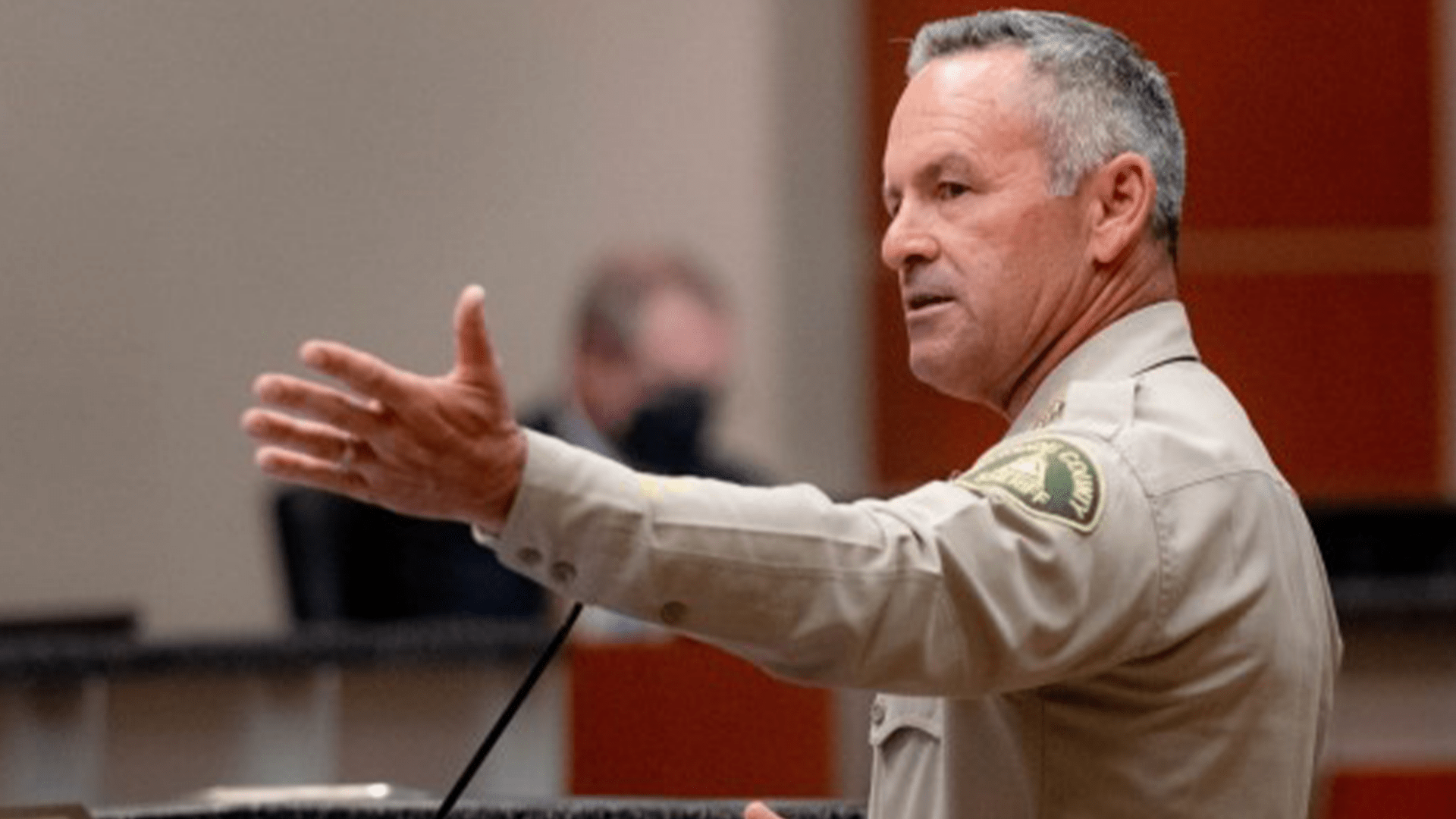
Riverside County Sheriff Chad Bianco doesn't shy away from a microphone. He's made a name for himself as a vocal critic of California’s political establishment. But when it comes to the integrity of our elections, his recent rhetoric about personal "verification" of results misses the mark on how democracy actually functions. It’s not just a matter of opinion. It’s about the legal and logistical framework that keeps our voting system from falling into chaos.
If you’re worried about whether your vote counts, you’re not alone. Trust in democratic institutions has been shaky for years. However, a law enforcement officer suggesting they need to personally vet the results using their own methods creates more confusion than clarity. There’s a better way to ensure every ballot is legitimate without turning the Sheriff's Office into an amateur registrar.
The Problems With Individual Law Enforcement Overreach
We expect the Sheriff to handle public safety, manage the jails, and investigate crimes. We don't—and shouldn't—expect them to act as the final arbiter of an election. When Sheriff Bianco hints that he needs to verify election outcomes through his own lens, he’s stepping outside the lane of his constitutional authority.
Elections are complex. They involve a chain of custody that starts months before Election Day and ends weeks after. California law already has a massive, multi-layered system of checks and balances. When a high-ranking official suggests those aren't enough, it undermines the hard work of the non-partisan staff at the Registrar of Voters. It suggests a problem exists before any evidence has been presented.
This isn't just about Bianco. It's about the precedent. If every county sheriff decided they had the right to "verify" an election before accepting it, we’d have 58 different versions of truth in California alone. That’s a recipe for a constitutional crisis.
Why the Current System Already Works
The Riverside County Registrar of Voters isn't just a bunch of people counting paper in a dark room. It’s a transparent process. Every step is open to the public. You can literally walk in and watch them process ballots.
The Logic of the Manual Tally
California requires a 1% manual tally. This is a crucial piece of the puzzle that often gets ignored by those shouting about "fraud."
In this process, officials randomly select 1% of the precincts. They then hand-count every single ballot in those precincts to ensure the machine totals match the paper reality. If there’s a discrepancy, it’s investigated. It’s a statistical safeguard designed to catch errors or tampering. If the Sheriff wants to verify results, he doesn't need a badge or a warrant; he just needs to show up for the public audit like any other citizen.
Simple and Safe Alternatives for Election Verification
If the goal is truly to ensure the "safety" and "accuracy" of the vote, there are ways to do it that don't involve political grandstanding.
1. Participate in the Observer Program. The Registrar of Voters has a formal program for observers. Any person—including the Sheriff or his deputies—can sign up to watch the signature verification, the opening of envelopes, and the machine counting. This is the "simpler, safer way" the competitor's piece likely touched on, but let's be more specific. Observing isn't just sitting in a chair. It’s about understanding the specific software used and the rigorous "logic and accuracy" tests performed on machines before a single vote is even cast.
2. Focus on Cyber Security Collaboration.
Instead of questioning the tally, the Sheriff’s Department could focus on its actual job: protecting the infrastructure. Local law enforcement should work with the Secretary of State’s office to ensure the physical security of ballot drop boxes and the digital security of the county’s network. That’s a productive use of resources.
3. Educate the Public on the Process.
A Sheriff has a massive platform. Instead of seeding doubt, they could use that platform to explain how ballot signatures are checked against the DMV database. They could explain how the "hanging chad" era is dead because of modern scannable paper trails.
The Dangers of Partisan Policing in Elections
When law enforcement takes a side in election skepticism, it changes the dynamic of the polling place. Imagine being a poll worker—usually a volunteer or a senior citizen—and seeing the local Sheriff’s department breathing down your neck because they "don't trust the count." It’s intimidating. It’s unnecessary.
We’ve seen this play out in other states. It leads to lawsuits, wasted taxpayer money, and zero evidence of the widespread fraud that was supposedly the reason for the "investigation" in the first place. Riverside County taxpayers are already on the hook for enough expenses; we don't need to fund a redundant, politically motivated audit that duplicates what the Registrar is already doing by law.
Logistics of the Ballot Chain of Custody
The security isn't just about the count; it’s about the journey of the ballot. From the moment you drop your envelope in a box or mail it, it’s tracked.
- Secure Transport: Ballots are collected by two-person teams.
- Tamper-Evident Seals: Every container has a logged seal number.
- Signature Verification: Every signature is compared to the voter’s registration record by trained staff.
- The Paper Trail: California uses paper ballots. Even if the machines were hacked (which they aren't, as they aren't connected to the internet), we have the physical paper to go back to.
If Sheriff Bianco wants to "verify" things, he should start by acknowledging these existing facts. Ignoring them feels less like a quest for truth and more like a quest for headlines.
Taking Action to Restore Trust
If you’re a resident of Riverside County and you’re tired of the back-and-forth, don't just complain on social media. Take a Saturday and go to the Registrar’s office during an election cycle. See the machines. Ask the staff how they handle duplicate ballots.
Trust is built through transparency, not through the shadow of law enforcement looking over the shoulders of civil servants. We have a system. It’s robust. It’s been tested through dozens of election cycles and lawsuits.
Next time you hear an official talk about "securing" an election that is already secure, ask for specifics. Ask which part of the 1% manual tally they find insufficient. Ask why they aren't using the existing observer channels. Demanding better from our leaders means demanding they respect the institutions they were elected to serve.
Go to the Riverside County Registrar of Voters website. Sign up to be a poll worker or an observer for the next cycle. That’s how you actually verify an election.