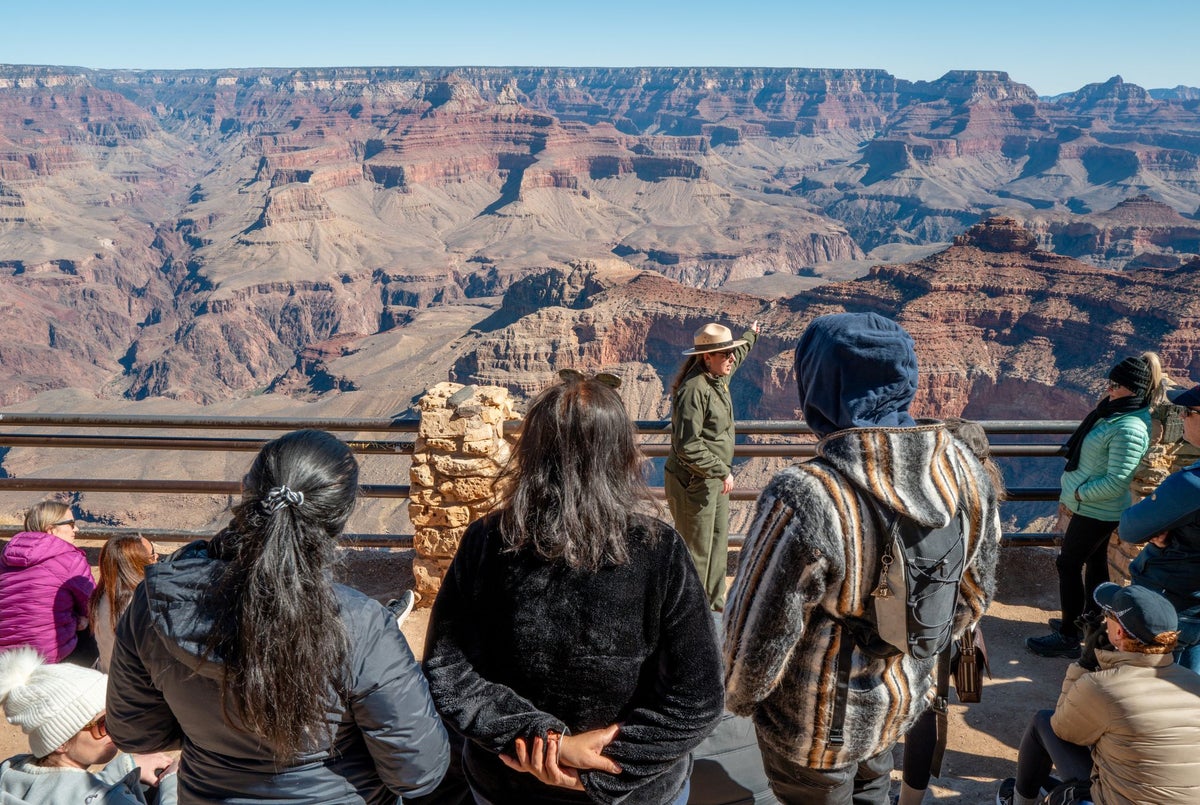
Standing on the South Rim of the Grand Canyon, you are not looking at a hole in the ground. You are looking at a wound in time. The air here feels thinner, not just because of the altitude, but because the scale of what is missing creates a sort of physical pressure. Below your boots, two billion years of Earth’s autobiography are stacked in neat, colorful layers of limestone, shale, and sandstone. But there is a gap. A massive, silent heist occurred in the geologic record, and for centuries, we blamed the wrong thief.
Geologists call it the Great Unconformity. It is a missing chapter in the middle of the book of the world—a billion years of rock that simply isn't there. If you touch the wall of the canyon at a specific point, your thumb might rest on rock that is 500 million years old, while your pinky touches rock that is 1.7 billion years old. The time between them vanished. We used to think this was a global event, a slow erasure by the sea. We were wrong.
The real story is more violent. It involves a continent tearing itself apart and a river that learned how to eat mountains.
The Architect of the Abyss
We have always been told that the Colorado River carved the Grand Canyon. That is a polite way of saying the river destroyed a plateau. Imagine a hypothetical hiker named Elias. He stands at the edge today, watching the muddy water miles below. To Elias, the river looks like a silver thread, delicate and shimmering. But if Elias could speed up time, he would see that thread acting like a high-pressure saw.
For decades, the scientific consensus held that the canyon was a relatively young feature, perhaps five or six million years old. It was a comfortable number. It fit our understanding of how fast water can move dirt. But new research into "thermochronology"—a way of measuring when rocks cooled as they moved toward the surface—suggests a much older, darker history.
The canyon wasn't a single project. It was a series of ancient gorges, stitched together by a river that was essentially a geological opportunist.
The Great Uplift
To understand how the canyon formed, you have to stop thinking of the Earth as solid. Think of it as a trampoline. About 70 million years ago, a massive tectonic plate began sliding underneath North America. It didn't just slide; it pushed. This event, known as the Laramide Orogeny, acted like a giant hand shoving a rug across a hardwood floor. The rug bunched up. This created the Rocky Mountains and, more importantly for our story, the Colorado Plateau.
Suddenly, the land was high. And when land gets high, gravity gives water a weapon.
Water is lazy. It always seeks the shortest, easiest path to the sea. But the Colorado River was trapped on a rising plateau. As the land pushed up, the river fought back by cutting down. It was a race between the sky and the silt. If the land rose an inch, the river took an inch back. Over millions of years, this stalemate created a vertical world.
The Mystery of the Missing Miles
If you look at the North Rim, you’ll notice it is about a thousand feet higher than the South Rim. This tilt is the secret to the canyon’s width. When rain hits the North Rim, it flows toward the canyon, carving deep side-gorges that eat away at the edges. When rain hits the South Rim, it flows away, leaving the edge sharp and precarious.
This is where the human element enters. We look at the Grand Canyon and see beauty. The indigenous peoples who have lived here for millennia, like the Havasupai and the Hopi, see a map of emergence and survival. To them, the canyon isn't a "natural wonder" to be checked off a bucket list. It is a living entity. They understood the power of the water long before we had the tools to measure the decay of radioactive isotopes in zircon crystals.
The new theory suggests that the canyon we see today was born from "drainage reversal." Imagine a river flowing one way for millions of years, only to have the ground tilt so sharply that it literally turned around. This geological whiplash sent a massive surge of energy through the system. It wasn't a slow, steady erosion. It was a series of catastrophic failures and bursts.
The Weight of the Void
The sheer volume of rock removed is staggering. We are talking about 1,000 cubic miles of debris. Where did it go? It was ground into sand and carried to the Gulf of California. The Grand Canyon is, in a very literal sense, a ghost. It is defined by what is no longer there.
When you sit on the limestone ledge of Mather Point at sunset, the colors shift from ochre to blood red to a deep, bruised purple. It feels peaceful. But that peace is an illusion. You are witnessing a crime scene of planetary proportions. The river is still working. Even now, as you breathe in the pine-scented air, the Colorado is carrying away the equivalent of a suburban house every few minutes.
Modern geologists are now looking at the "Great Unconformity" not as a global mystery, but as a local trauma. The tearing of the supercontinent Rodinia nearly a billion years ago created the initial scars. The Colorado River simply found those old scars and reopened them. It used the planet's own ancient weaknesses to hollow out the heart of the West.
The Invisible Stakes
Why does it matter if the canyon is six million years old or seventy million? It matters because it changes how we view the stability of our home. If the Grand Canyon was carved in a geological heartbeat, it means the Earth is far more volatile than we like to admit. It means that "solid ground" is a temporary state of affairs.
Consider the Colorado River today. We have dammed it. We have diverted it. We have bled it dry to green the lawns of Phoenix and fill the fountains of Las Vegas. We treat the river as a utility, a plumbing fixture for the American desert. But the history of the canyon suggests that the river has a memory. It has spent eons destroying mountains. It has outlasted continents.
Our intervention is a blink. The river is a god.
The Echo of the Stone
There is a specific kind of silence in the depths of the canyon. It isn't the absence of sound, but the presence of weight. Down at the bottom, near the Phantom Ranch, the rocks are black and gnarled. These are the Vishnu Schist. They are the roots of an ancient mountain range that was once as tall as the Himalayas. The river ate those mountains. All that remains is this dark, jagged basement.
When you touch that black stone, you aren't just touching rock. You are touching the survivor of a billion-year war.
The new theory of the canyon’s formation reminds us that we are guests in a landscape that does not care about our timelines. We measure our lives in decades; the canyon measures its life in the erasure of eras. The "natural wonder" isn't the hole itself, or the red walls, or the way the light hits the peaks at noon.
The wonder is the persistence of the water.
A single drop of rain, multiplied by infinity, can move a world. We stand on the rim and feel small, not because the canyon is big, but because we realize that the ground beneath us is only waiting for its turn to be carried away by the stream.
The river is still hungry.