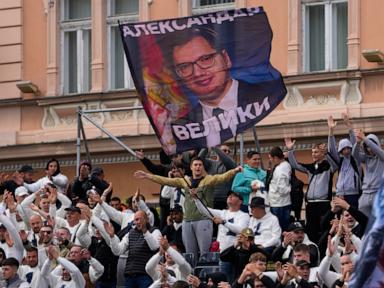
Conventional wire coverage treats Aleksandar Vučić's October 2026 campaign stop in Novi Sad as a routine show of political defiance. Populist strongman walks back into the scene of a disaster. Crowds gather. Pledges fly. Everyone moves on.
That reading misses the entire architecture of the crisis. In similar news, we also covered: Blaming Foreign Hands for Albanian Student Protests Misses the Real Crisis.
Novi Sad was not a random campaign stop on a map. On November 1, 2024, a concrete canopy collapsed at the city's main railway station, killing 16 people and turning a routine infrastructure project into a symbol of systemic rot. Almost two years later, returning there ahead of the October 25, 2026 parliamentary election was not a display of effortless dominance. It was a high-risk gamble by a political machine that had run out of safe rooms.
The Lazy Consensus Around Populist Comebacks
Standard political reporting loves a simple script whenever a long-serving leader stages a rally in a contested or grieving city. The lazy consensus says that state television dominance, patronage networks, and stadium choreography automatically neutralize street anger. Analysts point to years of Serbian Progressive Party (SNS) rule since 2012, mention Vučić's balancing act between Brussels, Moscow, and Beijing, and assume that voters will once again trade institutional reform for pensions, public-sector raises, and familiarity. NBC News has provided coverage on this fascinating subject in extensive detail.
That script worked for years. It failed in 2026.
Why? Because a concrete slab falling onto a station concourse does something a normal policy dispute never does. It strips away spin. You can argue on evening talk shows about foreign policy positioning or GDP numbers. You cannot argue with gravity when a newly renovated structure crushes 16 people. When grief curdles into conviction that corner-cutting and cronyism cost lives, a campaign rally stops looking like strength and starts looking like an audit.
Let's be clear about what populist politics actually is before throwing labels around. Political scientists like Cas Mudde define populism as a thin-centered ideology that pits a supposedly "pure" people against a "corrupt" elite. For over a decade, Vučić mastered the art of casting himself as the champion of ordinary citizens against entrenched rivals or foreign meddlers. After Novi Sad, the geometry flipped. Protestors and students didn't just oppose a party; they recast the ruling apparatus itself as the corrupt elite.
You Are Asking the Wrong Question About the Rally
Most coverage asks whether Vučić could still command big crowds or project authority in Novi Sad. Wrong question. Crowds in managed media ecosystems rarely settle elections. The real question is why an incumbent with control over major broadcasters and state levers felt compelled to step down from the presidency in late September, head the SNS parliamentary list as a prime ministerial candidate, and campaign directly inside the fault line of his own legitimacy.
Cornered incumbents don't gamble on symbolic ground unless their baseline math is already cracking.
Consider the numbers from the October 25, 2026 vote. Turnout jumped to nearly 69%, up roughly ten percentage points from 2023. The Student List captured about 53.7% of the vote and 140 or 141 seats in the 250-seat National Assembly, while Vučić's coalition dropped to roughly 39.5% and 103 seats, ending more than a decade of SNS parliamentary dominance and triggering an election-night concession.
Imagine a scenario where a ruling party relies on media monopoly and routine municipal mobilization to coast through another cycle. If baseline support holds, you keep the campaign in friendly territory, run out the clock, and let state-aligned outlets frame the narrative. You only walk into the epicenter of a 16-death infrastructure disaster when staying away looks like cowardice and showing up carries lethal risk.
What People Also Ask (And Why Half the Premise Is Flawed)
Did the Novi Sad tragedy alone topple the government?
No single event does that on its own. Disasters act as accelerants, not matches on dry tinder. Years of frustration over judicial independence, media capture, perceived corruption, and economic inequality were already stacked up. The canopy collapse gave that frustration a concrete focal point and a moral urgency that opposition infighting had previously failed to ignite. Blaming everything on one collapse oversimplifies a multi-year political shift; pretending the collapse didn't reshape the electorate is pure denial.
Why did a student-led movement beat a seasoned political machine?
Because traditional opposition parties spent years fighting inside a rigged frame, whereas a broad student slate built horizontal trust across campuses, cities, and eventually rural districts. When students knocked on doors outside urban centers and ran a full 250-candidate slate with a blunt anti-corruption message, they broke the myth that only insiders could challenge the machine.
Can a political machine survive losing its parliamentary majority?
Yes, sometimes—through institutional friction, coalition maneuvering, or surviving media footholds. Yet losing 26 seats in a single election while arrests and broadcaster resignations follow in the aftermath is no minor setback. Power in centralized systems relies heavily on the aura of inevitability. Once voters see that the monolith can lose, fear loses its grip.
Battle Scars From Reading Political Machines Wrong
I've watched political consultants, corporate strategists, and campaign veterans burn millions of dollars misreading entrenched incumbents. The classic mistake is confusing noise with durable leverage.
In consulting and crisis strategy, I've seen clients pour budgets into slick rallies, sympathetic media hits, and last-minute benefit promises right after a major operational failure. On paper, the playbook looks airtight: flood the zone, remind people of past stability, and attack challengers as inexperienced or foreign-backed. In practice, when public trust suffers a structural shock, high-decibel messaging often backfires. Every banner and speech reminds skeptical voters of the very accountability gap they came out to protest.
Political theorists like Jan-Werner Müller have written extensively on how populist leaders claim a monopoly on authentic representation, treating critics as illegitimate rather than ordinary citizens with grievances. That posture works until a tangible failure—a bridge, a hospital, a railway canopy—proves that slogans don't hold up weight. When reality contradicts the myth, louder repetition only widens the credibility gap.
The Downsides of Calling the Turn Early
Let's be honest about the risks of taking a sharp contrarian view in real time. Calling an incumbent's vulnerability before ballots are counted can make you look foolish if patronage networks hold one more time. Even after an election-night concession and parliamentary defeat, post-election Serbia remains fluid, with a presidential election required by late December 2026 and deep institutional questions still unresolved.
Contrarian analysis also carries an occupational hazard: over-indexing on dramatic narratives while underestimating boring administrative endurance. State bureaucracies, local municipal ties, and loyalist networks don't vanish overnight just because a headline shifts. Anyone claiming the old order is completely erased in a single week is selling cheap drama, not serious analysis.
What Actually Works When Legitimacy Cracks
If you are studying political survival—or advising any organization facing a legitimacy crisis after a major failure—three unconventional moves separate real recovery from theater:
- Stop staging victory laps on the crime scene. Returning to a site of tragedy for partisan applause looks tone-deaf to anyone outside the base. If you show up at all, keep it quiet, operational, and focused on independent engineering and legal accountability.
- Audit your own supply chain before your critics force it. Waiting until street protests or prosecutors pry open contracts guarantees maximum political damage. Real damage control means publishing raw procurement records, suspending compromised officials early, and accepting external oversight even when it hurts.
- Measure mobilization depth, not rally size. A packed square bused in from friendly districts tells you almost nothing about swing or first-time voters. Watch turnout spikes, door-to-door organizing in historically loyal towns, and whether non-partisan groups begin contesting every district.
Rallies project mood. Ballots settle power.