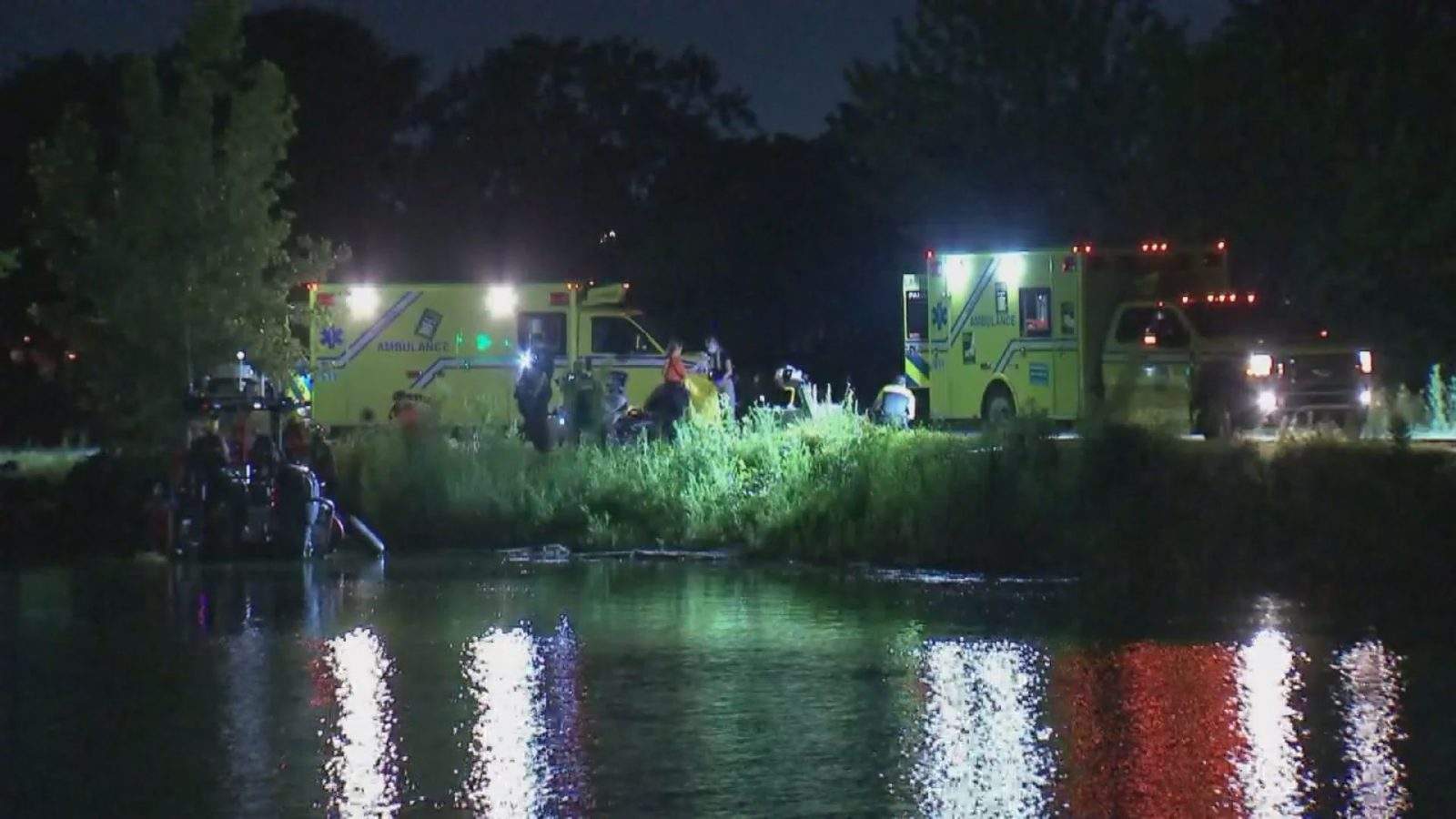
The water looks still. On a warm July midnight along the banks of Montreal’s Lachine Canal, the surface reflects the distant city lights like an oil slick. It looks solid. It looks calm.
It is a lie.
Beneath that dark glaze, the water is a heavy, muscular entity. It moves with a silent, freezing momentum that the human body cannot comprehend until it is completely submerged. When a young man in his early twenties lost his footing and plunged into the canal near René-Lévesque Park just before midnight, the water did what it always does. It shocked his lungs. It wrapped around his chest like a tightened ratchet. It began to pull.
What happened next is not a story about malice, nor is it a story about negligence. It is a story about love, adrenaline, and a fatal human instinct.
A second young adult, watching from the shore, saw their friend slip beneath the surface. There was no hesitation. There was no risk assessment. The human brain is wired to protect its own, to bridge the gap between safety and danger with the sheer force of will. This second individual leaped straight into the black water to save them.
Two hours later, Montreal Fire Department search boats and a Canadian Coast Guard vessel were cutting through the dark, their powerful spotlights slicing the fog. They weren’t looking for ripples anymore. They were using high-resolution sonar equipment to scan the riverbed. By 2:00 a.m., rescuers located both bodies, lifting them from the canal in critical, life-threatening condition.
On Monday morning, the Quebec coroner’s office confirmed what the emergency responders already feared. Both young people were dead.
The Heroism Trap
We are raised on stories of the savior who dives into the churning sea, emerges with the victim over their shoulder, and receives a medal. Society rewards the impulse. But the physics of drowning do not care about chivalry.
Data from the Drowning Prevention Research Centre Canada reveals a terrifying reality that contradicts every cinematic trope we know. Over half—54.7%—of all unintentional drowning fatalities across the country involve a rescue attempt. Let that sink in. In more than half of these tragedies, the emergency did not start as a double fatality. It became one because someone tried to help.
Even more striking is who these rescuers are. In 74.4% of those cases, the person jumping in is an untrained bystander.
When a human being is drowning, they enter a state of primal, mammalian panic. They are no longer a friend, a sibling, or a partner. They are an engine of survival desperate for oxygen. A drowning person will instinctively treat a rescuer like a piece of floating debris. They will climb you. They will push your head underwater to keep theirs above it. They possess a terrifying, adrenaline-fueled strength that can easily overpower even the strongest swimmer.
Tragically, these high-risk "contact" rescues lead to an average of seven bystander deaths every single year in Canada. In nearly half of those incidents, multiple people die. The water demands a tax, and if you offer yourself up without a plan, it takes both of you.
The Illusion of the Inviting River
Raynald Hawkins, the executive director of Quebec’s water safety organization, the Société de sauvetage, spends his life looking at these numbers. He knows that the Lachine Canal, much like the St. Lawrence River that feeds the region, possesses a deceptive architecture.
Consider how we view water in mid-summer. It is an escape from the stifling urban heat. It looks inviting. But river currents don't disappear just because the spring thaw is over.
Sometimes our rivers look inviting because they seem calm on the surface. But the currents can be just as strong, if not stronger, than during the spring freshet. It is just that the water levels are lower. The danger becomes invisible, hidden beneath a placid veneer that coaxes people into letting their guard down.
By early July, twenty-two people had already drowned in Quebec this year alone. It is a steady, grim heartbeat of loss that matches the previous year's pace. But the geography of these deaths has shifted dramatically. Approximately 60% of this year's drownings have occurred in moving rivers, compared to just 27% during the same window last year.
We are losing people to currents they cannot see, in waters they believe they can handle.
The Chasm in Our Education
There is a cultural vulnerability at play here too. Statistics show an increasingly pronounced overrepresentation of newcomers in Canadian drowning statistics. Community organizations note a recurring, heartbreaking pattern: many individuals feel perfectly comfortable socializing near the water, or even wading into it, but they do not possess the actual swimming literacy required to survive an unexpected drop-off or an undertow.
They know how to swim in a pool, perhaps, but they rarely swim in the wild, unpredictable grip of open water.
This is why water safety advocates are putting pressure on the provincial government to permanently fund its school swimming program, specifically the "Swim to Survive" initiative. It is an acknowledgment that water safety is not a luxury or a recreational hobby. It is basic civil infrastructure. It is the literal line between life and death for a generation growing up in a province defined by its waterways.
According to the coroner's own historical data, investing in young students is the single most effective way to break this cycle. If you teach a child how to tread water, how to orient themselves when thrown in unexpectedly, and—crucially—how to recognize when a river is unsafe, you save the adult they will become.
Reach, Throw, Don't Go
So, what do you do when the worst happens right in front of you? How do you fight the screaming urge to dive in?
You have to replace a lethal instinct with a practiced protocol. Water safety experts drill a simple, three-word mantra into lifeguards, one that every citizen should memorize: Reach, Throw, Don’t Go.
First, you assess. Stay on the dry ground. If the person is close to the bank or a pier, you do not use your hands. You lie flat on your stomach to lower your center of gravity so you aren't dragged in, and you extend an object. A tree branch. A jacket. A bicycle pump. A paddle.
If they are too far, you throw. Look around for anything that floats. A cooler lid. A lifejacket. A spare tire. A thick rope. Your goal is to give them buoyancy so their panic subsides, allowing them to think, breathe, and wait for professional help.
The final rule is the hardest to accept. You do not go in. Unless you have a rescue tube, fins, and hundreds of hours of formal training in managing a panicked victim, entering the water is not an act of salvation. It is an act of compounding the tragedy.
You call 9-1-1. You keep your eyes locked on the victim so you can point out their exact location to the first responders. You become a beacon, not a second casualty.
The Echo on the Bank
Near René-Lévesque Park, the cyclists are back on the paths today. The sun is out, warming the pavement where emergency vehicles sat idling with their lights flashing just dozens of hours ago. The canal looks beautiful, serene, and entirely indifferent to the two families whose lives were permanently fractured over the weekend.
Two young people in their early twenties, with entire lifetimes of summers ahead of them, are gone. One died by accident; the other died trying to prove that love and bravery are enough to conquer deep water.
They aren't.
Next time you stand by a river, a lake, or a canal, look past the reflection. Respect the cold weight of what lies beneath. And remember that sometimes, the ultimate act of heroism is choosing to stay on the shore.