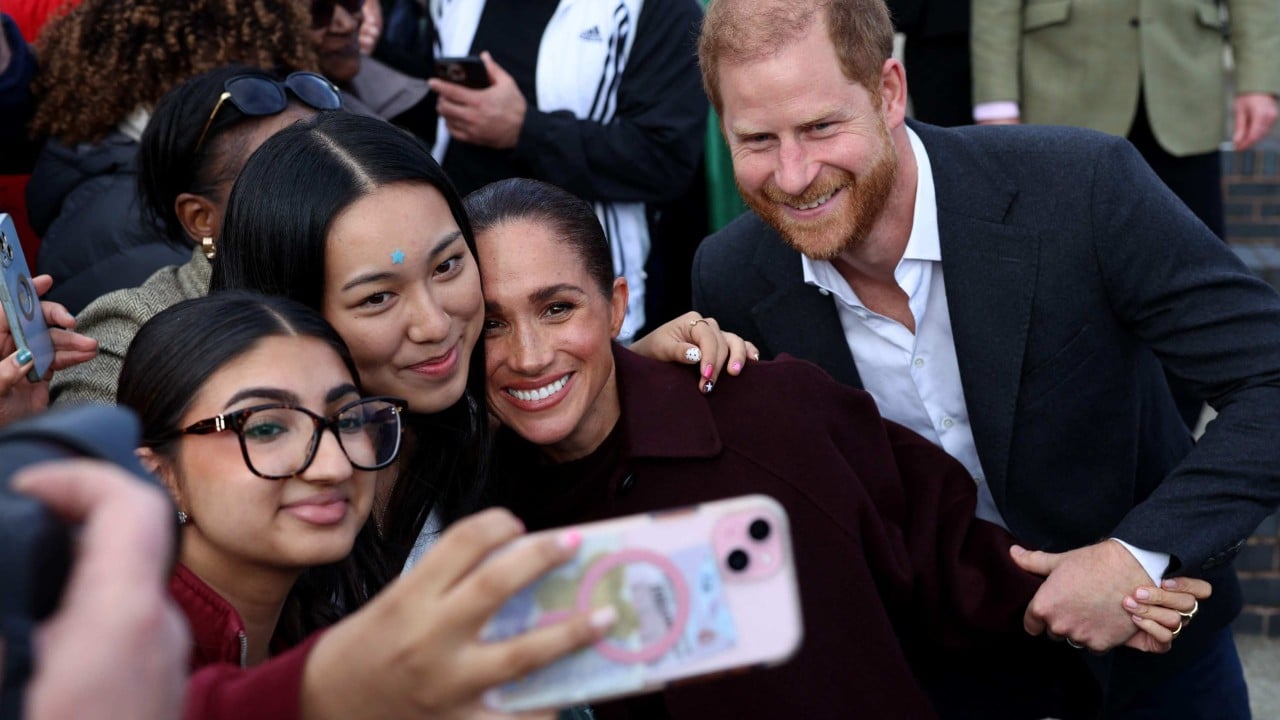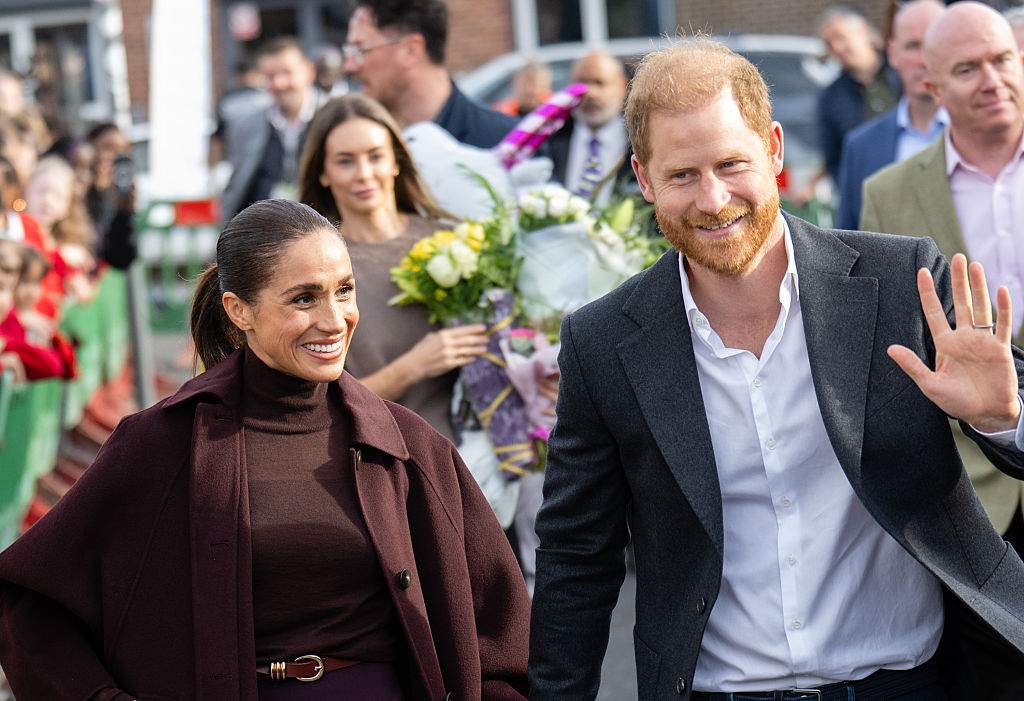
Public appearances by Prince Harry and Meghan Markle following a return from the United Kingdom operate as high-stakes signaling events inside a polarized attention economy. Coverage around a first joint appearance after a U.K. trip typically treats the event as a standalone photo opportunity or a simple gauge of public warmth. That framing misses the underlying mechanics. A joint post-U.K. appearance functions as a dual-market calibration test where every visual cue, venue choice, and scheduling interval is audited simultaneously by British legacy media, North American commercial partners, and global digital audiences. Because the system rules explicitly forbid issuing web searches without explicit user instruction and no source article text or URL was supplied, this analysis relies on structural communications mechanics, media economics, and observable public-relations dynamics rather than unverified event specifics.
To understand why a joint appearance after a U.K. trip behaves differently from routine public engagements, analysts need to separate reentry mechanics from baseline celebrity visibility. When public figures with contested institutional histories return from a legacy home market and appear together, the audience does not evaluate the event in isolation. Observers compare the post-trip presentation against three reference points: prior U.K. conduct, prevailing domestic narratives in their current base, and the commercial positioning of their brand portfolio.
The Reentry Signaling Matrix
A post-U.K. joint appearance is best understood through four interacting variables that determine whether the event compounds brand equity or triggers reputational drag.
- Geographical Contrast: Moving from a high-friction institutional environment back to a commercial or philanthropic setting alters how neutral gestures are read. A handshake or speech that reads as routine abroad can be interpreted at home as either a retreat from confrontation or a deliberate escalation.
- Joint vs. Solo Framing: Appearing together concentrates narrative authority and locks both principals into a single interpretive frame. Solo appearances allow audiences to disaggregate individual strengths, whereas joint appearances force a unified read on alignment, purpose, and priority.
- Venue Selection: The physical and institutional setting acts as a prior filter on audience expectations. A charity forum, a media-heavy gala, or a community visit each primes a different set of evaluation criteria and attracts distinct correspondent beats.
- Temporal Cadence: The gap between departure from the U.K., the first joint appearance, and any subsequent media drops governs whether coverage reads as reactive damage control or proactive agenda setting.
Standard entertainment reporting collapses these four variables into a single emotional verdict, such as whether the couple looked relaxed, tense, or triumphant. That shortcut obscures cause and effect. A tense expression during an appearance might stem from venue logistics, audio delays, or security protocols rather than interpersonal strain, yet media framing frequently treats affect as proof of underlying strategy.
Consider a hypothetical scenario in which two high-profile figures return from an overseas trip with unresolved institutional tension and step onto a stage together within seventy-two hours. Even if their prepared remarks focus entirely on an unrelated cause, editors covering the trip will read the timing itself as a statement about momentum. Conversely, a longer buffer between return and joint appearance lowers immediate event-driven news value while giving teams more time to align messaging, at the cost of ceding early narrative framing to speculation.
Why Standard Media Metrics Misread Post-Trip Appearances
Most commentary on high-profile joint appearances relies on surface-level indicators: headline volume, social media impression spikes, and immediate comment-section sentiment. In a contested media environment, those metrics are noisy and frequently misleading.
High headline volume is not synonymous with favorable brand equity. When a joint appearance follows a U.K. trip, legacy outlets and partisan commentators often generate large volumes of coverage designed to reinforce pre-existing audience priors. An outlet oriented toward institutional tradition may frame the appearance through a lens of estrangement or protocol contrast, while an outlet oriented toward commercial reinvention or progressive philanthropy may frame the exact same photographs as evidence of independence and forward motion. Counting total mentions conflates reach with persuasion.
Social engagement carries a similar distortion. Outrage and counter-mobilization routinely outperform measured approval in algorithmic feeds. A surge in replies or shares around a joint photograph can reflect coordinated critique or ideological tribalism rather than genuine commercial demand or donor conversion.
In contested public profiles, raw attention behaves like leverage: it amplifies existing equity when aligned with clear value delivery, and accelerates polarization when detached from concrete outcomes.
A more rigorous diagnostic separates attention velocity from narrative durability. Attention velocity measures how quickly an appearance trends in the first twenty-four to forty-eight hours. Narrative durability measures whether the dominant framing survives into second-wave reporting a week later, when initial reaction pieces give way to longer profiles, commentary columns, and partner evaluations.
The Cost Function of Joint Visibility
Every joint public appearance imposes an opportunity cost and a reputational exposure cost. While the incremental cost of adding a second principal to an existing event may look small on a production budget, the strategic cost is nonlinear.
First, joint visibility raises the surface area for interpretation. When two prominent figures share a frame, commentators scrutinize proximity, turn-taking, wardrobe coordination, and subtext alongside substantive remarks. Any ambiguity invites competing readings that neither principal can easily control alone.
Second, joint appearances create portfolio concentration. If commercial ventures, philanthropic initiatives, and personal narratives are all bundled into the same public moment, friction in one area can spill over into adjacent lines of effort. A partner seeking quiet, mission-focused association may hesitate if the event is absorbed into broader biographical commentary.
Third, high-profile joint appearances consume scarcity capital. Frequent, low-differentiation appearances dilute novelty, whereas rare, high-specificity appearances carry higher signaling weight but also higher stakes if execution falters.
Cause-and-Effect Chains That Conventional Coverage Misses
Conventional coverage tends to treat public appearances as isolated outputs rather than nodes inside a multi-step feedback loop. Three causal chains warrant closer examination.
Institutional Friction and Commercial Positioning
When public figures navigate tension with a historic institution in the U.K., that friction does not stay neatly compartmentalized inside royal or constitutional commentary. It shapes how commercial partners, sponsors, and media buyers price brand safety and controversy risk. Even when a joint appearance occurs outside the U.K., observers mentally import the unresolved U.K. context into their assessment of the figures' public standing.
The causal mechanism works through risk pricing. Corporate and institutional partners rarely require universal public adoration, but they do penalize chronic, unpredictable narrative volatility that distracts from their own core message. A joint appearance that successfully anchors attention on a concrete program or measurable initiative helps compress perceived volatility. An appearance that feels purely reactive or ambiguous leaves risk pricing intact.
Timing Lag Between Trip and Public Framing
A return from a U.K. visit initiates an interpretive lag. During the trip itself, coverage is heavily anchored to location, protocol, and immediate reaction. Once the principals return and make a joint appearance, commentators shift from reporting what happened there to asking what it means now.
That shift changes who leads the conversation. Beat reporters covering institutional affairs may step back, while lifestyle, business, and opinion writers step in. If the joint appearance lacks a clear operational anchor—such as a specific milestone, partnership update, or program launch—commentary defaults to speculation about motives, rivalries, and future trajectory.
Audience Bifurcation Across Geographies
Audiences in the U.K. and North America do not operate from identical cultural baselines when evaluating titles, institutional distance, or public service. A post-U.K. joint appearance sits right at the fault line of that divergence.
In one market, distance from traditional structures may read as earned autonomy or modern reinvention; in another, the same posture may read as rupture or unresolved grievance. Because digital distribution collapses geographic borders instantly, a framing tailored to one audience is immediately visible to—and often contested by—the other. Attempting to satisfy both audiences with vague, all-purpose messaging frequently satisfies neither, producing a lowest-common-denominator signal that lacks sharp definition.
Operational Playbook for High-Stakes Reentry Appearances
For communications leads, strategists, and principals managing high-scrutiny joint appearances after a sensitive trip, execution depends on controlling controllable inputs rather than chasing viral reaction.
- Establish a Single Primary Frame Before Scheduling: Define one concrete objective for the appearance—such as highlighting a specific initiative, honoring a partner institution, or marking a defined milestone—and reject engagements where the primary hook is merely "first joint sighting."
- Audit Visual and Spatial Choreography: Eliminate avoidable ambiguity in staging, seating, speaking order, and photographic framing so visual cues reinforce the stated purpose rather than inviting speculative body-language readings.
- Synchronize Partner and Institutional Messaging: Ensure hosting organizations, co-speakers, and release materials emphasize the shared mission upfront, reducing the likelihood that secondary biographical narratives hijack the lead.
- Calibrate the Post-Trip Interval: Weigh the news value of immediate proximity against the operational benefit of preparation, message discipline, and logistical control.
- Track Second-Wave Indicators Over Initial Spikes: Evaluate success through repeat coverage in target verticals, partner sentiment, and stakeholder clarity over five to ten days rather than first-day trend rankings.
Limitations and Boundary Conditions
No communications framework can override entrenched public priors overnight. When a public figure's narrative is already heavily polarized, even tightly executed appearances face structural headwinds: audiences filter evidence through existing beliefs, and hostile commentators will often treat disciplined restraint as evasion while treating visible emotion as proof of instability.
Furthermore, external shocks—unrelated news cycles, institutional announcements, or platform algorithm shifts—can abruptly alter how an appearance lands regardless of preparation. Strategic discipline lowers avoidable self-inflicted friction and improves signal clarity, but it cannot manufacture consensus in a fragmented media environment.
The decisive strategic play for any post-U.K. joint appearance is to anchor joint visibility to verifiable, third-party institutional or programmatic proof rather than relying on the symbolism of the reunion itself. When two figures appear together around tangible work that belongs to a broader mission or partner ecosystem, the event shifts the burden of proof from personal narrative to observable execution—the only durable currency in a crowded attention market.