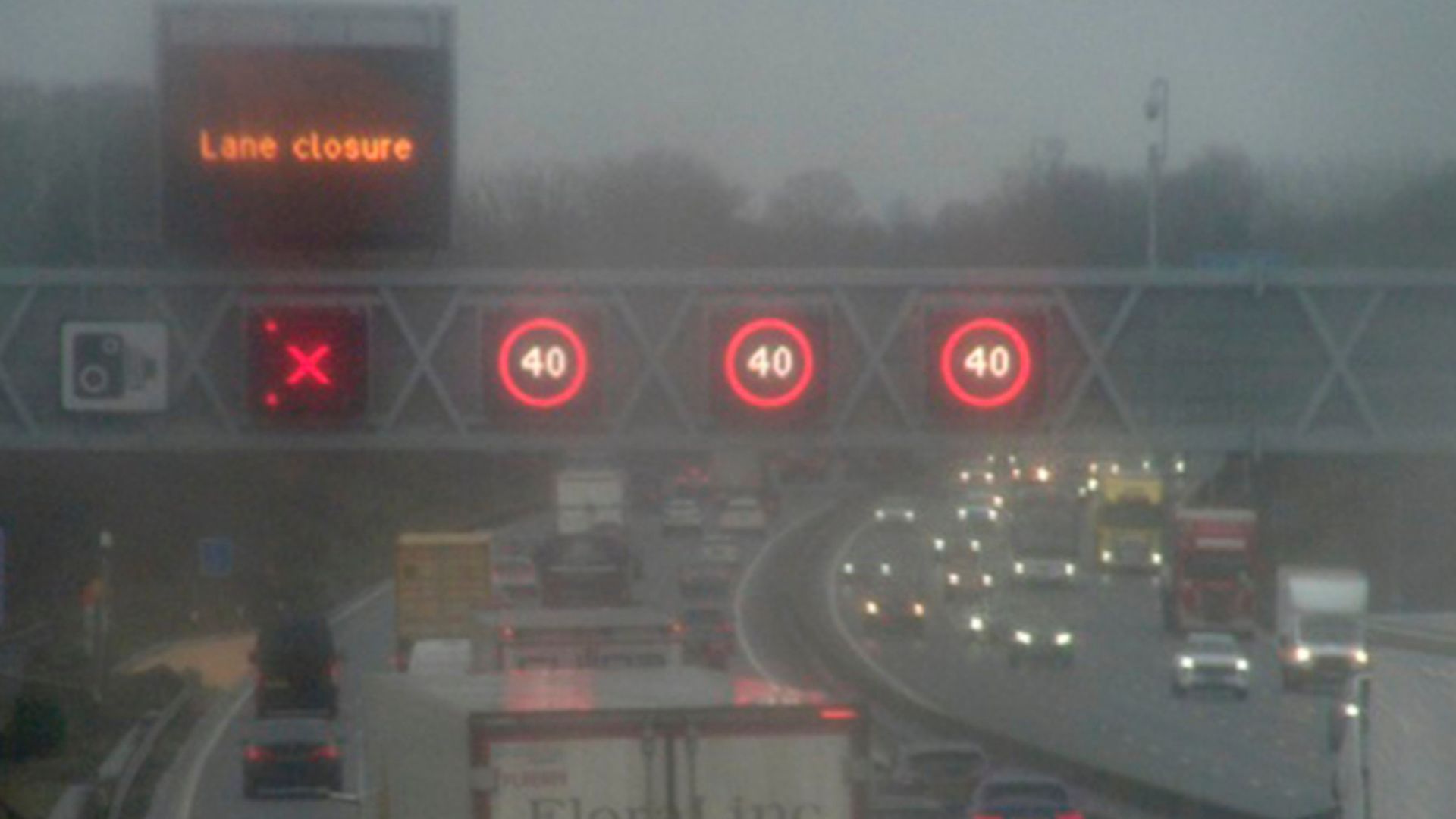
The dashboard glowed with the dull amber light of a fading afternoon. Rain tapped a frantic, rhythmic code against the windshield, blurring the tail lights of the sedan ahead into ribbons of crimson and gold. Traffic was crawling, the kind of heavy, soul-crushing commuter sludge where time stops and the mind drifts.
Then, overhead, it flashed.
A stark, blazing crimson X.
To the driver in the hypothetical sedan—let us call him Marcus, a man three minutes late for picking up his daughter from daycare—that glowing cross felt like an insult. The lane beneath it was empty. Clear. Stretching out for half a mile like an open invitation to bypass the misery. Why should he sit here? The car behind him edged left, darted into the forbidden zone, and vanished down the asphalt corridor.
Marcus hesitated. His foot twitched over the accelerator.
He stayed put. Good thing, too. Three miles down the road, a crumpled hatchback sat sideways across that exact empty lane, steam hissing from its fractured radiator, surrounded by blue flashing lights.
Most people do not see the wreckage until it is too late. Or worse, they do not see the price tag attached to their impatience. Recent research reveals a staggering reality: drivers are paying more than one hundred thousand pounds in cumulative penalties, fines, and points simply for ignoring smart lane closures. One hundred thousand pounds. Not for speeding through a sleepy village. Not for driving under the influence. But for treating a glowing red prohibition sign as a polite suggestion.
The Psychology of the Open Asphalt
We are wired to hate a vacuum.
Nature abhors it, and human drivers despise an empty lane. When every other track of concrete is choked with bumper-to-bumper steel, a wide-open lane triggers a primitive instinct. It looks like an error in the system. It looks like luck.
Behavioral psychologists call this the loophole bias. We assume rules are built for general conditions, but right now, in this specific moment, our urgency grants us an exemption. The red X hanging above the smart motorway feels arbitrary. It is electronic, distant, managed by some unseen operator sitting in a dimly lit control room fifty miles away. It lacks the immediate, visceral authority of a traffic cop standing in the road with an outstretched hand.
So, drivers gamble.
They calculate the risk based on visibility, not legislation. If they can see clear pavement for a quarter-mile, the brain whispers that the danger is nonexistent. They forget that smart motorways are electronic nervous systems. The overhead gantry does not care about what you can see right now. It cares about the stranded lorry stalled blind just over the crest of the hill, or the maintenance crew working in the shadow of the concrete barrier ten minutes ahead.
Behind the Electronic Curtain
To understand why those fines escalate so rapidly, you have to look at what those red Xs actually mean in practice.
Imagine sitting in a regional traffic control center. Monitors tile the wall from floor to ceiling, glowing with thermal feeds, loop-detector data, and live camera streams. It is a quiet room, save for the low hum of cooling fans and the occasional sharp chirp of an automated alert.
A vehicle dies in lane three. Within seconds, radar sensors pick up the sudden deceleration. The system flags an anomaly. The operator verifies the feed, eyes narrowing at the screen as a family car drifts helplessly to a halt in the path of oncoming seventy-mile-per-hour traffic.
With a few keystrokes, the operator triggers the red X across the gantries upstream.
It is a digital shield. A protective wall made of light and law, designed to funnel thousands of tons of metal away from a blind spot before tragedy strikes. When a driver blows past that gantry, they are not just breaking a traffic regulation. They are breaking the perimeter. They are driving blindly into a live hazard zone, relying entirely on the hope that the stranded driver has managed to scramble over the barrier in time.
The financial penalty—soaring past that grim milestone of one hundred thousand pounds in total extracted fines—is supposed to sting. It is designed to be heavy enough to crack through the armor of human impatience. Yet, the numbers keep climbing. People keep paying.
The Cost of Conviction
There is a quiet humiliation in receiving the brown envelope in the mail.
Picture it arriving on a Tuesday morning, nestled between junk mail and utility bills. You open it. A crisp, high-resolution photograph stares back at you. Your car, clearly defined, passing beneath the glowing crimson cross. No officer was there to pull you over. No blue lights flashed in your rearview mirror. Just cold, mechanical proof of a split-second decision made on a rainy Tuesday evening.
The fine is steep, but the penalty points bite deeper. Insurance premiums spike. The invisible tax of a momentary lapse in discipline cascades through the household budget for years.
And yet, money is the cheap part of the equation.
The real cost is measured in the terror of the road worker who hears the roar of an engine tearing past their shoulder when they are only trying to clear debris from a live lane. It is measured in the sudden, sickening thud of metal meeting metal in the dark because someone decided the rules didn't apply to their schedule.
We live in a culture obsessed with speed, efficiency, and optimization. We count seconds saved and minutes gained, treating transit as dead time to be conquered. But the asphalt does not care about your meeting. It does not care that you are tired, or late, or frustrated.
Next time you see that crimson cross blaze to life overhead, remember the empty space beneath it is not a shortcut. It is a scar. Tap the brakes. Fall in line. Let the red light do its work, and let the road below stay quiet just a little bit longer.


