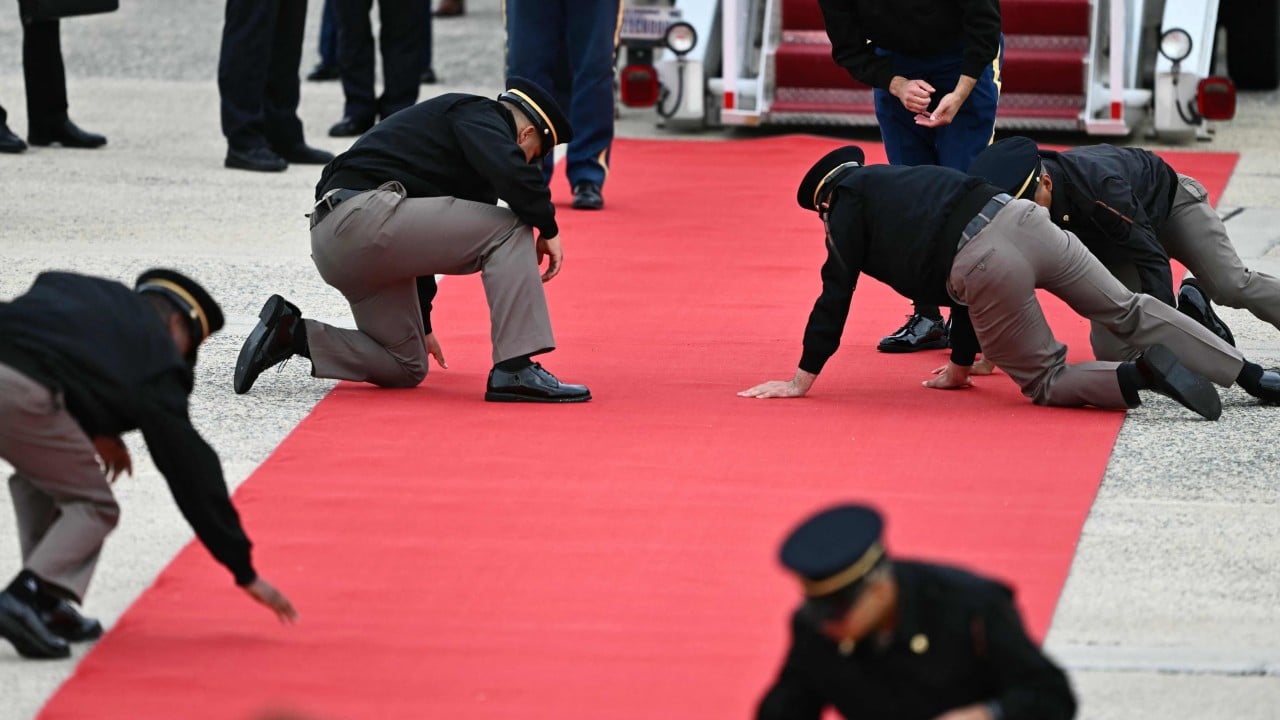
Diplomacy is theater, and the grand production staged at Joint Base Andrews during the opening hours of the high-stakes summit between Washington and Beijing exposed the deep anxieties plaguing both superpowers. Beneath the veneer of rolled-out red carpets, military band salutes, and carefully choreographed first lady appearances, a far more transactional and tense reality played out behind closed doors. The initial optics—complete with military personnel making last-minute adjustments to the tarmac and roaring bomber flyovers—offered a masterclass in modern geopolitical posturing. Yet, stripped of the ceremonial gloss, the first day of talks revealed that neither side is willing to compromise on core economic and technological choke points.
The immediate defense of the visit by Secretary of State Marco Rubio lays bare the administration's internal contradictions. Rubio asserted that refusing high-level dialogue between the world's two largest economic engines would be irresponsible, a pragmatic admission that decoupling has its limits. However, this pragmatic stance clashes sharply with concurrent policy maneuvers, such as tightened visa restrictions targeting birth tourism and ongoing export controls on advanced artificial intelligence semiconductors. Washington wants containment of Beijing's technological rise while simultaneously demanding market access and cooperation on transnational friction points like fentanyl distribution.
For Beijing, the primary objective remains securing predictable trade parameters and halting the erosion of Chinese corporate access to Western markets. Xi Jinping arrived in the United States facing an uphill battle against a bipartisan consensus in Washington that views China not as a partner to be managed, but as an existential threat to American primacy. While both leaders love the pageantry of personal summits—showcased by elaborate tours and mutual flattery—the structural divergence between their economic models makes comprehensive breakthroughs nearly impossible.
The core friction point remains the semiconductor arms race and the governance of frontier artificial intelligence. While the White House continues to resist heavy-handed domestic regulation under the banner of out-innovating rivals, it aggressively boxes out foreign competitors through allied export blocks. Beijing, meanwhile, seeks ways to bypass hardware restrictions through third-party data centers and proxy networks, rendering formal trade accords porous at best.
Ultimately, analyzing day one highlights requires looking past the helicopter pads and diplomatic pleasantries. The summit functions less as a vehicle for historic resolution and more as a pressure-release valve designed to prevent managed rivalry from boiling over into active conflict. As the meetings press forward, the gap between high-level diplomatic handshakes and the gritty reality of techno-nationalism remains as wide as ever.
Trump-Xi Summit Day 1: A Historic Reset?
This video provides an overview of the initial diplomatic talks and the broader strategic framing surrounding the summit between the United States and China.