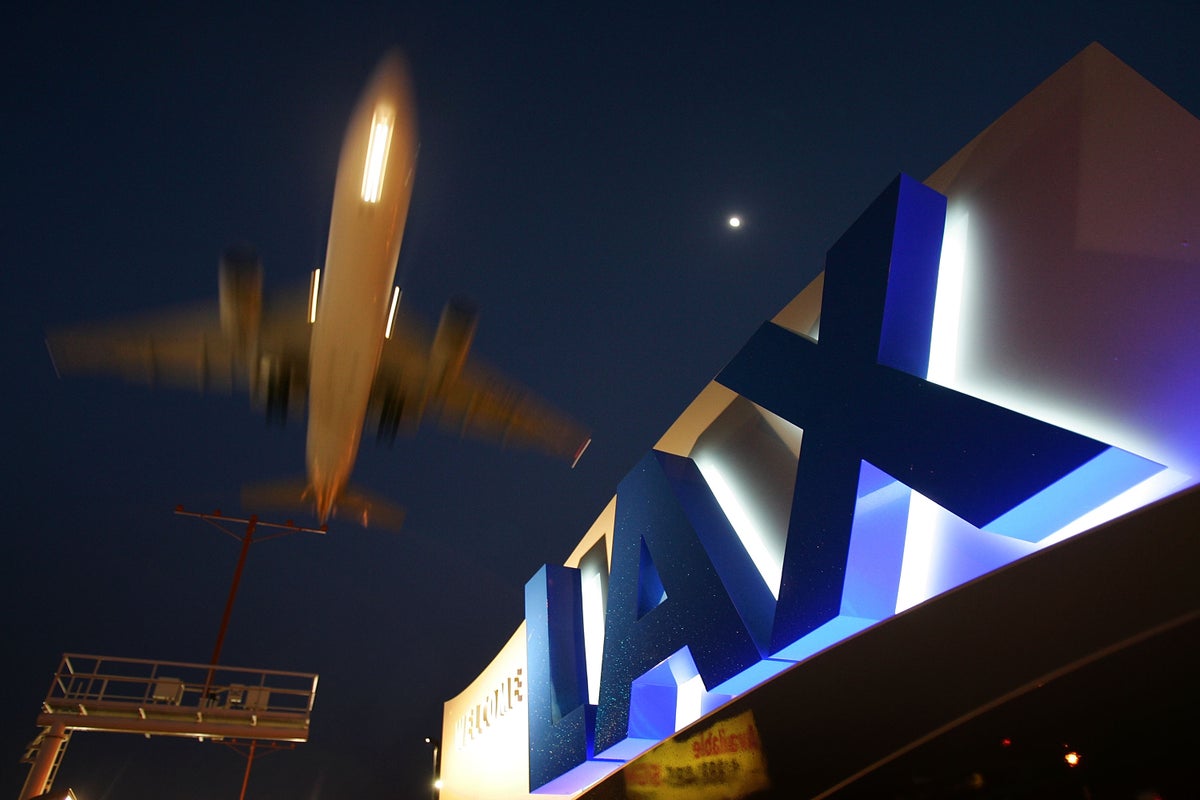
Air travel feels like a gamble lately. You sit in your seat, buckle up, and trust the professionals. But the "professionals" are staring down a crisis that almost ended in a fireball at Los Angeles International Airport (LAX). Just weeks after a terrifying close call at New York’s LaGuardia, a commercial jet at LAX came within feet of slamming into service trucks on the tarmac.
The system isn't breaking. It’s strained. We aren't talking about engine failures or bad weather. We’re talking about basic ground coordination falling apart at the world’s busiest hubs. When a multi-ton aircraft nearly clips a utility vehicle because of a communication gap or a missed signal, that’s a red flag waving in our faces.
The Close Call at LAX and What Really Happened
The incident at LAX wasn't a minor fender bender. It was a high-stakes near-miss involving a jet and ground equipment. Reports indicate the aircraft was taxiing—a phase of flight many passengers ignore while they're checking their phones—when it encountered trucks in its direct path. This wasn't supposed to happen. Tarmac movements are choreographed like a high-speed ballet.
Every move a pilot makes on the ground is dictated by Air Traffic Control (ATC). If a truck is on the taxiway, the plane shouldn't be. If the plane is moving, the truck should be clear. It’s binary. Yet, at LAX, those lines blurred. This specific event follows a pattern of "runway incursions" that have spiked across the United States. We’re seeing pilots, controllers, and ground crews making mistakes that used to be rare.
The Federal Aviation Administration (FAA) tracks these events. They call them runway incursions. They categorize them by severity. Category A is the "heart-in-your-throat" kind where a collision is narrowly avoided. The LAX incident fits into a broader, more worrying narrative of American infrastructure failing to keep up with the volume of flights.
LaGuardia and the Pattern of Tarmac Chaos
You can't look at LAX in a vacuum. Just a few weeks prior, LaGuardia saw its own brush with disaster. In that case, two planes nearly collided on the runway. It’s the same story with different players. One aircraft starts its takeoff roll while another is still clearing the area or crossing an intersecting path.
Why is this happening now? For one, the industry is dealing with a massive "experience drain." During the pandemic, senior pilots and veteran air traffic controllers took early retirement packages. They left in droves. Now, we have a workforce that's younger and under immense pressure to keep schedules tight. The "old guard" who could spot a mistake before it happened isn't there to mentor the new recruits.
Staffing shortages at ATC towers are another factor. When controllers work mandatory overtime and six-day weeks, fatigue sets in. A tired brain misses a blip on a screen. A tired voice gives a slightly garbled instruction. In aviation, "slightly garbled" can lead to a catastrophe.
The Invisible Risks of Ground Operations
Most people worry about the wings falling off or a bird hitting the engine. In reality, the most dangerous part of your trip is often the transition between the gate and the runway. The tarmac is a crowded, loud, and confusing place.
Ground crews are juggling fuel trucks, baggage tugs, catering vans, and maintenance vehicles. All of these must move around massive jets with limited visibility. Pilots have huge blind spots. They rely entirely on the wing walkers and the ground controllers to be their eyes. When a truck driver at LAX ends up in the wrong place at the wrong time, the pilot might not see them until it’s too late to stop.
Technical Failures vs. Human Error
We love to blame technology, but most of these near misses come down to human slip-ups.
- Misinterpreted instructions: A pilot thinks they're cleared to cross a runway when they aren't.
- Loss of situational awareness: A ground driver gets lost on a complex airport map.
- Read-back errors: A controller says "Hold short," and the pilot repeats it back incorrectly, but the controller doesn't catch the mistake.
The FAA has been pushing for better surface safety technology. Systems like ASDE-X (Airport Surface Detection Equipment, Model X) use radar and satellite data to track every single thing moving on the ground. It sounds foolproof. It isn't. Not every airport has the latest version, and even when they do, the alerts sometimes come too late for a pilot to react.
The Cost of the Push for Efficiency
Airlines are businesses. They want to turn planes around fast. Every minute a jet sits on the tarmac is money bleeding out of the company. This creates a culture of "get it done" that can sometimes push safety to the periphery.
Think about the sheer volume of traffic at LAX. It’s one of the most complex airport layouts in existence. There are four parallel runways and a maze of taxiways. It requires absolute precision. When you add the pressure of making up for a delayed arrival or hitting a tight departure window, people start moving faster. Speed is the enemy of safety on the tarmac.
Ground crews are often underpaid and overworked. Turnover in these positions is high. You might have a guy driving a fuel truck who has only been on the job for three weeks. He’s trying to navigate a dark, rainy tarmac at 5:00 AM while a supervisor is yelling in his ear to hurry up. That’s how you get a truck in the path of a Boeing 737.
What is Being Done to Stop a Disaster
The FAA held a "Safety Summit" recently because the number of close calls became too high to ignore. They know they're on borrowed time. You can only have so many near misses before the math catches up and two planes actually hit each other.
One of the biggest moves is the implementation of Runway Encursion Air Traffic Control (REAT) procedures and better lighting systems. "Stop bars"—rows of red lights embedded in the pavement—are supposed to keep pilots from wandering onto active runways. But again, these tools only work if the humans are paying attention.
If you’re a passenger, you can actually see some of this in action. Next time you're taxiing, look out the window. Look at how many vehicles are darting around. Look at the complex markings on the ground. It’s a miracle it works as well as it does, but "mostly works" isn't good enough when lives are on the line.
Protecting Yourself as a Traveler
It’s easy to feel helpless when you're strapped into 14B. You aren't flying the plane. But being an informed passenger matters.
Pay attention during the taxi. Most accidents happen during takeoff, landing, and ground movement. If you're on a plane and you see something that looks truly wrong—like a vehicle nearly hitting the wing—don't be afraid to speak up to a flight attendant. It sounds "extra," but aircrew would rather hear a false alarm than deal with a collision.
Keep your seatbelt fastened until the plane is parked at the gate. If a pilot has to slam on the brakes to avoid a truck at LAX, you don't want to be the person who gets launched into the seat in front of you.
The industry needs to fix its staffing issues. It needs to stop treating controllers like machines. Until the FAA and the airlines prioritize human rest and retention over quarterly profits, these "near miss" headlines will keep popping up. We’ve been lucky so far. Let's hope the system fixes itself before our luck runs out.
Check your flight status through official apps and watch for news on "FAA ground stops." These often happen when ground safety systems are malfunctioning or weather makes tarmac movement too risky. Don't complain about the delay; it might be the only thing keeping your plane from a "near miss" of its own.