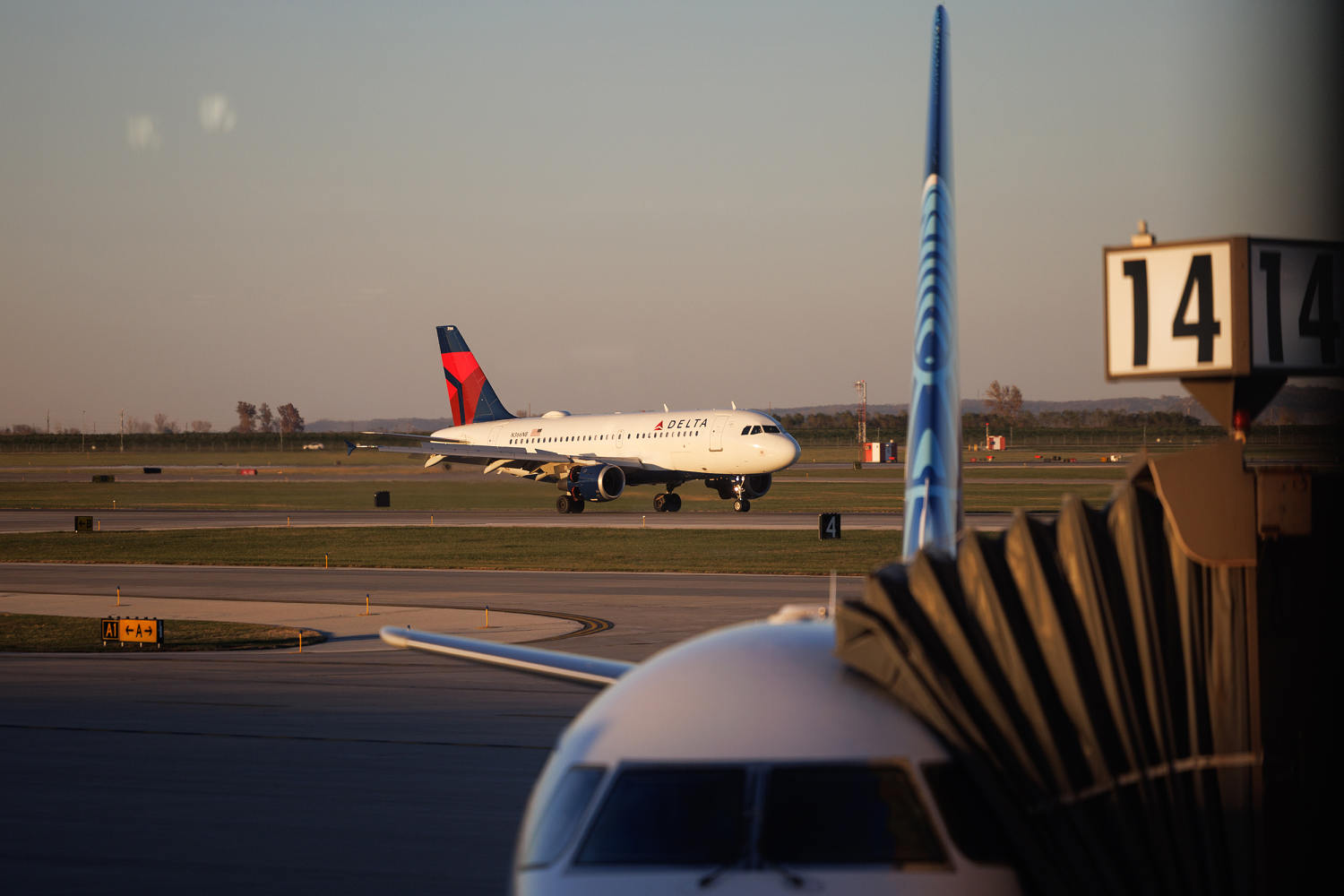
Your screen turns red at Hartsfield-Jackson. Nobody at the gate knows why. When Delta flights delayed in Atlanta due to issue with automation system hit the news, most travel sites just regurgitate a two-sentence airline press release and call it a day. That doesn't help you get off Concourse B.
Here's the blunt truth about what's actually happening behind those podiums, why Atlanta breaks down differently than any other airport on earth, and what you need to do the exact second an automation glitch drops.
The Real Reason Atlanta Grinds to a Halt
Atlanta isn't just another hub. Hartsfield-Jackson Atlanta International Airport (ATL) is the busiest airport in the world by passenger traffic, moving over 100 million travelers a year, and Delta Air Lines operates roughly 70% to 80% of the flights moving through those concourses. Because Atlanta functions as a massive "connecting bank" system, flights arrive in tightly choreographed waves, swap thousands of passengers and bags in 45-minute windows, and push back simultaneously.
When an internal automation system hiccups—whether it's crew scheduling software, weight-and-balance calculation servers, or automated gate-assignment tools—the damage isn't linear. It's exponential.
Think of it like a subway line where every train has to wait for three specific passengers from three other trains before closing its doors. One software freeze stops ten planes from pushing back. Those ten planes still occupy ten gates. Now ten incoming flights from Chicago, Miami, and New York have nowhere to park, so they sit on the tarmac burning fuel while their crews run closer to federal flight-duty time limits.
I've watched a 22-minute computer outage in Atlanta turn into a seven-hour cascading meltdown across four time zones. The computers come back online fast. The physical airplanes and human crews don't teleport back into position.
Why "Automation System" Is Vague on Purpose
Airlines love broad technical phrases. When Delta or the Federal Aviation Administration (FAA) mentions an "automation issue," they're usually talking about one of three distinct systems, and knowing which one broke tells you how long you'll be stuck sitting on the carpet near Gate A14.
1. Internal Airline Dispatch and Weight-and-Balance Software
Before any commercial jet moves an inch, pilots must receive an official dispatch release and final weight-and-balance figures calculated from passenger counts, cargo loads, and fuel weight. Modern carriers automate this almost entirely. If the server feeding data to the cockpit's Aircraft Communications Addressing and Reporting System (ACARS) crashes, pilots legally cannot take off.
Gate agents sometimes switch to manual calculations during these outages. Manual math works fine for a single regional jet. Doing manual weight-and-balance sheets for 200 mainline departures in Atlanta at 4:00 PM on a Thursday? Brutal. Expect delays of 60 to 120 minutes minimum while dispatchers clear the backlog by hand.
2. FAA Air Traffic Control Automation (ERAM and STARS)
Sometimes the glitch isn't Delta's fault at all, even though Delta takes the brunt of the delays in Atlanta. The FAA relies on En Route Automation Modernization (ERAM) systems at high-altitude control centers and Standard Terminal Automation Replacement System (STARS) computers at major airport approach facilities like Atlanta TRACON.
When FAA automation loses radar track processing or flight-plan data feeds, controllers immediately increase spacing between aircraft for safety. Instead of landing planes every 60 seconds, Atlanta might drop to one arrival every three minutes. Ground stops follow within minutes.
3. Crew Tracking and Scheduling Databases
Remember the July 2024 CrowdStrike outage that crippled Delta for days? That disaster exposed how tightly airline recovery depends on crew-tracking automation. Even when the planes are fueled and the skies are clear, Delta's computers have to match thousands of pilots and flight attendants to specific aircraft types while obeying strict FAA Part 117 rest rules. If that database loses sync with real-time flight movements, the airline literally doesn't know which crews are legal to fly which jets.
What Most Travelers Get Wrong During a Hub Tech Outage
Most passengers react to a tech delay the exact wrong way. They stand in a 90-person line at the gate podium, refreshing the Fly Delta app every four seconds, waiting for someone in a uniform to hand them a solution.
Stop doing that.
Gate agents in Atlanta during a system outage are often staring at the exact same frozen terminal screen you see on the departure board. Worse, when internal automation goes down, agents frequently lose the ability to rebook tickets quickly or issue meal and hotel vouchers until corporate IT restores database access. Standing in line for 45 minutes only to watch an agent apologize because their keyboard won't process a seat change is pure wasted time.
Another massive misconception involves airline compensation rules. Under current U.S. Department of Transportation (DOT) guidelines, airlines are required to provide certain amenities—like meal vouchers or hotel accommodations—only when a delay or cancellation is "controllable" (meaning caused by the airline's own systems, maintenance, or staffing). If the automation failure belongs to Delta's internal IT infrastructure, it counts as controllable. If the automation failure belongs to the FAA's air traffic control network, the airline classifies it as uncontrollable, which means you're on your own for hotels and food. Always ask specifically whether the system outage is an internal carrier issue or an FAA air traffic control issue, and screenshot the app notification showing the reason.
Your Immediate Playbook When ATL Goes Red
When you see delays piling up in Atlanta over a system issue, speed beats loyalty to your original itinerary. Move before the other 30,000 stranded passengers figure out what's going on.
- Open the app before walking to the podium. Use the automated rebooking tool inside the Fly Delta app immediately. Even when back-end gate terminals lag, mobile self-service channels often grab remaining inventory on later flights faster than an agent can type.
- Call the reservation line while standing in line. Dial Delta customer support (or your Medallion desk line if you have status) and put your phone on speaker while you wait at the counter. Whichever channel connects first wins.
- Look at nearby airports, not just ATL. If you're trying to reach the Northeast or Midwest and Atlanta is locked up, check flights routing through Detroit (DTW), Minneapolis (MSP), or even New York (LGA/JFK). Getting out of Atlanta on any flight moving away from the bottleneck is half the battle.
- Verify your crew is actually at the gate. Look past the gate agent and check if pilots are in the cockpit or sitting near the boarding door. Even if the computer system comes back online at 5:00 PM, your plane isn't leaving if your captain timed out at 4:45 PM.
- Keep every receipt if it's an internal Delta outage. Under Delta's customer service commitment filed with the DOT, controllable delays over three hours qualify for meal vouchers, and overnight controllable delays qualify for hotel rooms and ground transport. If system outages prevent agents from issuing digital vouchers on the spot, pay out of pocket for reasonable expenses and submit itemized receipts through Delta's online reimbursement portal once operations stabilize.
Why These Glitches Keep Happening
Aviation infrastructure runs on layers of legacy code stacked beneath modern cloud interfaces. Airlines have spent billions upgrading passenger-facing apps so you can track your bag with GPS precision, yet many core operational systems—crew pairing, dispatch messaging, gate management—still bridge decades-old mainframe architecture with modern APIs.
When those bridges drop packets under peak load, everything stops at once. Atlanta's sheer volume leaves zero buffer room. A minor 15-minute data sync error at a smaller airport like Raleigh-Durham barely registers on the departure board, while the exact same error at Hartsfield-Jackson ripples across 1,000 daily flights before engineers even finish rebooting the server.
Next time you book through Atlanta, give yourself at least a 90-minute connection window instead of the bare-minimum 40 minutes the booking engine suggests, download both the Fly Delta app and FlightAware before leaving home so you can see inbound aircraft locations independently, and never check a bag containing medication or essentials you can't survive 24 hours without.