Federal agents rarely face local felony charges. Usually, when a federal immigration operation goes sideways, internal investigators quietly handle the fallout behind closed doors, and local prosecutors steer clear of the jurisdictional headache.
That pattern broke in Houston.
When news broke that an ICE officer accused of intentionally striking man expected to surrender on Monday, most quick-hit news summaries focused solely on the looming court date. They missed the deeper legal collision unfolding in Harris County. U.S. Immigration and Customs Enforcement agent Mario Alberto Morales, 33, isn't just dealing with a routine traffic accident or an internal disciplinary review. A Harris County grand jury indicted him on a felony charge of aggravated assault with a deadly weapon—the deadly weapon being his unmarked SUV.
The case pits local Texas prosecutors directly against a federal agency that claims local officials have zero business investigating federal officers on duty. Even wilder? The person ICE claimed they were originally hunting during the operation has reportedly been dead for nearly a decade.
The October 10 Parking Lot Pursuit
To understand why Harris County District Attorney Sean Teare took the rare step of prosecuting a federal agent, you have to look at the timeline of October 10.
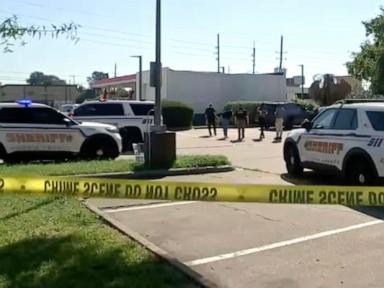
Miguel Parra Hernandez, a 48-year-old Mexican construction worker, was in Houston when he and a coworker exited a pickup truck and began running through a parking lot during an immigration enforcement operation. Morales was behind the wheel of an unmarked Jeep Cherokee.
According to surveillance footage and body-worn camera video released by the District Attorney’s office, the encounter escalated in seconds. In the body-camera audio, Morales can be heard reacting to the foot chase: "Got a runner, got a runner. On foot. Both of them."
Then comes the moment at the center of the felony indictment.
Surveillance video reviewed by prosecutors shows the Jeep Cherokee speeding over a median and driving toward Parra Hernandez as he fled across the lot. On the body-camera footage, Morales appears to turn his steering wheel sharply to the left right before the vehicle shakes from an impact. The SUV struck Parra Hernandez, running him over before coming to a stop.
When Morales stepped out of the vehicle and walked around to where Parra Hernandez lay on the ground clutching his leg and yelling in pain, the officer's own microphone captured his immediate reaction. "He got hit with a car, bro," Morales said, followed by, "I was coming in and I hit him with the car."
Parra Hernandez suffered a severe broken leg that required surgery and metal implants. His attorneys later noted he is dealing with nerve damage and chronic pain. Despite his injuries, Parra Hernandez wasn't released to recover at home—he remained in federal immigration custody at a rehabilitation facility while his family sounded alarms about his deteriorating mental health.
Two Completely Different Stories
If you read the statements from both sides, it almost sounds like they're describing two entirely different events.
The Prosecution and Family Account
District Attorney Sean Teare didn't mince words when announcing the grand jury indictment on October 30. Having reviewed hundreds of use-of-force and vehicular cases over his career, Teare stated that the video evidence in this file was as clear as any he had ever investigated.
His core argument rests on intent and trajectory. Teare told reporters that the surveillance and body-camera footage directly contradicts ICE's initial narrative that Parra Hernandez simply darted out in front of a moving patrol vehicle. During his press briefing, Teare framed the prosecution as a line in the sand regarding constitutional accountability, stating that an ICE badge doesn't grant free rein to injure or violate anyone's rights on Houston streets.
Parra Hernandez’s siblings, Carmen and Rodolfo Parra, echoed that view. They told CBS News that watching the footage and hearing their brother scream that his leg was being broken convinced them the collision was deliberate. According to Parra Hernandez's legal team, his primary goal isn't just personal compensation—he wants assurance that federal agents won't use vehicles as battering rams against fleeing suspects in the future.
The Defense and ICE Pushback
ICE and Morales's legal team tell a radically different story.
First, ICE headquarters came out swinging against the Harris County District Attorney's Office. In statements to the Associated Press and BBC, an ICE spokesperson labeled the allegations that Morales intentionally hit Parra Hernandez "RECKLESS and FALSE." The agency dismissed the entire indictment as "a political stunt by sanctuary Houston politicians" and argued that local officials lack the legal authority to prosecute federal officers carrying out their official duties.
Morales's defense attorney, Lindenmuth, focused on the split-second mechanics of driving in a chaotic parking lot. According to his defense:
- Avoidance, not aggression: Lindenmuth argued that Morales turned the wheel left not to aim at Parra Hernandez, but in a split-second reaction to avoid colliding with another truck in the lot.
- No criminal intent: Morales told deputies at the scene that while he acknowledged he didn't brake before impact, he never intended or knowingly tried to strike anyone.
- Character and service record: His attorney emphasized that Morales is a former U.S. Army paratrooper, a former corrections officer, and a Christian pastor who has participated in overseas missionary work. He had previously worked as a detention and processing officer at the Port Isabel Detention Center and as a DHS contractor before officially becoming a federal immigration officer in August 2025.
From the defense perspective, prosecutors are criminalizing a split-second traffic accident during a lawful pursuit to score political points.
The Strange Twist About the Original Target
Here is the detail that makes this case even harder for ICE to defend in the court of public opinion.
Right after the October 10 incident, ICE stated that agents weren't originally looking for Miguel Parra Hernandez. Instead, the agency claimed the actual target of the enforcement operation was a man named Jose Mendoza-Cervantes, whom agents allegedly saw getting into a vehicle with Parra Hernandez.
There's just one massive problem with that explanation.
Jose Mendoza-Cervantes appears to have been dead for roughly nine to ten years. Mendoza-Cervantes's daughter informed the Houston immigrants' rights organization FIEL that her father passed away nearly a decade ago. District Attorney Sean Teare publicly confirmed this discrepancy during his news conference, noting that the person ICE claimed to be pursuing had apparently been dead for nine years.
In law enforcement, intelligence errors happen. Databases lag, names get mixed up, and surveillance teams misidentify subjects in the field. Still, seriously injuring an unintended bystander while chasing a ghost target raises uncomfortable questions about operational planning, target verification, and why an unmarked SUV was jumping a median in a commercial parking lot in the first place.
Why Surrendering on Monday Matters Legally
When a regular citizen gets indicted on a felony aggravated assault charge in Texas, police usually kick in a door or slap on handcuffs during a traffic stop. When an active federal agent gets indicted, things work differently.
Because Teare announced the indictment on a Friday while Morales was not yet in custody, prosecutors coordinated directly with Morales's attorney to arrange a voluntary surrender. Rather than sparking a tense standoff between local Harris County sheriff's deputies and federal DHS personnel, both sides agreed Morales would turn himself in on Monday morning to be booked and processed. (He subsequently surrendered, pleaded not guilty, and was released on a $30,000 bond ahead of a December court date.)
Honestly, this is where the real legal battle begins, and it has nothing to do with witness testimony or body-cam angles.
When a state prosecutor charges a federal officer for actions taken on the job, the defense almost immediately invokes Supremacy Clause immunity under the U.S. Constitution. Under well-established federal precedent (dating back to the 1890 Supreme Court case In re Neagle), a federal officer can't be prosecuted by a state if they were performing an act authorized by federal law and did no more than what was necessary and proper to carry out their duties.
Expect Morales's legal team to file a motion removing the case from Harris County state court straight into federal court. Once in federal court, a federal judge—not a local Houston jury—will likely hold an evidentiary hearing to decide two things:
- Was Morales acting within the scope of his federal duties when he drove over that median?
- Was his conduct objectively reasonable under the circumstances, or did turning the wheel toward a fleeing, unarmed man cross the line into an unconstitutional use of deadly force?
If a federal judge decides Morales acted within his lawful authority without criminal recklessness, the state indictment gets thrown out before a trial ever starts. If the judge rules that running over a fleeing suspect in a parking lot exceeds federal authority, Morales faces a Texas jury on a second-degree felony charge that carries up to 20 years in prison.
What to Watch as the Case Moves Forward
If you're following how accountability works in federal law enforcement, this prosecution is a major test case. Most use-of-force cases involving federal agents die quietly at the Department of Justice's Civil Rights Division, which rarely brings criminal charges against DHS or ICE personnel. Local district attorneys almost never step into that vacuum because fighting the federal government over jurisdiction drains time, money, and political capital.
To track where this case actually goes over the next few months, keep your eye on three specific milestones:
- Federal removal filings: Watch how quickly Morales's defense team petitions to move the case out of Harris County state court and into the U.S. District Court for the Southern District of Texas. That procedural move will determine who ultimately decides Morales's fate.
- Full video synchronization: Right now, the public has only seen clips released during press briefings. Pay attention to court filings that sync the parking lot surveillance footage frame-by-frame with the steering wheel movements and speedometer data from Morales's unmarked Jeep Cherokee. That telemetry will prove whether he swerved to dodge another truck or steered into Parra Hernandez's path.
- Parra Hernandez's custody status: Monitor whether federal immigration authorities keep Parra Hernandez detained in a custody-controlled rehabilitation facility or grant him humanitarian parole while he serves as the key complaining witness in a state felony prosecution against one of their own agents.
You can watch the full breakdown of the indictment and the body-camera footage released by prosecutors in ICE officer surrenders after being indicted for striking immigrant with vehicle, which covers the surveillance video and statements from Harris County officials.