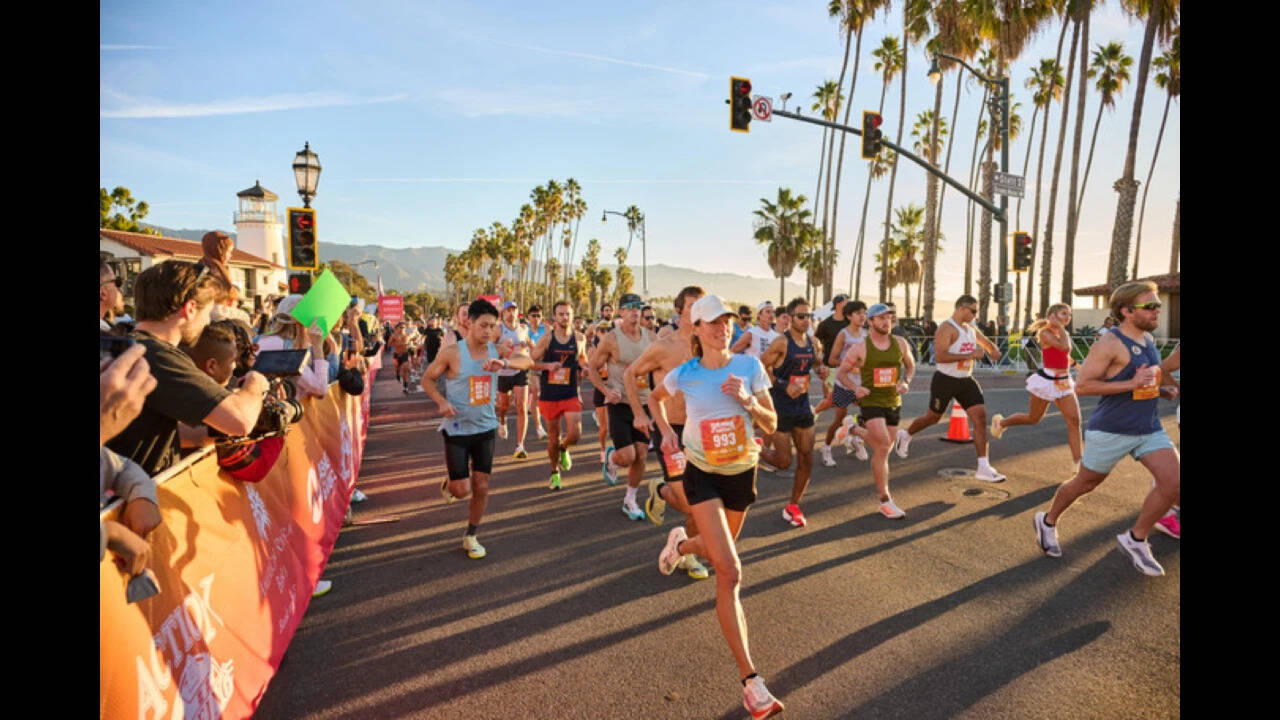
Nineteen runners didn't end up in Santa Barbara hospitals just because it was warm outside.
When emergency responders pulled 19 participants off the course of the Santa Barbara Wine Country Half Marathon after they started showing what officials described as "unusual symptoms," the easy headline pointed straight at the 86-degree Fahrenheit thermometer. Heat exhaustion makes sense on paper. You run 13.1 miles in unexpected May heat, your body overheats, and you drop.
Except anyone who has actually raced through Central California coastal valleys knows that 86 degrees isn't a death sentence by itself. Something else happens when cool-weather runners hit sudden heat spikes, and misreading those early warning signs is exactly how a routine weekend half marathon turns into a mass-casualty medical response.
Why 86 Degrees Hit Runners So Hard in Santa Barbara
Most runners training for a spring race along the California coast spend months logging miles in 55-to-65-degree marine layer weather. Your blood plasma volume stays tuned for cool air. Your sweat rate stays relatively modest. Then race morning arrives, the inland valley traps heat early, and temperatures climb toward 86 degrees before the middle-of-the-pack runners even reach mile eight.
That sudden jump matters way more than the raw number on the weather app.
Exercise physiologists at institutions like the Korey Stringer Institute at the University of Connecticut have documented for years that heat acclimatization takes roughly 10 to 14 days of consistent exposure. Without it, your cardiovascular system fights a losing two-front war. Your working muscles demand oxygen-rich blood to keep moving forward, while your skin desperately needs blood flow to dump internal heat.
You can't feed both systems at full capacity. Your heart rate spikes 15 to 25 beats per minute higher than normal at your usual training pace. You slow down, or your core temperature climbs past the point where your central nervous system lets you stay upright.
The Trap of "Unusual Symptoms"
Emergency crews on the Santa Barbara course noted that several hospitalized runners displayed symptoms beyond standard cramping or mild dizziness. When medical teams use phrases like "unusual symptoms" at endurance events, they're usually looking at the messy overlap between three distinct conditions that look eerily similar from the sidelines.
First is classic exertional heat exhaustion, where core body temperature rises above 100.4°F (38°C) and blood pressure drops as blood pools in dilated vessels near the skin. Second is exertional heat stroke, the true medical emergency where core temperature pushes past 104°F (40°C) and central nervous system dysfunction kicks in—confusion, slurred speech, stumbling, or sudden collapse.
Third, and frequently missed in the heat of the moment, is exercise-associated hyponatremia.
When runners panic about an 86-degree forecast, they often overcorrect at every aid station. They chug plain water at every mile marker even when they aren't thirsty. Diluting your blood sodium levels produces nausea, throbbing headaches, disorientation, and vomiting—symptoms that mirror severe heat illness almost identically. Treating a hyponatremic runner with standard IV saline without checking blood sodium first can actually make things worse, which is why local emergency rooms end up taking in clusters of runners for lab work and observation rather than treating everyone in a parking lot medical tent.
What Race Organizers and Runners Often Miss About Spring Heat
People love blaming race directors when medical tents overflow, or blaming runners for being undertrained. Both takes miss the actual mechanics of how spring road races go sideways.
Spring races operate on fixed permits, fixed road-closure windows, and supply orders placed weeks in advance. You can't magically double the ice supply along a rural wine-country course at 7:00 AM when the morning fog burns off two hours ahead of schedule. Aid stations stocked for a 68-degree morning suddenly run thin on ice sponges and cold fluids by 9:30 AM when the slower half of the field hits the exposed stretches of road with zero shade.
Runners make an equally predictable mistake. We obsess over our goal pace for months. Letting go of a 1:55 finish time when the sun comes out feels like quitting, so people hold their cool-weather splits through mile six, ignore the early chills or goosebumps that signal overheating, and hit a wall so hard their legs simply buckle.
How to Adjust Your Race Plan When Temperatures Spike
If you show up to a spring or fall half marathon and the forecast jumps 15 or 20 degrees above your training weather, your original goal time is dead. Accept that in the corral before the gun goes off.
- Drop your target pace immediately. According to running physiology guidelines from coaches like Jack Daniels and sports medicine researchers, every 5-degree rise above 60°F slows distance performance by roughly 1.5 to 3 percent. At 86 degrees, you need to back off your goal pace by 30 to 60 seconds per mile right from the start line.
- Drink to thirst, not on a rigid schedule. Grab fluids when your mouth feels dry or you crave water, and alternate plain water with an electrolyte drink containing sodium rather than flooding your stomach with plain water every ten minutes.
- Pour water over your head and wrists. Evaporative cooling works faster than drinking cold water when your skin is exposed to dry California air. Dump half a cup of water over the back of your neck and forearms at aid stations to pull heat directly off major blood vessels.
- Respect neurological red flags. Heavy legs and sweat are normal. Goosebumps on your arms in 86-degree sun, sudden irritability, tunnel vision, or stumbling sideways mean your brain is overheating—stop running immediately and walk to the nearest volunteer.
Check the hourly wet-bulb globe temperature rather than just the air temperature before your next warm-weather race, adjust your pace splits the night before, and treat the first half of the course like a warm-up whenever the sun comes out early.