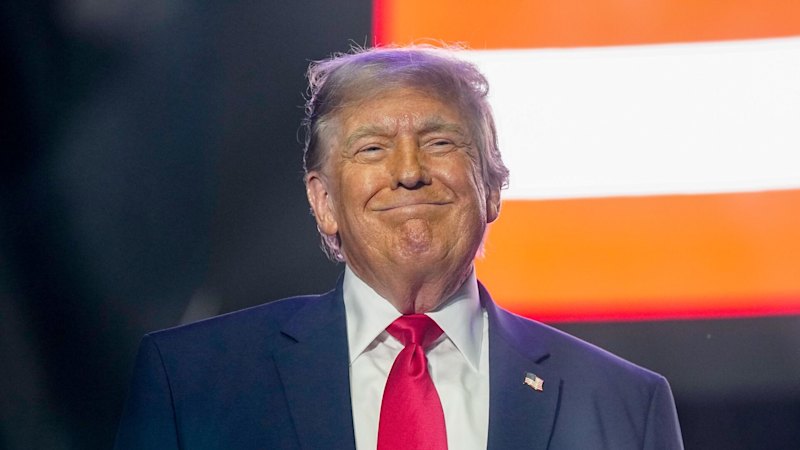
The White House recently unveiled a striking modification to the upcoming limited-edition United States travel document, officially designated as the patriot passports. Featuring a stern, three-quarter-length portrait of President Donald Trump leaning over the Resolute Desk with clenched fists, this commemorative document marks the first time a living, sitting president will appear inside an American passport. Officially produced to commemorate the 250th anniversary of American independence, the document will be issued exclusively at the Washington Passport Agency starting on July 6, 2026, while supplies last. Beyond the immediate partisan uproar, this move represents a profound transformation in how national sovereignty is packaged and projected to the world.
A passport is not a piece of political campaign literature. It is a sovereign instrument, a legal declaration of citizenship, and an official request to foreign governments to allow safe passage. For more than two centuries, the iconography of American travel documents has relied heavily on dead statesmen, historical architecture, and enduring natural monuments. By inserting his own modern likeness into the inner front cover of the document, the president has shattered a long-standing bureaucratic tradition. This change was not made by accident. It is part of a calculated, multi-front campaign to merge the machinery of the federal government with personal branding.
The Mechanical Shift inside the State Department
The bureaucratic execution of this rollout has caused significant friction behind closed doors within the civil service. Originally, the State Department announced in April that a commemorative passport with custom artwork would be made available for the Semiquincentennial. However, the final rendering published on Friday looks radically different from those early designs.
The previous version featured a simpler, standard headshot paired with text highlighting first-term achievements, subsequent legal challenges, and his reelection. That version proved controversial enough, but the updated design shifts the artistic tone entirely. The new image utilizes a photograph taken by Daniel Torok, which currently hangs in the Smithsonian National Portrait Gallery as part of the America’s Presidents exhibition. In the image, the president stares directly into the lens, projecting raw executive authority.
The facing page displays a historical reproduction based on John Trumbull’s classic oil painting depicting the signing of the Declaration of Independence. The visual contrast is deliberate. On one side sits the collective committee of the Founding Fathers in 1776; on the other sits the singular modern executive.
The aesthetic changes extend down to minor graphic design choices. The initial mock-up featured the president’s signature rendered in gold ink, with no specific mention of the number 250. The newly finalized layout flips this dynamic. The signature is now rendered in sharp black ink, while the number 250 is stamped in gold. Additionally, the back cover has been modified to feature a gold flag carrying the phrase Freedom 250.
Department spokespeople have stated that between 25,000 and 30,000 of these documents will be printed. They will be distributed solely to applicants who appear in person at the capital city's centralized passport office. This narrow distribution mechanism creates an artificial scarcity. It transforms an essential government service into a collectible commodity. While citizens can still opt for standard passports via traditional mail-in applications or standard online renewals, those walking through the doors of the Washington office will receive the commemorative version by default.
Institutional Friction and the Ghost of Monarchy
Predictably, the unveiling has triggered intense institutional resistance from opposition lawmakers and constitutional purists. The core argument against the patriot passports rests on the historical aversion to monarchical aesthetics. Early American leaders intentionally avoided placing their faces on currency or official state documents to distance the young republic from the British crown. George Washington famously refused to have his likeness stamped onto early coinage, viewing the practice as overly dynastic.
The current design philosophy of standard American passports favors collective symbols. The Statue of Liberty, the Liberty Bell, Independence Hall, and the peaks of the Rocky Mountains dominate the pages. When individual figures are included, they are confined to a double-page spread of Mount Rushmore, rendering Washington, Jefferson, Lincoln, and Theodore Roosevelt as historical monuments rather than active politicians. Quotations interspersed throughout the pages come from long-deceased figures like Martin Luther King Jr., Dwight Eisenhower, and John F. Kennedy.
By inserting a living politician into this mix, the administration has fundamentally altered the document's purpose. Critics argue that a passport should represent the entire nation, independent of whoever happens to occupy the Oval Office at any given moment. This project signals that national identity and executive identity are one and the same.
The Broader Campaign to Rebrand the State
To look at the patriot passports in isolation is to miss the larger operational picture. This is not an isolated design experiment. It is one component of an expansive strategy to embed a specific political brand across the physical and financial architecture of the nation's capital.
Consider the ongoing transformation of the physical environment in Washington. The administration has pushed through a $600 million expansion of the White House East Wing to construct a massive new ballroom. The Lincoln Memorial Reflecting Pool has undergone structural modifications under executive direction. Plans have been formally submitted for a 250-foot-tall triumphal arch to be built within the city limits. Furthermore, the Treasury Department has confirmed that plans are moving forward to print the current president's signature onto new runs of the one-dollar bill, another departure from traditional currency timelines.
The administration’s efforts have occasionally collided with the judicial branch. For months, an aggressive push was made to officially rename the John F. Kennedy Center for the Performing Arts. That initiative only ground to a halt when a federal judge intervened, ruling that the administration lacked the statutory authority to strip the Kennedy name from the cultural landmark.
Financial institutions are also seeing this branding push. The United States Mint has been directed to produce a solid-gold commemorative coin for the 250th anniversary. This coin is slated to use the exact same Daniel Torok portrait found in the new passport, accompanied by the inscription of the word fight repeated three times, invoking the rally cry used after the assassination attempt in Butler, Pennsylvania.
This coin project has drawn severe scrutiny from figures like Senators Elizabeth Warren and Ron Wyden. The lawmakers launched an investigation following intelligence reports indicating that a portion of the gold supply utilized by the Mint originates from foreign operations linked to illegal mining and human exploitation. The pushback highlights a deeper systemic risk. When the state apparatus is mobilized to produce highly personalized, fast-tracked items, traditional supply chain oversight and ethical guardrails frequently break down under the pressure of meeting tight political deadlines.
International Repercussions at the Border
While the internal domestic debate centers on constitutional norms, the international implications of the patriot passports present a complex set of practical challenges for travelers. Customs and border protection officers worldwide are trained to look for specific, standardized security features and design templates when verifying identification.
A sudden, highly localized variation in a passport design can cause immediate operational delays at foreign checkpoints. A border official in a remote international airport, completely unversed in American political iconography or the specific existence of a Washington-only limited-edition printing, may view a portrait of a living president with suspicion. The document contains all standard biometric chips and watermarks, but its visual layout is unprecedented. This could easily lead to increased secondary screenings for American citizens carrying the document abroad.
There is also the matter of geopolitical signaling. In many parts of the world, the introduction of a national leader's face into a travel document is associated with authoritarian governance models or personality cults. For decades, American diplomats have pointed to the neutral, historical nature of U.S. documentation as evidence of a system built on institutions rather than individuals. Carrying a passport that prominently features a living executive changes the nature of the message transmitted when an American hands over their papers to a foreign official.
California Governor Gavin Newsom attempted to highlight this perceived absurdity by releasing a satirical mockup of a gold-tinted California driver’s license emblazoned with his own face. While the counter-move was dismissed by the White House as a partisan stunt, it underscores how deeply the weaponization of official documentation has penetrated the broader political culture. The state-issued document is no longer treated as an objective administrative necessity. It has become a battleground for competing visions of power.
The Security Architecture and Production Logistics
Despite the dramatic visual overhaul, the internal security architecture of the document remains tethered to the strict guidelines mandated by international aviation authorities. The State Department has emphasized that the passport retains the advanced polycarbonate data pages, specialized color-shifting inks, and intricate micro-printing designed to prevent counterfeiting.
The logistical challenge of execution remains formidable. Producing a specialized run of 30,000 documents requires modifying the centralized printing queues at the Government Publishing Office. It requires adjusting the specific calibration of the laser-engraving machinery used to bind the imagery to the pages. The physical materials required for the Freedom 250 gold flag on the back cover demand an entirely separate manufacturing process from standard blue buckram covers.
The decision to limit issuance to the Washington Passport Agency serves an administrative purpose. It prevents the nationwide backlog of standard passport applications from spiraling further out of control. By funneling all demand for the commemorative document through a single physical location, the bureau can insulate its broader, mail-based renewal infrastructure from the sudden surge of collectors and political supporters seeking the rare item.
The true test of this initiative will occur when the first batch of travelers attempts to clear customs in foreign capitals. The administration has gambled that the document will be received as an expression of national strength and renewed patriotism. The institutional reality suggests that it will instead be analyzed as a case study in how executive power can systematically repurpose the neutral tools of state administration to secure a permanent place in the visual landscape of the world.