The fragile truce between the United States and Iran has collapsed into open military conflict. President Donald Trump warned that the Islamic Republic of Iran could cease to exist if Washington is forced to completely finish the military operations it initiated earlier this year. This warning followed two consecutive days of heavy American airstrikes targeting Iranian surveillance networks, communication systems, and drone storage infrastructure along the Persian Gulf. By analyzing the underlying intelligence reports and tactical maneuvers behind this sudden escalation, it becomes clear that the crisis stems from fundamentally irreconcilable terms within the initial ceasefire framework.
A Broken Agreement in the Strait of Hormuz
The immediate trigger for the renewed combat occurred in the narrow shipping lanes of the Strait of Hormuz. A Panama-flagged oil tanker, the M/T Kiku, carrying more than two million barrels of crude oil, was struck by a one-way attack drone. United States Central Command traced the launch directly to Iranian coastal infrastructure.
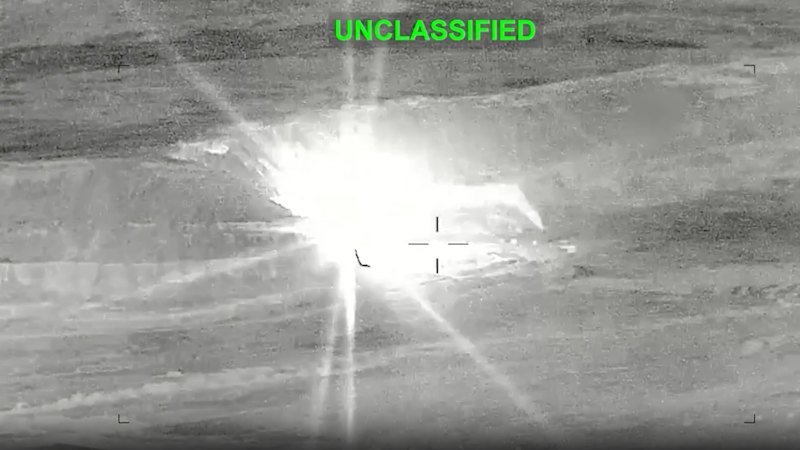
Because the attack directly violated the newly minted Islamabad Memorandum of Understanding, the White House ordered immediate retaliatory strikes. Navy and Air Force fighter jets struck ten distinct military installations near Sirik and Qeshm.
The strategy behind the American response targets specific functional capabilities rather than general personnel. The Pentagon focused on destroying minelaying vessels, anti-aircraft positions, and coastal radar stations. This selection reflects a deliberate effort to strip away Iran’s ability to choke off international energy shipments. Trump stated on social media that the military struck these locations to enforce the terms of the agreement, warning that the administration’s patience had run out.
Tehran did not remain passive. The Islamic Revolutionary Guard Corps fired a barrage of missiles and drones at regional hubs used by the American military, specifically targeting the Ali al-Salem airbase in Kuwait and the Fifth Fleet naval facility in Bahrain. While military officials confirmed no American casualties occurred, the counter-strike demonstrates that Iran is willing to risk a wider regional war to preserve its leverage over the waterway.
The Secret Friction Points in the Islamabad Memorandum
While the drone strike on the M/T Kiku served as the public flashpoint, the actual breakdown of the truce was predetermined by unresolved issues hidden within the diplomatic text. The memorandum gave both nations sixty days to settle the operational details of the permanent peace framework, but the negotiations behind closed doors stalled almost immediately.
Three core disputes prevented the implementation of the agreement.
- Maritime Jurisdictional Demands: Tehran insists that the Strait of Hormuz falls under its domestic security umbrella, demanding the right to inspect commercial traffic. Washington views the strait as an international waterway governed by global transit laws.
- The Frozen Assets Dispute: A key component of the initial framework involved releasing billions of dollars in frozen Iranian oil revenues. The White House demanded strict oversight to ensure the funds went exclusively to domestic civilian infrastructure. Tehran viewed this level of auditing as an unacceptable violation of national sovereignty.
- Uranium Stockpile Ratios: Negotiators could not reach a consensus on how to verify the reduction of Iran's highly enriched uranium stockpiles, leaving a verification gap that the Pentagon viewed as a severe security risk.
The public threats issued by both sides are actually a form of high-stakes bargaining over these specific points. With domestic inflation inside Iran soaring to over eighty-eight percent, the regime faces severe internal pressure to secure financial relief. Yet, the leadership cannot appear to surrender its core military posture without risking domestic destabilization.
The Reality of a Total Conflict
A full-scale implementation of the threat to finish the job would require a fundamental shift in American military doctrine in the Middle East. Unlike the targeted surgical campaigns of previous decades, neutralizing Iran’s military apparatus completely would demand an extended air and sea campaign designed to systematically dismantle the regular army and the Revolutionary Guard.
The initial phase of such an operation would require total suppression of Iranian air defenses. This means destroying Russian-supplied missile systems scattered across mountainous terrain. It would also require the permanent neutralization of hundreds of underground missile silos hidden deep within the interior.
A major challenge for military planners is the asymmetric capability of Iran's naval forces. The Revolutionary Guard does not rely on large warships that are easily targeted by aircraft carriers. Instead, they use hundreds of fast-attack craft armed with anti-ship missiles, alongside extensive naval mining capabilities. Clearing these hazards from the shipping channels would take weeks, during which global energy markets would experience unprecedented disruptions.
Economic indicators suggest the global financial system is highly vulnerable to an extended closure of the Persian Gulf. A prolonged conflict would immediately impact shipping insurance rates, causing a cascade of price increases for consumer goods well beyond the energy sector.
The situation has escalated past basic diplomacy. The regional architecture is now shaped by a volatile cycle where tactical actions on the water instantly trigger strategic threats from leadership. With regional bases in Kuwait and Bahrain now directly involved in the exchange of fire, the margin for error has shrunk to zero.
The true test will occur over the next few days as the true impact of the strikes on Sirik becomes apparent. If the Revolutionary Guard continues to deploy mine-laying assets and small vessels into the transit lanes, the White House will face an immediate choice between accepting a flawed maritime status quo or executing the broader campaign that the president outlined.