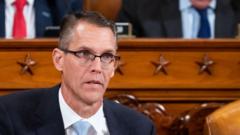
The political immunity of a Donald Trump endorsement evaporated in the Iowa fields on Tuesday night. Representative Randy Feenstra, backed by the full weight of the MAGA apparatus, lost the Republican gubernatorial primary to political newcomer Zach Lahn, a businessman and farmer who weaponized the Make America Healthy Again movement.
For years, the conventional wisdom in Republican politics has been absolute. If Trump blesses your campaign, you win. If he targets you, you pack your bags. That ironclad rule shattered in the Hawkeye State, exposing a deep rift between national populist messaging and local agrarian reality. Feenstra became the first major casualty of the 2026 primary cycle, demonstrating that even the most loyal foot soldiers can be left stranded when local grievances outpace national culture wars.
This was not a failure of national alignment. Feenstra ran hard on a standard populist platform, leaning heavily on anti-China rhetoric, border security, and absolute loyalty to the administration. But his loss reveals a broader structural vulnerability in the conservative coalition. The MAGA movement is no longer a monolithic entity controlled entirely from Mar-a-Lago. It has fractured into competing factions, and in Iowa, the populist fringe successfully turned on the establishment gatekeeper.
The Toxic Rift Over Big Agriculture
To understand how a sitting congressman with presidential backing loses an open-seat gubernatorial primary, you have to look at what Iowa farmers are putting in their soil and their water. For decades, the traditional Republican playbook in Iowa meant total fealty to the interests of corporate agriculture. Feenstra operated directly within this legacy framework.
Lahn blew up that playbook by leaning into the rising, deeply disruptive Make America Healthy Again (MAHA) movement.
During his victory speech, Lahn pointed directly to a statistic that has terrified rural communities but has largely been ignored by establishment politicians in both parties. Iowa has the fastest-growing cancer rate in the country. Instead of standard corporate platitudes, Lahn framed the public health crisis as an economic and existential war waged by corporate entities against everyday citizens.
"We all know something is terribly wrong, but too many politicians from Washington, D.C., to Des Moines have had their heads stuck in the sand while big ag and big pharma printed money," Lahn told supporters.
This messaging directly targeted the Trump administration's ongoing protection of pesticide manufacturing and industrial farming methods. By advocating for strict limits on glyphosate and pesticide usage, Lahn did something previously thought impossible in a Republican primary. He framed the traditional agricultural establishment as a corrupt entity that is actively poisoning the electorate. Feenstra, heavily funded by traditional agricultural political action committees, was left defending a corporate status quo that his own voters are beginning to fear.
The Danger of the Late Endorsement
Political capital behaves much like financial capital. If you hoard it too long and spend it in a panic, it loses its value.
Trump did not intervene in the Iowa gubernatorial race until early voting had already been underway for weeks. By the time the official endorsement dropped, Lahn had spent six months building an aggressive, grassroots network of conservative activists who felt abandoned by the party mainstream.
This created an unprecedented dynamic on the ground. When the endorsement finally arrived, it did not look like a strong leader guiding his flock. It looked like a panicked Washington establishment trying to save a failing campaign.
National endorsements can easily backfire when they collide with intense local organizing. Lahn had already locked in his support among voters who considered themselves deeply conservative but were looking for a candidate focused entirely on "Iowa First." When voters are told who to choose by a national figurehead after they have already made up their minds, the advice feels less like an endorsement and more like an dictate from an outsider.
The Hidden Threat of Strategic Crossover Voting
While the civil war within the Republican party decided the race on paper, an invisible hand was working in the background. Iowa allows for a highly fluid primary system, and there is growing evidence that strategic Democratic behavior played a significant role in tipping the scales.
Democratic strategist Rob Sand ran completely unopposed in his primary. Sand is a twice-elected state auditor with deep rural roots, making him the most formidable statewide candidate the Democrats have fielded in Iowa in over a decade. With no competitive race of their own, independent voters and moderate Democrats had a unique opportunity.
By temporarily changing their registration or voting strategically in the Republican column, these voters had a massive incentive to back Lahn over Feenstra.
- The Chaos Factor: Elevating an insurgent candidate like Lahn creates immediate friction within the Republican base, forcing the party to spend resources healing internal wounds rather than fighting Democrats.
- The General Election Calculus: National Democrats view a matchup between the moderate, populist Sand and an anti-establishment outsider like Lahn as their absolute best chance to flip a red-state governorship this November.
The margin of victory was razor-thin, decided by roughly 1,600 votes. In a race that close, even a tiny faction of strategic voters can completely alter the political future of a state.
A Blue Roadmap in a Red State
The general election in Iowa is no longer a guaranteed walkover for the Republican party. Trump carried the state by more than 13 percentage points in 2024, but gubernatorial races operate under vastly different rules than federal campaigns.
The Democratic Governors Association immediately signaled that it views Iowa as a top-tier target for a flip. The path forward for Sand relies heavily on a coalition of suburban moderates and rural voters who are exhausted by the ongoing civil war inside the GOP.
Lahn's platform is highly polarizing. Alongside his environmental health crusade, he champions an absolute ban on abortion and aggressive restrictions on public school curricula. While these positions energized the hard-right primary electorate, they present a massive target in a general election. Sand will undoubtedly attempt to paint Lahn as an unstable radical, while Lahn will counter by painting Sand as a tool of the federal bureaucracy.
The political myth making is over. The Iowa primary proved that the populist movement is no longer a top-down enterprise managed by a single phone call from Florida. It is a volatile, unpredictable force driven by local anxieties, economic survival, and a growing distrust of any establishment figure, no matter who happens to sign their certificate of endorsement.