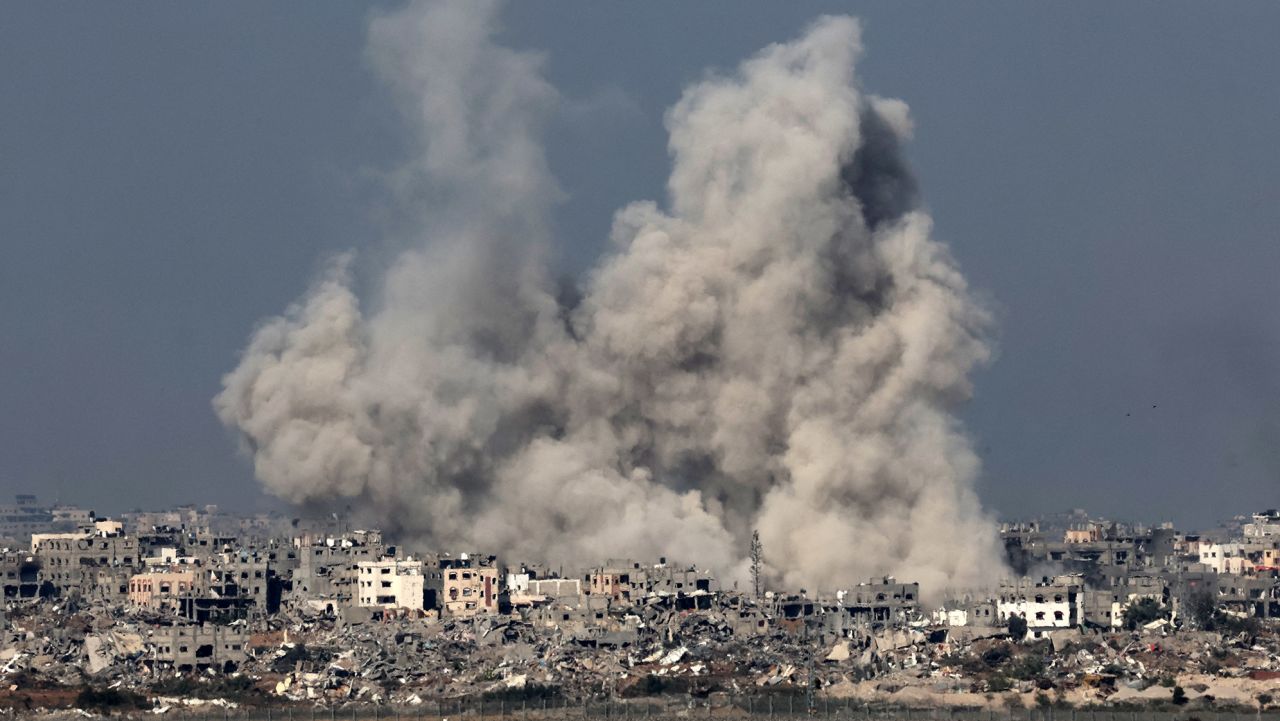
Early Tuesday morning, Israeli aircraft crossed into Syrian airspace and delivered a precise, violently calculated message. Between four and eight airstrikes slammed into the Abu al-Duhur military airfield in the eastern Idlib countryside. The attack caused material damage to the runways and storage facilities, but resulted in zero casualties.
If you are wondering why Israel just spent millions of dollars on aviation fuel and precision-guided munitions to blow holes in empty Syrian concrete, the answer is not found in Damascus. It is found in Ankara. Discover more on a similar topic: this related article.
The strikes occurred mere hours after a Turkish military delegation visited the exact same airfield to inspect plans for reactivating it.
This was not a tactical military operation designed to degrade an immediate, active threat. It was an explosive diplomatic telegram sent directly to the Turkish government, written in the unmistakable language of high-yield explosives. The incident has ripped the bandage off a festering geopolitical wound in the Middle East, exposing a bitter proxy dispute between Israel, Turkey, and a surprisingly frustrated United States. More reporting by Reuters delves into comparable views on this issue.
To understand the gravity of what happened at Abu al-Duhur, one must look past the smoke rising from the tarmac and examine the brutal realities of post-Assad Syria.
The Message Buried in the Crater
When a modern air force attacks a runway, the goal is rarely permanent destruction. Runways are just long strips of concrete. They can be patched, paved, and made operational again by a competent engineering crew within days.
Israel knows this better than anyone. They did not strike the Abu al-Duhur base because they believed they were permanently neutralizing a military asset. They struck it to establish a red line.
Since the collapse of Bashar al-Assad's regime in December 2024, the strategic map of the Levant has been violently redrawn. The new interim government in Damascus, led by President Ahmad al-Sharaa, inherited a shattered country and a hollowed-out military apparatus. For the past year and a half, Israel has engaged in a systematic, unyielding campaign to ensure that the Syrian military remains completely crippled.
According to regional defense analysts, Israeli strategic goals have expanded far beyond merely securing their northern borders. They are now actively engaged in a long-term project to completely prevent Syria from acquiring or restoring any meaningful strategic military capabilities.
An empty airfield in Idlib, located roughly 70 kilometers from the Turkish border, does not inherently threaten Tel Aviv. But a functional airfield, funded by foreign capital, protected by foreign air defense systems, and operated under the protective umbrella of the Turkish military? That is an entirely different calculation.
A Direct Warning to Ankara
Turkey has emerged as the principal foreign backer of the new Syrian government. Ankara has a vested interest in stabilizing its southern neighbor. A stable Syria means secure borders, the potential return of millions of refugees, and a lucrative sphere of economic and military influence.
To achieve this stability, Turkey has been quietly but aggressively working to rehabilitate Syria's shattered military infrastructure. The Syrian Observatory for Human Rights recently reported that Turkish forces have been installing radar systems on Syria's Mediterranean coast, an obvious first step in rebuilding a national air defense network.
The visit by the Turkish military delegation to Abu al-Duhur was meant to be a routine inspection. They were assessing the logistics of putting the base back into service after it had sat dormant for years. Israel's response was immediate and overwhelming.
This is not without precedent. In April 2025, Israel launched a similar wave of airstrikes against the T4 military airbase in Homs province. That attack occurred shortly after Turkey began negotiations to establish an airbase and deploy air defenses at that location.
The pattern is undeniable. Whenever Turkey attempts to lay down permanent military infrastructure within Syrian borders, Israel bombs the foundation before the concrete can dry. Turkey’s foreign ministry understood the message perfectly, issuing a furious statement on Tuesday accusing Israel of violating international law and demanding a decisive stance from the international community to end the aggression.
But beneath the diplomatic outrage lies a cold military reality. Israel and Turkey previously established a "deconfliction" mechanism in Azerbaijan to prevent unintended clashes between their respective forces. That mechanism works on paper. In the skies over Idlib, however, Israel is making it abundantly clear that Syrian airspace belongs to them, and they will tolerate no challengers—not even from a NATO member state.
Washington Breaks Character
Perhaps the most startling development to emerge from the rubble of Abu al-Duhur is the reaction from the United States.
Historically, Washington maintains a predictable silence regarding Israeli military operations inside Syria. The standard operating procedure is to offer quiet diplomatic cover or issue vague statements about Israel's right to self-defense.
On Tuesday, that protocol was abandoned.
Tom Barrack, the US ambassador to Turkey and special envoy for Syria, issued a remarkably pointed condemnation. He stated publicly that Washington was "deeply concerned" and explicitly labeled the confirmed Israeli airstrikes as an "unnecessary escalation that does not advance regional stability".
This is an astonishing public rebuke of an allied military operation.
Barrack did not stop there. He went out of his way to praise the Syrian interim government. He noted that under President al-Sharaa, Damascus has not adopted a predatory posture, has not maintained proxy forces, and has repeatedly indicated a strong preference for de-escalation with Israel.
Why is the United States suddenly running interference for a government led by former Islamist insurgents?.
The answer lies in grand strategy. The US State Department recognizes that the current situation in Syria is unsustainable. A perpetually bombed, militarily castrated state cannot effectively govern itself, control its borders, or suppress the inevitable resurgence of extremist terror networks. Washington desperately wants the al-Sharaa government to succeed, normalize, and stabilize the region.
Israel, conversely, fundamentally distrusts the new leadership in Damascus. From Tel Aviv's perspective, a weak, chaotic Syria is preferable to a strong, organized Syria under the influence of Ankara.
This divergence in strategic priorities is creating severe friction. Barrack recently met with Syrian Foreign Minister Asaad al-Shaibani in Istanbul, actively attempting to encourage "diplomatic cadence over kinetic frustration". Israel's decision to bomb an airfield merely hours later feels like a deliberate slap in the face to American diplomatic efforts.
The Intelligence Backchannel
The mechanics of the strike reveal just how deeply this friction runs.
According to a senior Israeli official who spoke anonymously following the operation, Jerusalem actually shared "sensitive intelligence" with Washington prior to launching the jets. This information was supposedly passed at the highest levels of various agencies in both countries.
Think about the implications of that timeline.
Israel told the United States what it was going to do. The United States, based on Tom Barrack's subsequent fury, clearly objected. Israel executed the strike anyway.
The notification was not a request for permission. It was a courtesy heads-up to ensure American assets in the region were not accidentally caught in the crossfire. It was a declaration of unilateral intent.
Furthermore, the Israeli official confirmed that a direct message was sent to Syrian President al-Sharaa alongside the airstrikes. The message bluntly stated that al-Sharaa "cannot operate like the previous Syrian regime," adding a patronizing observation that "it is possible that he did not understand what was happening, or did not know".
This is the psychological warfare component of the operation. Israel is forcing the Syrian president into a humiliating position. They are publicly demonstrating his complete powerlessness. The Syrian Ministry of Foreign Affairs can release all the statements it wants. They can describe the strikes as a "flagrant violation of Syria's sovereignty" and formally call upon the United Nations Security Council. Syrian Foreign Minister Asaad al-Shaibani can stand next to IAEA chief Rafael Grossi at a press conference and demand an end to the violations.
None of it changes the fact that Israeli jets can enter Syrian airspace at will, destroy whatever they choose, and leave before the air raid sirens stop echoing.
The Illusion of Sovereignty
The government in Damascus is desperately trying to project an image of a functional, recovering nation. Just this month, the Syrian military held its first air exercises since the fall of Assad, flying ancient, Russian-made MiG-21 fighter jets.
It is a poignant, almost tragic display. Flying obsolete Cold War-era jets does not constitute a modern air force. It constitutes target practice.
Israel's operational wave against the Abu al-Duhur base shatters the illusion of Syrian sovereignty. Jordan’s Ministry of Foreign Affairs quickly backed Damascus, labeling the attack an "unjustified aggression" and warning that repeated strikes risk deepening regional instability. But diplomatic solidarity from Amman offers zero protection against bunker-buster munitions.
A state without the ability to defend its own airspace is not truly sovereign. It is a tenant living under a leaky roof, constantly at the mercy of the landlord's temper.
The situation is rapidly approaching an intolerable threshold for all involved. Turkey cannot indefinitely pour resources into a client state if those resources are instantly vaporized by Israeli warplanes. The United States cannot effectively broker a lasting peace if its closest ally in the region continually ignores its diplomatic directives and undermines its appointed envoys. And the fragile government in Damascus cannot maintain the confidence of its own people if it is repeatedly subjected to public, military humiliation.
Israel has drawn its line in the sand with high explosives. They will not accept a rehabilitated Syrian military. They will not accept Turkish military expansion on their northern flank.
The US Special Envoy can preach about restraint and constructive paths. Regional allies can cite the United Nations Charter until they are blue in the face. But the brutal, observable reality of the Middle East remains unchanged. Power belongs to whoever commands the skies.
Right now, that is Israel. And they intend to keep it that way, regardless of who owns the broken concrete below.