The illusion of a durable Middle East peace shattered before the opening bell on Wall Street today. As a fragile ceasefire between the United States and Iran faces its most severe test yet, energy markets have reacted with predictable aggression, sending crude benchmarks surging while leaving equity markets locked in a state of anxious paralysis.
Global benchmark Brent crude jumped 2.5% to $98.22 per barrel, while West Texas Intermediate climbed past $95. This abrupt reversal follows a brief, optimistic two-week market retreat that was predicated on a diplomatic breakthrough that never actually existed. The hard reality is that investors premature priced in a sweeping stabilization of the region, ignoring the underlying operational realities on the ground. The current market friction is not just a temporary hiccup; it is a structural reassessment of global energy security risk.
The Illusion of a Paper Peace
For the past week, the narrative coming out of Washington suggested that an interim peace deal was all but finalized. Mainstream consensus held that a memorandum of understanding between Washington and Tehran would immediately reopen the blockaded Strait of Hormuz, unlocking millions of barrels of stranded crude and providing much-needed relief to an inflation-weary global economy.
That narrative collapsed overnight.
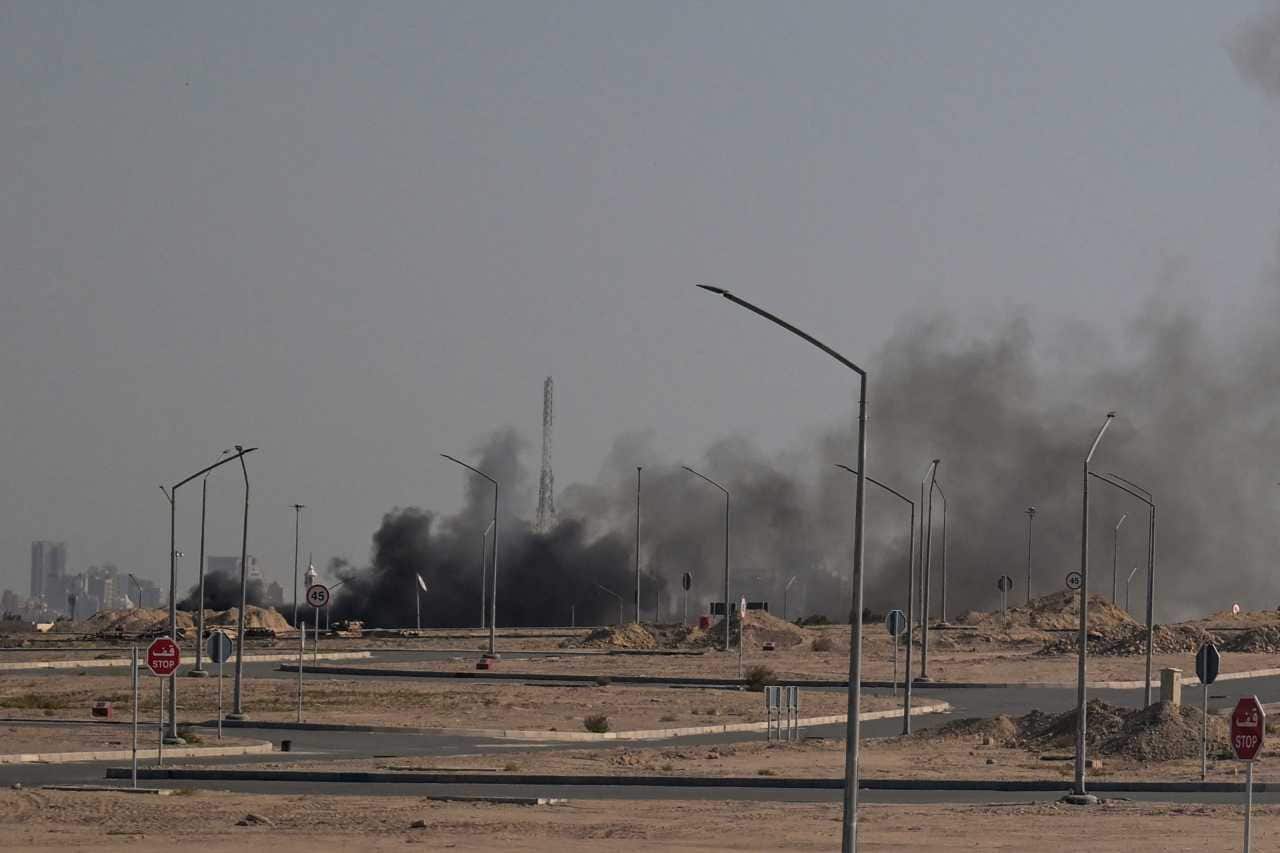
A series of deadly military engagements, including Iranian ballistic missile strikes targeting locations in Kuwait and Bahrain, met swift American retaliatory strikes on Qeshm Island. When the dust cleared, the civilian airport in Kuwait was damaged, casualties were reported, and the diplomatic framework looked entirely disconnected from reality.
The fundamental mistake equity traders made was treating a highly volatile military standoff as a standardized corporate negotiation. A signature on a draft agreement in Washington does not instantly clear sea lanes or change the tactical calculus of military commanders on the water.
The Chokepoint Problem
Even if diplomatic channels remain open, the physical infrastructure of global energy transit has suffered deep, systemic damage that cannot be reversed by a press release. The Strait of Hormuz, through which roughly 20% of the world's liquefied natural gas (LNG) and a fifth of its petroleum flows, remains effectively non-operational for commercial shipping.
- Sea Mine Proliferation: Naval intelligence reports indicate that Iranian forces have extensively mined vital corridors within the waterway. Clearing these channels requires specialized minesweeping operations that could take months, not days.
- The Insurance Boycott: Maritime insurance syndicates are refusing to underwrite commercial tankers attempting the passage, irrespective of political declarations. Without risk mitigation, major fleet operators are keeping their vessels anchored or routing them around the Cape of Good Hope.
- Production Scars: The collective production drop from major Gulf producers, which saw nearly 10 million barrels per day sidelined at the peak of the spring blockades, cannot be restarted with the flick of a switch. Oil reservoirs and extraction infrastructure require technical reassessments after prolonged, unplanned shutdowns.
Wall Street Fractures on Disparate Realities
While the energy sector prepares for a prolonged supply deficit, the broader equity market presents a deeply fragmented picture. The S&P 500 and the Dow Jones Industrial Average slid into negative territory at the open, yet tech-heavy indexes managed to eke out marginal gains. This divergence highlights a profound decoupling within the modern market structure.
Market Performance At The Open (June 3, 2026)
+------------------------+------------------+
| Asset Class            | Performance      |
+------------------------+------------------+
| Brent Crude Futures    | +2.5% ($98.22)   |
| WTI Crude Futures      | +2.3% ($95.22)   |
| S&P 500 Index          | -0.6%            |
| Japan Nikkei 225       | +2.5%            |
+------------------------+------------------+
This structural split exists because institutional capital is fleeing toward two very different safe havens: physical commodities and large-cap technology firms insulated from short-term supply chain pressures.
The AI Capital Cushion
The only reason major equity indexes have not suffered a systemic rout is the extraordinary concentration of capital in artificial intelligence infrastructure and semiconductor equipment manufacturers. Japan's Nikkei 225 actually surged past the 68,000 threshold today, entirely decoupled from the geopolitical crisis. This was driven by massive, double-digit gains in companies like Tokyo Electron and Advantest.
Investors are operating under the assumption that computational demand is completely agnostic to geopolitical turmoil in the Persian Gulf. A semiconductor fabrication facility in East Asia or an enterprise data center in Virginia will continue to operate regardless of the security situation in Kuwait. However, this perspective ignores the macroeconomic gravity of energy inflation. If crude oil sustains a trajectory toward triple digits, the broader consumer economy will contract, eventually hitting corporate earnings across every sector.
Corporate Earnings Disconnect
Oddly specific pockets of consumer retail also showed resilience this morning. Macy's posted strong first-quarter profit forecasts, and GameStop experienced a significant surge following an aggressive stock buyback announcement. These anomalies create a false sense of stability.
A veteran analyst looks past the idiosyncratic behavior of individual retail stocks to look at the macro picture. Corporate balance sheets are currently burning through the inventory cushions they built up late last year. When those inventories are depleted and must be replaced under the current high-freight, high-fuel cost paradigm, the margins of these resilient retailers will face severe contraction.
The Central Bank Corner
The most critical consequence of this crumbling ceasefire is its direct impact on monetary policy. Before this conflict escalated, central banks across Europe and North America were broadly expected to initiate a cycle of interest rate reductions to support flagging domestic growth.
Those plans are now obsolete.
"We are no longer looking at a temporary supply disruption," notes a senior European monetary strategist who spoke on the condition of anonymity. "The energy shock is embedding itself into core inflation metrics. If central banks cut rates now to salvage economic growth, they risk triggering a wage-price spiral reminiscent of 1974."
The European Central Bank has already revised its inflation forecasts upward and signaled that any anticipated rate cuts are indefinitely postponed. The Federal Reserve finds itself in an equally restrictive corner. While domestic energy production provides the United States with a partial buffer against absolute supply shortages, American consumer prices are tracking the upward march of international crude.
Macroeconomic Reality
The global economy is facing a structural energy supply gap that diplomacy cannot immediately bridge. The premise that a fragile truce would seamlessly restore the pre-war energy status quo was built on flawed assumptions.
For corporate strategists and institutional investors, the takeaway is clear: stop trading on daily diplomatic headlines. The operational reality is that the Strait of Hormuz remains a high-risk combat zone, global oil inventories are drawn down to historic lows, and the structural cost of moving goods around the globe has reset at a permanently higher baseline. Wealth preservation in this environment requires pivoting away from speculative equities reliant on cheap credit, and allocating capital toward tangible assets, localized supply chains, and companies with absolute pricing power.