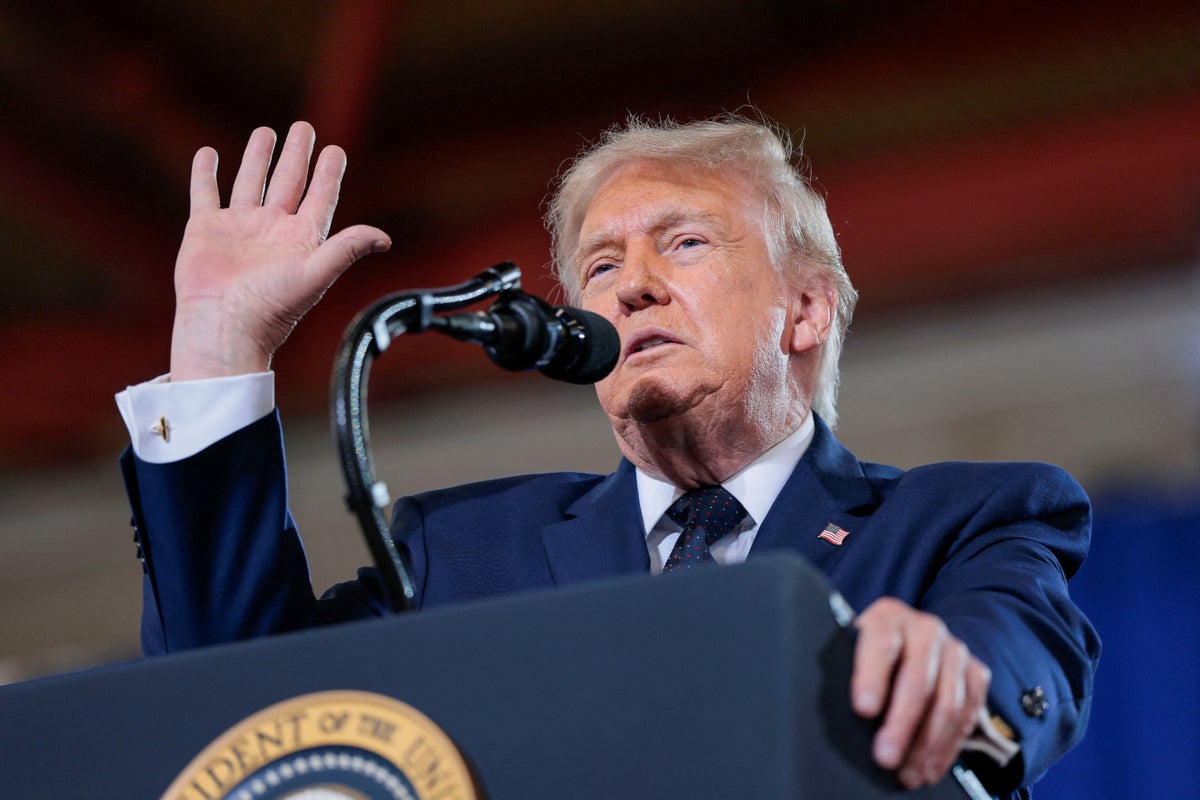
Donald Trump is trying to execute the most audaciously contradictory maneuver of his political life, and the bedrock of his domestic coalition is beginning to fracture beneath him.
By declaring on social media that critics of his emerging Iranian peace deal are "losers, who are critical about something they know nothing about," the president has fundamentally miscalculated the nature of the rebellion brewing within his own party. This is not a minor squabble over diplomatic wording. It is a profound ideological reckoning over a three-month-old war that has already cost $29 billion, claimed the lives of thirteen American service members, and sent global energy markets into a tailspin.
The primary query undergirding this crisis is simple: Why are hardline Republicans turning on a president they routinely venerate? The answer is that Trump’s proposed framework threatens to leave the core objective of Operation Epic Fury completely unfulfilled, potentially allowing Tehran to retain its nuclear infrastructure in exchange for short-term economic relief. For the traditional hawks who tolerated Trump’s unorthodox style, a deal that looks even remotely like a resurrection of the 2015 nuclear pact is an explicit betrayal of why the war was launched on February 28 in the first place.
The Mirage of an Easy Victory
When the joint United States and Israel military campaign against Iran commenced earlier this year, the White House promised a swift, decisive operation. Predictions from the Oval Office suggested the conflict would reach a conclusion within four to six weeks. Instead, the confrontation has stretched into a grueling war of attrition.
The strategic center of gravity quickly shifted to the Strait of Hormuz. When Iran enacted a total military blockade of this vital waterway, through which roughly 20 percent of global energy supplies transit, the global economy suffered an immediate, violent shock. Brent crude oil skyrocketed from a stable $60 per barrel at the start of the year to over $120 during the peak of the escalations. For American consumers, this manifested as painful, compounding inflation at the gas pump, eroding Trump’s domestic approval numbers just months before crucial midterm elections.
Under intense economic pressure and mounting domestic fatigue, the administration began searching for an exit ramp. The resulting framework, hammered out through regional intermediaries and Gulf nation partners, consists of a three-stage de-escalation plan:
- An immediate formal cessation of active hostilities.
- The lifting of the Iranian blockade in the Strait of Hormuz to restore global energy shipping.
- A 60-day ceasefire window during which Iran would be permitted to sell its oil without restrictions while a final, comprehensive treaty is negotiated.
The fatal flaw in this sequence, according to senior defense analysts and congressional leadership, is the sequencing of the nuclear question. The administration claims that Iran has agreed in principle to surrender its substantial stockpile of uranium enriched to 60 percent, which currently stands at an estimated 970 pounds according to the International Atomic Energy Agency. However, Iranian state media and senior officials in Tehran have already contradicted this narrative, publicly stating that the nuclear program is a matter for the final-stage negotiations and is completely excluded from the initial ceasefire agreement.
The Right Wing Revolt
This discrepancy is where the political consensus for the war completely fell apart. For hardline conservative figures, the administration is committing the exact error that Trump spent nearly a decade weaponizing against the Obama administration.
Former Secretary of State Mike Pompeo broke directly with his former boss, asserting that the emerging deal was "not remotely America First" and seemed to be lifted directly from the previous administration's playbook. This critique struck a particularly sensitive nerve in the White House, prompting an aggressive, profanity-laced response from communications director Steven Cheung.
The discomfort is even more pronounced on Capitol Hill, where the legislative framework supporting the executive branch is fracturing. Senator Roger Wicker, the influential chair of the Senate Armed Services Committee, openly labeled the proposed 60-day ceasefire a disaster. His argument cuts to the heart of the military's frustration: if the United States halts operations without eliminating Tehran's enrichment capability, then every dollar spent and every life lost during Operation Epic Fury will have been entirely for naught.
                  [Operation Epic Fury Escalation]
                                 │
              ┌──────────────────┴──────────────────┐
              ▼                                     ▼
     [Strait of Hormuz Blockade]           [$29B Taxpayer Cost]
              │                                     │
              ▼                                     ▼
     [$120+ Oil/Gas Spikes]                [Political Pressure]
              │                                     │
              └──────────────────┬──────────────────┘
                                 ▼
                    [Trump Ceasefire Framework]
                                 │
              ┌──────────────────┴──────────────────┐
              ▼                                     ▼
     [White House View:                    [GOP Hawk View:
      Uranium Surrender Outlined]           Nuclear Infrastructure Left Intact]
This legislative anxiety is no longer theoretical. The Senate recently advanced a war powers resolution by a 50-47 vote, aimed at legally compelling the administration to terminate unauthorized military operations in Iran. While the measure faces an certain presidential veto even if it clears the House, the political significance lies in the roster of those who voted to advance it.
Four Republican senators joined the Democratic minority. Among them was Senator Bill Cassidy, who explicitly noted that his constituents—including staunch Trump loyalists—are deeply alarmed by the lack of clarity, strategy, and an identifiable end state for the conflict. When a president loses the confidence of his base on matters of war, rhetorical attacks on social media lose their efficacy.
The Strategic Miscalculation
The administration’s current defense, articulated by Secretary of State Marco Rubio, is that the United States is in no hurry and will not sign an unfavorable agreement. Rubio has emphasized that the military blockade on Iranian shipping will remain fully active until a certified treaty is signed.
Yet, this assertion ignores the leverage that has already been surrendered. By signaling an eagerness for a 60-day window where Iran can resume unrestricted oil sales, the White House is offering Tehran a massive financial lifeline at the exact moment economic sanctions and military pressure are hitting their peak.
Furthermore, the regional balance of power is shifting in ways Washington seems slow to comprehend. Senator Lindsey Graham warned that the current terms would constitute a nightmare scenario for long-term Israeli security. If Iran emerges from this three-month war with its leadership intact, its regional proxy networks subsidized by renewed oil revenue, and its 60 percent enriched uranium stockpile merely subject to future debate, the geopolitical reality of the Middle East will have tilted decisively against Western interests.
Trump's insistence that his negotiation is "THE EXACT OPPOSITE" of past diplomatic failures represents a classic branding exercise applied to a complex geopolitical crisis. But international relations do not operate like real estate development. You cannot simply bully opposition lawmakers and foreign adversaries into accepting a narrative that contradicts observable reality on the ground.
The administration’s gamble hinges on the belief that the American public’s aversion to a prolonged foreign war will outweigh the conservative establishment's demand for a total victory. That calculation may hold true for the broader electorate, but it ignores the institutional reality of Washington. By alienating the very national security hawks who provided the intellectual and political cover for Operation Epic Fury, Trump is attempting to cross a dangerous chasm on a very thin tightrope. If the upcoming negotiations fail to secure immediate, verifiable structural concessions from Tehran regarding its nuclear assets, the president will find himself entirely isolated, trapped between an unyielding adversary abroad and an increasingly hostile party at home.