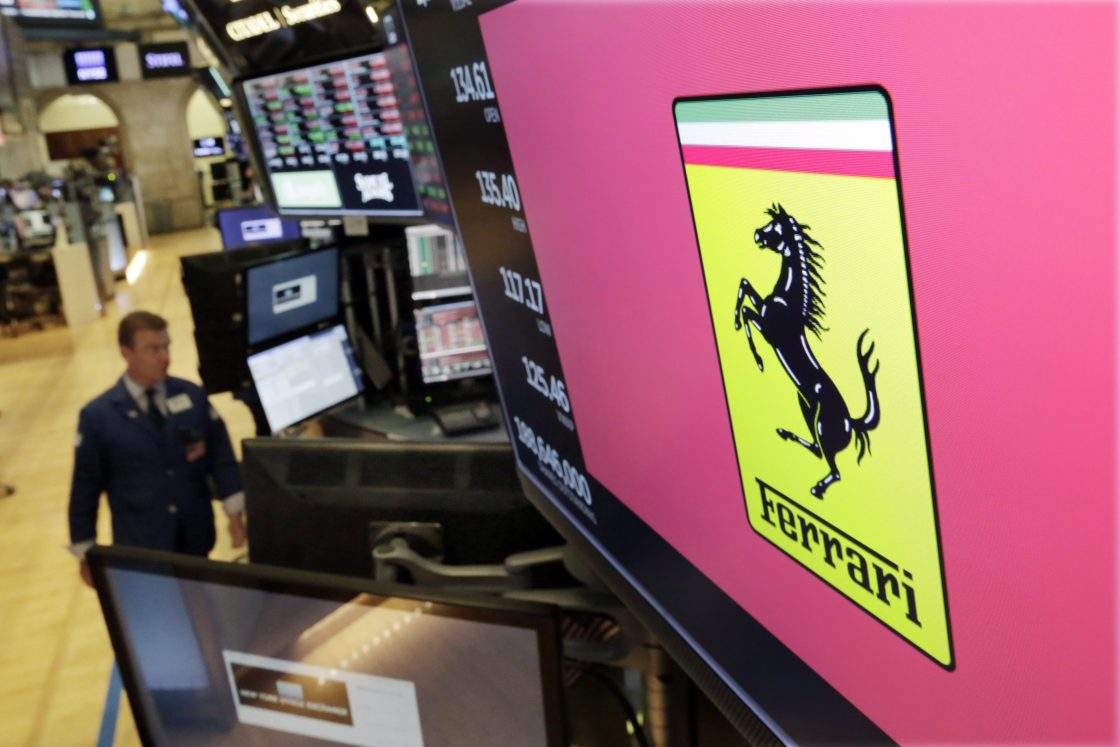
The red ticker tape on the Borsa Italiana told a story that Maranello’s marketing department never rehearsed. Shortly after the grand unveiling of the Luce, Ferrari’s inaugural foray into the purely electric domain, shares of the Prancing Horse (RACE) took a sharp 6.2% dive. On the surface, the numbers for the Luce are staggering: 1,000 horsepower, four motors, and a design collaboration with former Apple creative powerhouse Jony Ive. Yet, for a brand built on the visceral, mechanical scream of an internal combustion engine, the Luce feels like a high-voltage identity crisis that investors aren’t buying.
The immediate sell-off, wiping billions in market value, isn't just about a single car. It is a referendum on the fundamental survival of the luxury "soul" in an era of silent propulsion.
The Luce Paradox
Ferrari has built its empire on the concept of "unnecessary" engineering—the kind of mechanical complexity that serves no purpose other than to stir the blood. The Luce, despite its €550,000 price tag, introduces a uncomfortable reality: in the electric age, performance is a commodity. When a family-friendly sedan or a Chinese-built utility vehicle can achieve 0-100 km/h in under three seconds, the "performance" pillar of the Ferrari brand becomes precarious.
The markets are reacting to the dilution of rarity. By utilizing a quad-motor setup and a 122kWh battery, Ferrari is playing a game of numbers that it can no longer win by a wide margin. The skepticism also stems from the car's physical silhouette. To accommodate the massive battery pack, the Luce sits higher than the traditional low-slung grand tourers, a compromise that has already sparked a backlash among the Ferrari "Puristi" who view the five-seater layout as a betrayal of the brand’s racing DNA.
The Margin Trap
Beyond the aesthetic debate lies a cold, hard fiscal reality. Ferrari is synonymous with industry-leading profit margins, often hovering around 38%. However, the transition to EV production is an expensive pivot. The brand’s new "e-building" in Maranello cost €200 million to construct, and while CEO Benedetto Vigna insists the facility is about flexibility rather than raw volume, the overhead is daunting.
Investors are looking at the scaling back of Ferrari's own targets. The company recently quietly lowered its 2030 goal from 40% fully electric sales to just 20%. To the institutional eye, this looks like a lack of confidence. If the captain of the ship is backing away from the destination, why should the passengers stay on board?
The Core Issues Driving the Dip
- The Sound Problem: A Ferrari without a V12 or V8 soundtrack is like a Stradivarius made of plastic. While Ferrari has patented "authentic" sound generators, the market views these as synthetic substitutes for a lost heritage.
- Segment Crowding: The Luce enters a market where Porsche, Lamborghini, and even high-end startups like Lucid are fighting for the same ultra-wealthy early adopters.
- Infrastructure Mismatch: The typical Ferrari owner wants to drive from Monaco to St. Moritz without worrying about whether a charging station in the Alps is functional. The infrastructure is not yet a luxury experience.
The Shadow of the Jony Ive Influence
The collaboration with Jony Ive was meant to signal a new era of "quiet luxury" and digital integration. Instead, it has introduced a minimalist aesthetic that some argue is too detached from Ferrari’s heritage of raw, analog passion. The interior is a marvel of glass and haptic feedback, but it moves the brand closer to a "tech company" and further from a "racing stable."
There is also the matter of the target demographic. Ferrari is banking on the "New Wealth"—tech entrepreneurs in California and the Nordics who prioritize sustainability over petrol-fumed nostalgia. But these buyers are notoriously fickle. They buy the "new thing," whereas traditional Ferrari collectors buy for life. By chasing the trend-setters, Ferrari risks alienating the "Tifosi" who provide the floor for the brand’s resale value.
Why the Market is Wrong (And Where it is Right)
The panic might be premature. Looking at the fundamental health of the company, Ferrari still boasts a 10/10 profitability ranking and a backlog of orders that stretches into 2027 for its combustion models. The Luce is not meant to replace the V12; it is meant to be a hedge against a future where internal combustion is legislated out of existence.
However, the "Fix" for Ferrari isn't more horsepower. It's a return to the exclusive alchemy of the brand.
The Strategic Pivot Required
- Embrace the Hybrid Mid-Point: Ferrari should lean harder into high-performance hybrids like the SF90, which offer the electric "halo" without sacrificing the mechanical heartbeat.
- Synthetic Fuels (e-Fuels): Investing in carbon-neutral fuels would allow Ferrari to keep its engines screaming while satisfying ESG mandates.
- Artificial Scarcity: The Luce should have been a limited-run hypercar, not a full-production GT. Exclusivity is the only thing that justifies a €500,000 entry price in an EV market defined by rapid depreciation.
The stock market isn't reacting to the car's speed. It's reacting to the fear that Ferrari is becoming just another car company. In Maranello, being "just another" anything is the ultimate failure.
Protect the engine, or lose the horse.