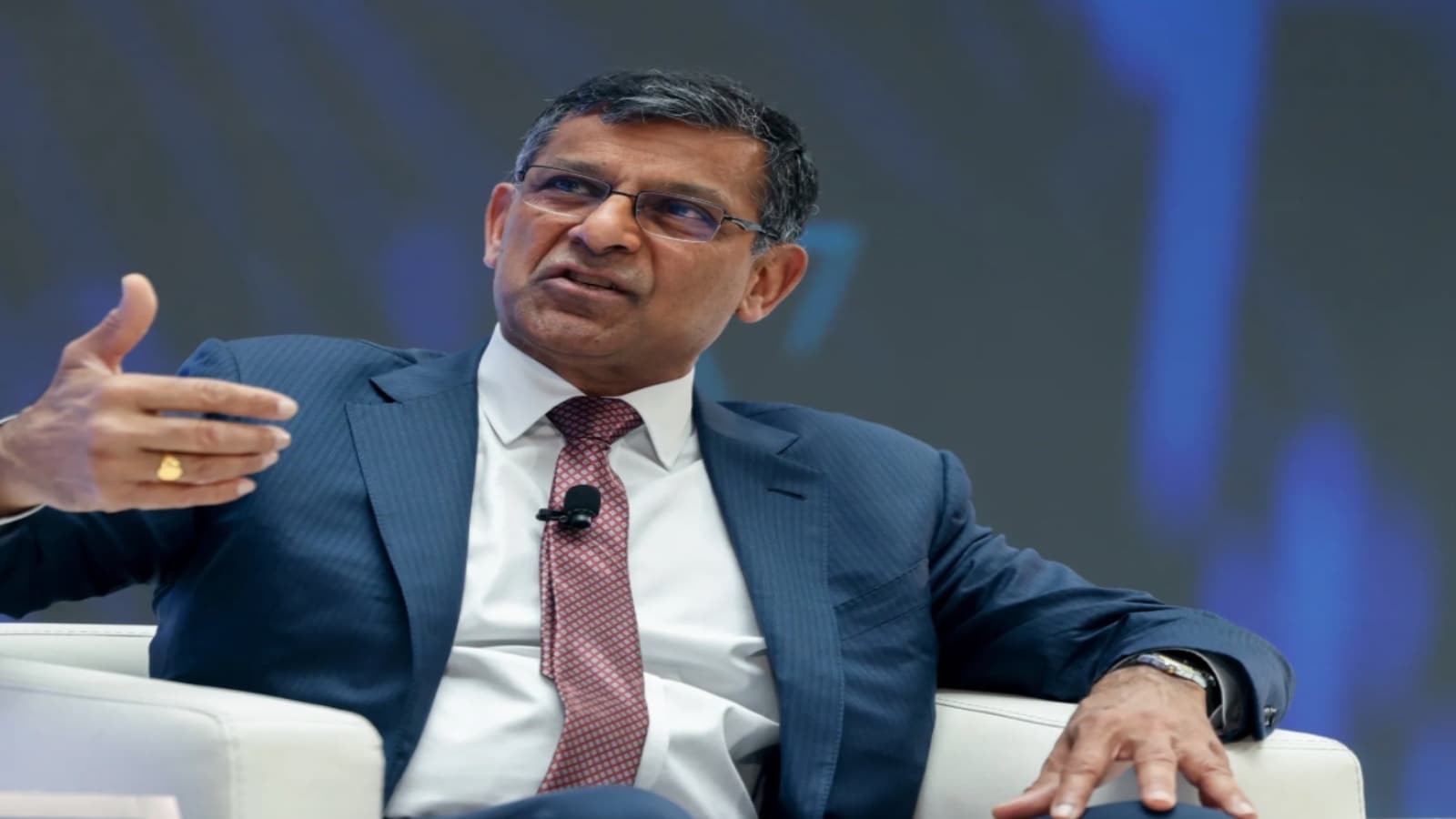
Newly appointed Federal Reserve Chairman Kevin Warsh has quietly admitted what independent analysts have suspected for years: the central bank's economic playbook is fundamentally broken. By forming five independent task forces stuffed with outsiders like former Reserve Bank of India Governor Raghuram Rajan, Harvard inequality economist Raj Chetty, and tech executives like Microsoft’s Asha Sharma and venture capitalist Marc Andreessen, the Fed is attempting a massive course correction to salvage its credibility after years of misjudging inflation and mismanaging its multi-trillion-dollar balance sheet.
This is not a routine academic exercise. It is an emergency intervention. For a generation, the Fed has operated as an insular priesthood, relying on outdated models that failed to anticipate the post-pandemic inflation surge and struggled to comprehend a rapidly shifting labor market. By bringing in fierce external critics and technologists, Warsh is signaling a distrust in the institution’s internal bureaucracy.
The move acknowledges a uncomfortable reality. The world's most powerful economic institution has been flying blind.
The Broken Machinery of Central Banking
Central banks rarely broadcast their failures, but the composition of these new task forces speaks volumes about where the blind spots lie. For over a decade, the Fed expanded its balance sheet through quantitative easing, buying up government debt and mortgage-backed securities until its holdings peaked at nearly $9 trillion. The internal consensus was that this came with little cost.
Raghuram Rajan knows otherwise. Appointed to the Balance Sheet Policy task force alongside former Fed Governor Jeremy Stein, Rajan has long warned that massive central bank balance sheets distort private markets, create dependency among commercial banks, and build systemic instability.
When the Fed floods the market with liquidity, it creates an artificial environment where risks are mispriced. When it tries to pull that liquidity back, the banking system experiences violent withdrawals. Rajan’s presence indicates that the Fed is finally preparing to examine the long-term damage of its permanent intervention stance. The era of the endless safety net might be drawing to a close because the central bank simply cannot afford the asset bubbles it leaves in its wake.
Lagging Data and the Real-World Disconnect
The Fed's reliance on backward-looking indicators has consistently put it behind the curve. Official government statistics on employment and inflation often arrive weeks late and are subject to massive subsequent revisions. Policymakers are effectively steering a battleship while looking through a rearview mirror.
The Real-Time Economy
To fix this, Warsh has tapped Raj Chetty to co-lead the Data task force. Chetty gained prominence by using giant, anonymized datasets from private companies—credit card processors, payroll managers, and real estate platforms—to map economic mobility and real-time consumer spending.
Traditional Fed Indicators: Delayed surveys, government lag, broad averages
Modern Big Data Targets: Anonymized transaction feeds, real-time payroll, local mobility
By pairing Chetty with former Walmart CEO Doug McMillon, the panel aims to bypass Washington's sluggish data mills. Walmart tracks economic shifts at the cash register seconds after they happen. If working-class families suddenly pull back on buying household staples, McMillon sees it weeks before a government survey worker logs it. The inclusion of these figures suggests the Fed is ready to discard the academic isolation that led to the catastrophic "transitory inflation" misjudgment.
The Silicon Valley Infiltration
Perhaps the most jarring additions to the Fed's review are not the economists, but the technology executives. Microsoft Executive Vice President and Xbox chief Asha Sharma will lead the Productivity and Jobs task force alongside venture capitalist Marc Andreessen.
This addresses a critical failure in traditional economic forecasting. Mainstream models have failed to measure the productivity gains and labor disruptions caused by software and automation. The Fed has historically treated productivity as a slow, predictable trend line.
Generative automation does not move in a straight line. It moves exponentially. If software can automate thirty percent of administrative tasks within two years, traditional employment metrics become useless. Sharma and Andreessen are there because the central bank's internal staff does not understand how modern corporate America uses technology to eliminate or reshape jobs.
Rebuilding a Fractured Monologue
For years, the Fed's primary tool for managing market expectations has been "forward guidance"—the practice of telling investors exactly what it plans to do months in advance. This was meant to provide stability. Instead, it trapped the central bank in its own rhetoric.
When economic conditions shifted rapidly, the Fed hesitated to change course out of fear of triggering a market tantrum. The Communications task force, which includes former Bank of England Governor Mervyn King and former Brazilian central bank chief Arminio Fraga, has been tasked with dismantling this rigid system.
Central banking should not be about managing the stock market's daily emotions. It requires clear, honest assessments of uncertainty. When a central bank promises a path and the economy shifts, breaking that promise destroys public trust. The new panel is expected to push for a return to a more nimble, less predictive style of communication.
The underlying tension across all five panels is clear. The Federal Reserve can no longer afford to operate as an academic echo chamber. The global financial system has grown too complex, too fast, and too volatile for a small circle of technocrats to manage using economic theories formulated in the previous century.
Whether this outside intervention will successfully overhaul the institution depends entirely on whether the Fed's entrenched internal staff is willing to accept the medicine these outsiders prescribe. History suggests that bureaucratic inertia is a powerful force, but with a new chairman backing the disruption, the status quo is no longer tenable.