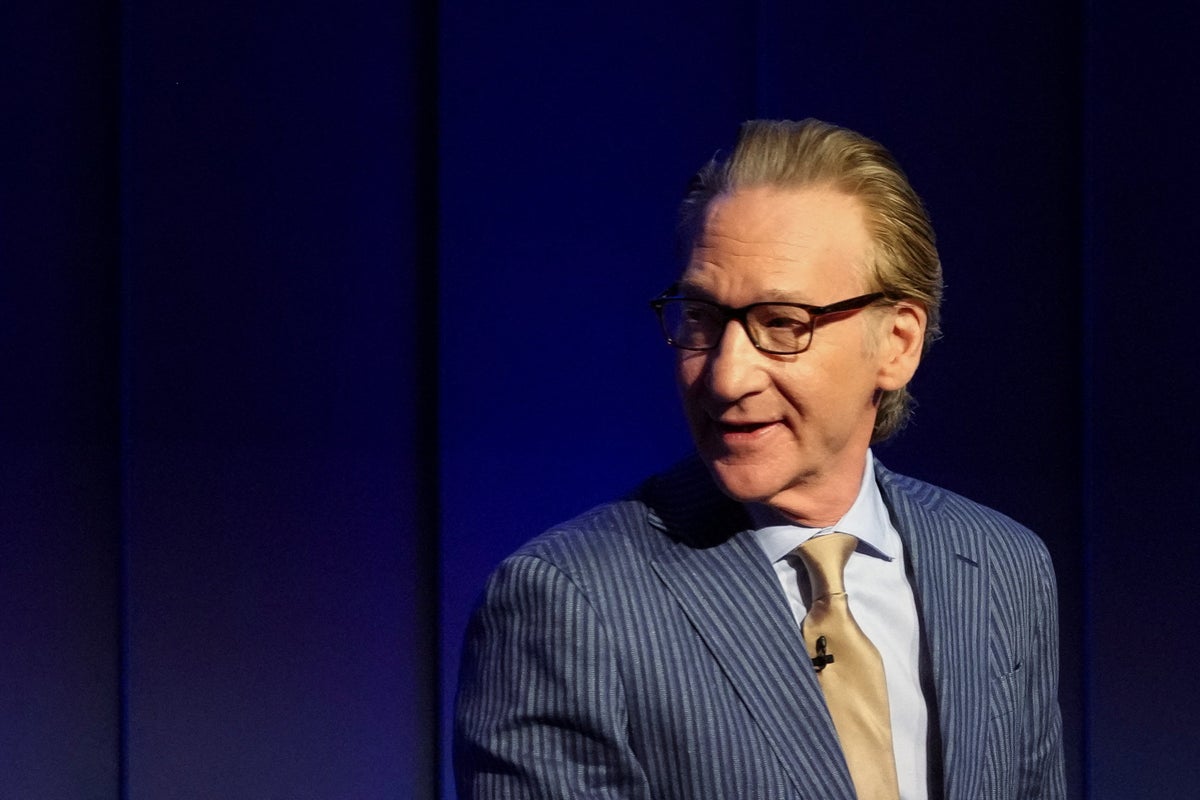
The political center of gravity in American media is shifting, and the crackup is happening in plain sight on Sunday morning television. When Bill Maher sat down with ABC News anchor Jonathan Karl, he did not just deliver a viral soundbite; he signaled a structural realignment that should terrify Democratic strategists looking ahead to 2028. Asked point-blank about his political alignment in the post-Trump era, Maher leveled his own party with a blunt, three-word diagnosis: "Democrats are cowardly".
He did not stop there. The lifelong liberal icon openly admitted that his vote is actively "in play" for the 2028 presidential cycle, explicitly naming Vice President JD Vance as a viable option if the Democratic Party continues its drift toward its most radical flank.
This is not merely a comedian venting for ratings. It is a lagging indicator of a massive, quiet defection among culturally moderate, economically liberal voters who feel alienated by an institutional Left that refuses to police its own house.
The Cowardice of the Institutional Center
The core of Maher’s critique rests on a systemic failure of political courage. For the past decade, mainstream Democratic leaders have operated under a doctrine of asymmetric appeasement. Fearing primary challenges from the progressive Left and brutal cancellations on digital platforms, moderate Democrats have consistently ceded the rhetorical high ground to activist wings whose policies do not align with the broader American electorate.
Maher pointed directly to the Democratic Socialists of America (DSA) platform, which calls for the state takeover of key industries, noting that mainstream liberals simply look the other way. "Don’t tell me I’m not seeing what I am seeing," Maher argued, rejecting the boilerplate defensive talking points that these ideas are just harmless Scandinavian-style social democracy.
When the activist wing of a party flirts with abolishing prisons or cheering for global unrest, the national leadership rarely counter-punches. They stay quiet. This silence is interpreted by the average voter not as nuance, but as complicity or total capitulation.
Why the Post Trump Landscape Changes the Math
The conventional Democratic playbook has long relied on a single, powerful unifying force: the existential threat of Donald Trump. For three consecutive election cycles, this fear acted as a powerful adhesive, holding together an incredibly disparate coalition ranging from Wall Street neoconservatives to campus Marxists.
But that adhesive has an expiration date.
The 2026 midterm cycle already shows signs of being a pure referendum on the current administration. By 2028, however, the political calculus changes entirely. With Trump off the ballot, the structural weaknesses of the Democratic coalition will be fully exposed.
- The Anti-Trump Premium Vanishes: Without a singular villain to vote against, voters will finally look at what they are voting for.
- The Rise of National Populism: Figures like JD Vance offer a different brand of conservatism—one that strips away the chaotic personal unpredictability of Trump while retaining a focus on the working-class economic grievances that the Democratic Party used to champion.
- The Exhaustion Factor: The American electorate is deeply fatigued by ideological purity tests. A candidate who promises a return to basic institutional sanity, even from the right, becomes appealing to voters who are simply tired of the culture wars.
The Populist Trap Waiting for Democrats
The danger for the Democratic Party is that JD Vance represents a highly specific ideological threat. Unlike the country-club Republicans of the early 2000s, Vance’s political identity is built on a direct critique of globalization, corporate overreach, and the abandonment of the American rust belt. He speaks a language of economic protectionism that appeals directly to the historic base of the Democratic Party.
If the Democrats enter the 2028 cycle defined by campus radicalism and abstract identity politics, a populist conservative like Vance can easily peel away working-class voters of all demographics. Maher’s open flirtation with Vance is proof that this appeal extends even to affluent, culturally influential liberals who prize free speech and basic common sense over partisan loyalty.
Political realignment happens slowly, then all at once. The warning shots have been fired from the very studios that used to be safe havens for the liberal establishment. If the Democratic Party cannot find the spine to reject its own fringe, they will find that the center of the country has moved on without them.