Cuba is suffocating in the dark. When the national grid collapses—as it now does with rhythmic, catastrophic frequency—the immediate response from Havana is boilerplate blame directed at the United States embargo. While Washington’s restrictions severely choke the island's cash flow and fuel imports, the total disintegration of Cuba’s electrical infrastructure is actually driven by decades of internal financial mismanagement, a fatal reliance on dying Soviet-era technology, and a desperate, short-sighted bet on floating Turkish power plants. The grid is not just failing under external pressure; it is decaying from the inside out.
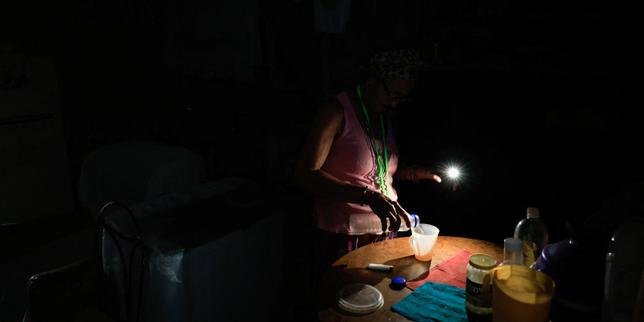
The reality on the ground has moved past temporary blackouts into systemic structural failure. For the average Cuban, a collapsing grid means rotting food, no running water, and nights spent on mattresses dragged to balconies in search of a breeze. For a closer look into similar topics, we suggest: this related article.
The Myth of the Sudden Collapse
To understand why Cuba’s lights go out, one must look at the Thermo-Electric Plants (CTEs) that form the backbone of the island’s generation capacity. Most of these massive facilities, like the Antonio Guiteras plant in Matanzas or the Máximo Gómez complex in Mariel, were built with Soviet assistance during the Cold War. They were designed to burn a specific type of fuel: heavy domestic crude oil.
This crude is highly corrosive. It contains massive amounts of sulfur, which eats away at the internal machinery, boilers, and tubes of these aging plants every single day they operate. For additional context on this topic, in-depth reporting can also be found at Al Jazeera.
The plants require constant, aggressive maintenance. They require specialized spare parts that Cuba can no longer afford. Instead of scheduled overhauls, the state has forced these facilities to run continuously past their breaking points to maintain a fragile peace with an increasingly frustrated public. The result is a predictable cycle of failure. One boiler leaks, forcing an emergency shutdown. The sudden drop in power destabilizes the rest of the interconnected grid, triggering a domino effect that plunges the entire nation into total darkness within minutes.
The Crutch of Floating Power
Desperate for a quick fix that did not require rebuilding its domestic infrastructure, Havana turned to the Turkish company Karpowership. These massive, floating power barges anchored off the Cuban coast were supposed to plug the gap.
They did, but at a ruinous cost.
+-------------------------------------------------------------+
|               CUBA'S ENERGY MIX DILEMMA                     |
+-----------------------------+-------------------------------+
| SOVIET-ERA ONSHORE PLANTS   | TURKISH FLOATING BARGES       |
+-----------------------------+-------------------------------+
| * Burns cheap domestic oil  | * Requires expensive fuel     |
| * Highly corrosive to pipes | * High rental fees in cash    |
| * Plagued by constant leaks | * Immediate source of power   |
| * Years overdue for rebuild | * Vulnerable to cash crunches |
+-----------------------------+-------------------------------+
The powerships require direct payment in hard currency or high-grade refined fuel to keep their generators spinning. When Cuba's foreign reserves dried up completely, the Turkish barges slowed production or stopped entirely, waiting for payment. Relying on floating, rented infrastructure to sustain a sovereign nation's base-load power is the engineering equivalent of paying a mortgage with a payday loan. It keeps the lights on for another week, but it accelerates the financial ruin of the state utility, Unión Eléctrica (UNE).
The Collapse of the Venezuelan Lifeline
For nearly two decades, the structural rot of the Cuban energy sector was masked by cheap Venezuelan oil. Under the Petrocaribe agreements initiated by Hugo Chávez, Caracas shipped tens of thousands of barrels of crude daily to Havana in exchange for Cuban doctors, teachers, and security advisors.
That lifeline has frayed to near-nothingness.
Venezuela’s own economic crisis and decaying oil infrastructure have forced state oil company PDVSA to drastically slash its export volumes to Cuba. Havana has been forced to scramble on the open global market to buy fuel at spot-market prices. Because the US embargo restricts standard banking channels and frightens away international shipping lines through sanctions, Cuba must pay a massive premium to brokers willing to skirt the rules. They are buying oil at inflated prices with money they do not have.
The Renewable Illusion
The Cuban government frequently touts its plans to transition to solar and wind energy, aiming to generate 24 percent of its power from renewable sources. The announcements look excellent in state media.
The implementation tells a different story. Building massive solar arrays requires significant upfront capital investment. It requires modern transmission lines capable of handling variable loads. Cuba’s distribution network is so old that it loses an estimated 15 to 20 percent of the electricity it generates simply through resistance in old wiring and poorly insulated transformers before the power ever reaches a household.
Green energy cannot save a grid that bleeds power through its own transmission lines. Without the capital to stabilize the existing distribution network, adding solar panels is like pouring water into a bucket riddled with holes.
Political Inertia Over Technical Reality
The management of Unión Eléctrica remains deeply militarized and bureaucratic. Decisions are made based on political survival rather than engineering reality. When technical experts suggest long-term shutdowns for deep rehabilitation, they are routinely overruled by party officials terrified of the civil unrest that prolonged blackouts provoke.
This short-term thinking has gutted the professional staff of the energy sector. Engineers, operators, and maintenance technicians are leaving the country in record numbers, joining the wider migratory wave fleeing the island's economic stagnation. The plants are being run by exhausted, underpaid crews who lack the specialized training to manage complex thermodynamic systems under extreme stress.
Washington's embargo certainly locks Cuba out of international development banks and complicates every single transactional step the island takes. Yet, using the embargo as a total explanation ignores a deeper truth. The Cuban state chose to invest its scarce capital into building luxury hotels for a tourism boom that never materialized, rather than rebuilding the basic utility infrastructure required to keep those hotels—and the country—running.
The current crisis cannot be solved by patched boilers or another rented barge. The system has reached its thermodynamic limit. Every time technicians restart the grid after a total collapse, they put immense mechanical stress on equipment that belongs in a museum. They are not fixing the problem; they are merely resetting the timer on the next explosion.