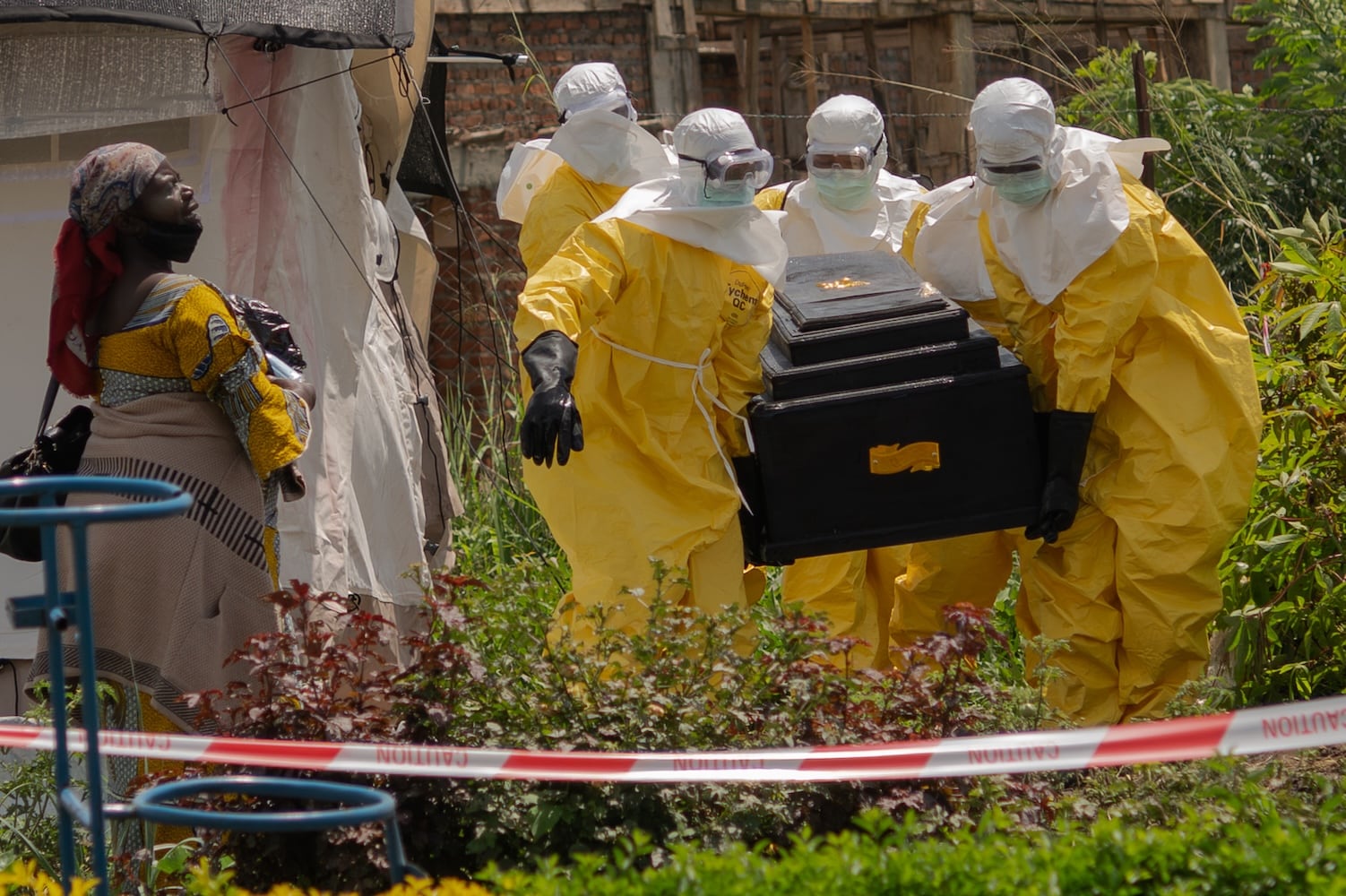
First responders on the front lines of the Democratic Republic of Congo’s 17th Ebola outbreak are facing an immediate, life-threatening scarcity of basic medical supplies, leaving them completely exposed to a virus that kills up to half of those it infects. In the conflict-ravaged northeastern province of Ituri, health workers are treating patients without face masks, running out of basic pain medication, and lacking the motorbikes necessary to trace contacts through dense, mountainous terrain. This supply crisis is not a temporary logistical hiccup. It is the direct consequence of a massive, systemic retreat by Western donors who gutted global health funding and dismantled vital health security architectures just before the virus re-emerged.
The current crisis features the rare Bundibugyo strain of Ebola. Unlike the more common Zaire strain, which heavily benefited from years of international research, the Bundibugyo variant has no approved vaccine and no authorized antiviral treatments. Caring for an infected patient requires intense supportive therapy: rigorous hydration, symptom management, and immediate isolation. This means that personal protective equipment (PPE) is not merely a safety precaution for the staff; it is the only wall standing between an isolated outbreak and a runaway regional catastrophe.
Instead of a well-fortified defense, local clinics are empty. The immediate cause sits squarely with international donors who slashed funding to regional health initiatives over the last year, including the destabilizing withdrawal of major Western aid pipelines. When funding evaporates, local health budgets shrink to zero.
The Blind Spot in Ituri
Because the Bundibugyo strain circulated silently for weeks before the first samples were officially confirmed by the National Institute of Biomedical Research in Kinshasa, the virus gained a massive head start. Surveillance failed because the local clinics lacked the basic laboratory inputs to run preliminary screenings. Of the initial batch of blood samples sent to the capital, nearly 40 percent could not even be analyzed because the sample volumes collected by under-equipped local teams were insufficient.
When an outbreak begins in a conflict zone, the traditional playbook falls apart. Ituri is highly volatile, with active militant groups controlling key transit corridors. In this environment, a motorbike is a critical piece of diagnostic equipment. Contact tracers must ride out to remote villages to track down individuals exposed to symptomatic patients. Without motorbikes, tracers are stranded in urban centers like Bunia while the chain of transmission moves silently through rural communities.
International agencies have begun moving emergency stockpiles into the region, flying in metric tons of medical supplies from regional hubs like Nairobi. Organizations already on the ground, such as ALIMA, have depleted their own contingency reserves of tents and protective gear just to keep local clinics from shutting their doors entirely. These emergency shipments are vital, but they are a reactive sticking plaster on a deep, structural wound.
The Myth of Emergency Preparedness
The global health community treats Ebola outbreaks as sudden, unpredictable natural disasters. They are not. They are predictable failures of long-term health infrastructure. For over a decade, international donors have poured hundreds of millions of dollars into reactive emergency funds while consistently underfunding the mundane realities of everyday healthcare delivery.
Donor Funding Dynamics: Emergency vs. Systemic Support
┌────────────────────────────────────────────────────────┐
│  ████████████████████████████████████  Emergency Aid    │
├────────────────────────                          │
│  ██████                Long-term Infrastructure        │
└────────────────────────────────────────────────────────┘
When a crisis hits, Western governments aggressively deploy elite medical teams and set up temporary field hospitals. Once the case count drops to zero, the funding vanishes, the tents are packed up, and local clinics are left without running water, consistent electricity, or a reliable supply chain for basic gloves.
This boom-and-bust cycle creates a profound level of local distrust. When health workers suddenly show up in full-body biohazard gear to handle Ebola after months of ignoring rampant maternal mortality, malaria, and cholera, local populations naturally view the intervention with deep suspicion. The infrastructure must exist before the virus arrives, not after the bodies start accumulating.
The Border Paradox
The geographical reality of the DRC makes this supply failure an international threat. Ituri borders South Sudan and Uganda, two countries with highly porous frontiers and heavily integrated local trade economies. Medical officials are already warning that the virus will cross these borders.
Instead of reinforcing these border towns with surveillance equipment, diagnostic kits, and personal protective gear, neighboring states have resorted to closing border crossings or implementing travel bans. These blunt political tools do not stop a virus. They simply push desperate travelers away from official checkpoints and into unmonitored bush paths, rendering effective health screenings impossible and driving the outbreak further underground.
Building a Resilient Supply Architecture
Fixing this recurring failure requires a permanent shift in how international health aid is structured. Emergency airlifts are the most expensive, least efficient way to manage an epidemic. A functional system must prioritize regional resilience.
- Decentralized Strategic Stockpiles: Rather than storing emergency PPE and medicines in European or American logistics hubs, permanent, climate-controlled stockpiles must be established within the regional capitals of high-risk provinces.
- Flexible Funding Mandates: International aid grants must allow local health ministries to pivot funds from specific disease programs to general infrastructure, allowing them to purchase vehicles, maintain cold-chain refrigeration, and pay frontline workers a reliable living wage.
- Local Diagnostic Autonomy: Regional referral hospitals need the equipment and training to sequence pathogens locally, eliminating the week-long delays caused by flying blood samples across a continent to centralized national laboratories.
Relying on reactive international charity to fight a highly lethal pathogen is a proven failure. The health workers in Bunia do not need more high-level global summits or promises of future aid packages. They need masks, they need pain medication, and they need motorbikes today.